
Finding the Right 30 Day Inpatient Rehab Kenosha WI: What You Need to Know
30 day inpatient rehab Kenosha WI is one of the most effective options for people ready to break free from addiction. If you need a quick answer, here’s what’s available right now:
Top options for 30-day inpatient rehab near Kenosha, WI:
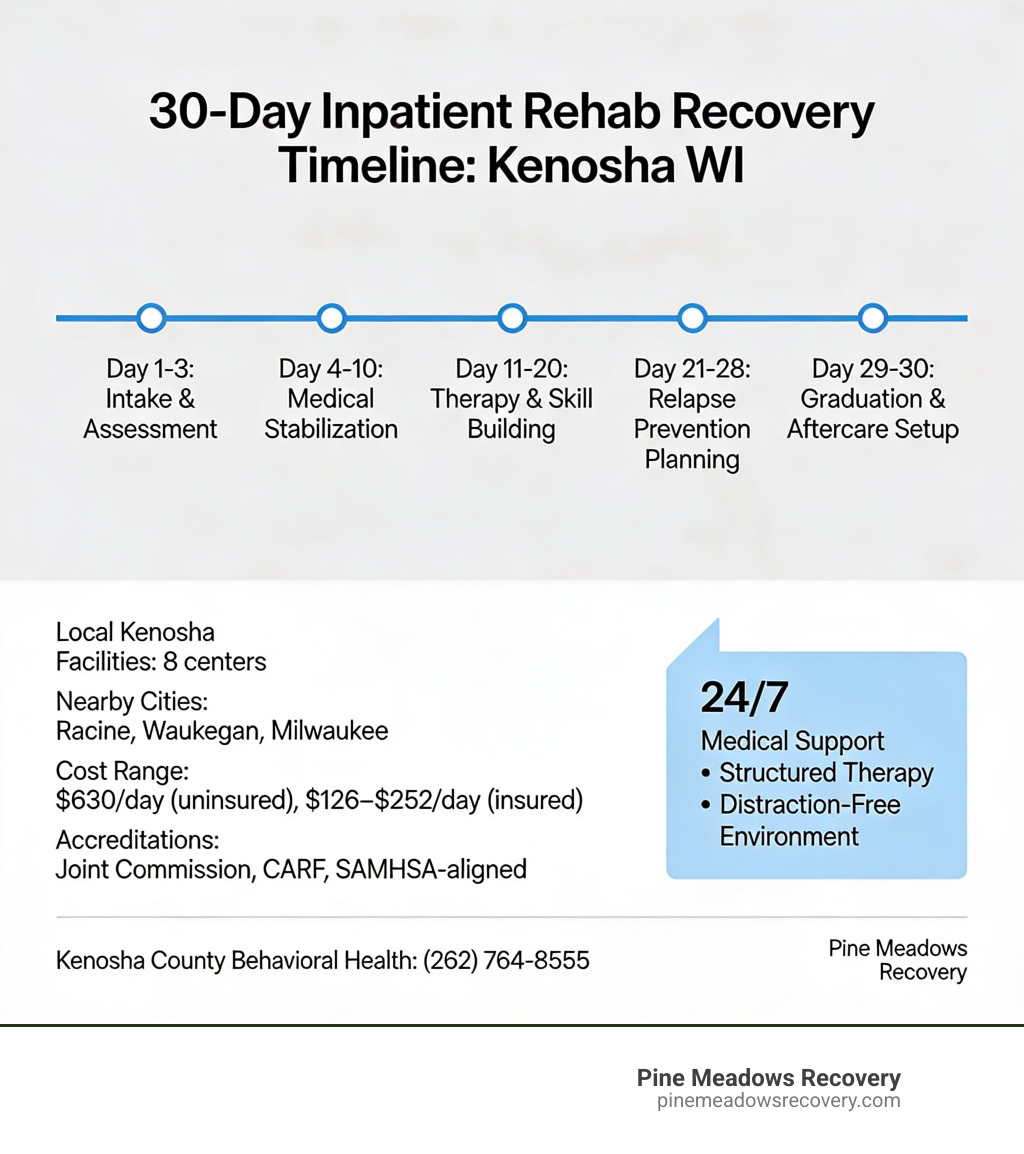
- Local Kenosha facilities – Kenosha has 8 alcohol and drug rehab centers, with access to 57 licensed inpatient treatment centers in the broader area, many of which are listed through the Substance Abuse and Mental Health Services Administration (SAMHSA)
- Nearby residential programs – Cities like Racine, Waukegan, and Milwaukee offer additional inpatient and residential options within easy reach
- Cost range – Roughly $630/day without insurance, dropping to $126-$252/day with insurance coverage
- Accreditations to look for – Joint Commission, CARF, and SAMHSA-aligned programs
- Who to call first – Kenosha County Behavioral Health Resource Center: (262) 764-8555
Choosing inpatient care means 24/7 medical support, structured therapy, and a distraction-free environment – all critical when addiction is severe or paired with mental health challenges.
The decision to seek help is hard. But a 30-day program gives you a real, focused window to stabilize, heal, and build the foundation for lasting recovery.
At Pine Meadows Recovery, we’re a Kenosha-based addiction treatment center with deep experience helping individuals navigate the path from active addiction to sustainable sobriety – including guiding clients toward the right level of 30 day inpatient rehab Kenosha WI has to offer. Our team is here to help you find the best fit for your situation, whether that’s through our own programs or connecting you with the right inpatient resources nearby.
Understanding 30 Day Inpatient Rehab Kenosha WI
When we talk about 30 day inpatient rehab Kenosha WI, we are referring to a residential level of care where you live at the facility for the duration of your treatment. This isn’t just a place to sleep; it is a sanctuary for sobriety that provides a 24/7 structured environment designed to remove the triggers of everyday life.
In Kenosha, these programs focus on stabilization. For many, the first few days are about physical safety—managing withdrawal symptoms under medical supervision. Once stabilized, the focus shifts to the therapeutic community. You aren’t doing this alone; you are surrounded by professionals and peers who understand the struggle. This immersion is what makes the 30-day model so powerful for those who need to hit the “reset” button on their lives.
Benefits of a 30 Day Inpatient Rehab Kenosha WI Program
A 30-day stay is often the “Goldilocks” of treatment—long enough to break the cycle of physical dependence but short enough to feel manageable for those with jobs or families. The primary benefits include:
- Intensive Healing: You receive more therapy hours in one month than most people get in a year of traditional outpatient care.
- Peer Support: Living with others in recovery helps reduce the shame and isolation that often fuels addiction.
- Distraction-Free Environment: You don’t have to worry about the “people, places, and things” that lead to use. You can focus 100% on yourself.
Core Services and Therapies in Kenosha Facilities
Reputable centers in the Kenosha area don’t just use a one-size-fits-all approach. We believe in evidence-based and holistic care that treats the whole person. Common therapies include:
- Cognitive Behavioral Therapy (CBT): Identifying and changing the thought patterns that lead to substance use.
- Dialectical Behavior Therapy (DBT): Learning emotional regulation and distress tolerance.
- EMDR: A specialized therapy used to process trauma, which is often at the root of dual diagnosis cases.
- Holistic Care: This may include nutritional support, yoga, or mindfulness practices to help heal the body alongside the mind.
Choosing a Quality 30-Day Inpatient Rehab in Kenosha WI
With 57 licensed inpatient centers in the Kenosha area, the choices can feel overwhelming. How do you know which one is right for you? It starts with looking at quality standards. A top-tier facility should hold accreditations from The Joint Commission or CARF (Commission on Accreditation of Rehabilitation Facilities). These “gold standards” ensure the facility meets rigorous safety and clinical benchmarks.
When evaluating the best drug rehab centers Kenosha WI has to offer, look for an interdisciplinary team. This means your care is managed by a group of experts—doctors, nurses, licensed therapists, and case managers—who meet regularly to discuss your progress.
| Feature | Inpatient Rehab | Outpatient Care |
|---|---|---|
| Supervision | 24/7 Medical & Clinical | Scheduled Appointments |
| Living Arrangement | On-site Residence | Live at Home |
| Intensity | High (30+ hours therapy/week) | Low to Moderate |
| Cost | Higher (includes room/board) | Lower |
| Best For | Severe addiction / Dual Diagnosis | Mild addiction / Post-Inpatient |
Specialized Programs for Veterans and Pregnant Individuals
Addiction doesn’t affect everyone the same way. That’s why specialized tracks are vital. For veterans, trauma-informed care is essential to address the unique experiences of service members. Similarly, pregnant individuals require a specific medical approach to manage substance abuse while ensuring the health of the baby. Many Kenosha-area programs provide these specialized tracks, ensuring that alcohol abuse or drug dependence is treated with the appropriate medical and emotional sensitivity.
Success Rates and Patient Outcomes in 30 Day Inpatient Rehab Kenosha WI
Does it actually work? National studies show that patients treated at medical rehabilitation hospitals return home sooner and stay home longer than those in less structured environments. In the Kenosha area, discovering top drug and alcohol rehabs means looking at facilities that emphasize long-term sobriety over “quick fixes.” Reputable centers often boast lower hospital readmission rates because they focus on thorough stabilization and comprehensive aftercare planning.
Costs and Insurance for Kenosha Addiction Treatment
Let’s talk numbers. We know that cost is often the biggest hurdle to getting help. In Wisconsin, the average cost for a 30-day inpatient stay is approximately $18,927 without insurance. That breaks down to about $630 per day.
However, most people do not pay the full sticker price. Through insurance verification, many find that their provider covers a significant portion of the stay. For example:
- With 60% insurance coverage, the cost drops to about $7,571 ($252/day).
- With 80% insurance coverage, the cost is roughly $3,785 ($126/day).
Yes, your insurance likely covers rehab, thanks to laws that require mental health and substance use treatment to be covered similarly to physical ailments.
Navigating Insurance and Low-Cost Options
Understanding your policy is key. There is a big difference between a PPO and an HMO. Decoding your PPO might reveal that you have more flexibility to choose a facility, while an HMO might require you to stay within a specific network.
If you don’t have private insurance, don’t lose hope. Kenosha County’s “Navigating Treatment” guide highlights funding options for uninsured residents. You can contact the Kenosha County Behavioral Health Resource Center at (262) 764-8555 to discuss public funding or sliding scale options. Unpacking your insurance coverage with a professional can help clarify exactly what you’ll owe out of pocket.
30 Day Inpatient Rehab Kenosha WI Pricing Breakdown
When looking at private health insurance coverage, the daily rate usually covers everything: your room, all meals, 24/7 nursing care, individual therapy, group sessions, and medical evaluations. Some facilities also offer scholarship opportunities or payment plans to help bridge the gap for those in financial need.
The Admission Process: From Detox to Aftercare
Getting started is often the scariest part, but the process is designed to be supportive. It begins with a clinical assessment. This is just a conversation where we learn about your history, the substances involved, and any mental health concerns.
For many, the next step is detoxification. This usually lasts 3 to 7 days. We know people have common questions about drug detox, such as “Will it hurt?” or “Is it safe?” When done in a medical setting, detox is managed with medications to ensure you are as comfortable and safe as possible. For those new to the process, finding the best medical detoxes for beginners is crucial for a positive start to recovery.
Transitioning to Aftercare and Sober Living
A 30-day stay is just the beginning. Real recovery happens in the months and years that follow. That’s why we emphasize a “step-down” approach. After inpatient rehab, you might transition to:
- Partial Hospitalization (PHP): Full-day treatment while living at home or in sober living.
- Intensive Outpatient Program (IOP): Several hours of therapy a few days a week.
- Outpatient Program: Weekly check-ins and therapy.
- Sober Living: A drug-free residential environment that provides accountability.
Immediate Steps for Addiction Crisis in Kenosha
If you or a loved one is in immediate danger, do not wait for a 30-day program opening.
- Call 911 for medical emergencies or overdoses.
- Contact the Kenosha County Crisis Line at (262) 657-7188.
- Visit a local Emergency Room for an immediate behavioral health assessment.
- Reach out to an interventionist if a loved one is refusing help but is in clear danger.
Frequently Asked Questions about Kenosha Rehab
What substances are treated in Kenosha 30-day programs?
Local programs are equipped to treat a wide range of addictions, including:
- Opioids: Heroin, fentanyl, and prescription painkillers (OxyContin, Vicodin).
- Alcohol: Often requiring medical detox due to the risk of seizures.
- Benzodiazepines: Xanax, Valium, and Ativan.
- Stimulants: Methamphetamine and cocaine.
- Co-occurring disorders: Treating depression, anxiety, or PTSD alongside the addiction.
How does inpatient rehab compare to outpatient options?
The main difference is the level of “containment.” Inpatient rehab provides 24/7 supervision and a total change of environment. This is often necessary for those who have tried to quit on their own and failed, or those whose home environment is unstable. Outpatient options provide more flexibility but require the individual to have a strong support system at home and the ability to resist triggers in real-time.
What amenities are provided in Kenosha inpatient centers?
While the focus is on therapy, comfort matters. Many Kenosha-area facilities offer:
- Semi-private or private rooms.
- Fitness equipment or yoga spaces.
- Nutritional, chef-prepared meals.
- Medication-Assisted Treatment (MAT) to help curb cravings.
- Outdoor spaces or “peaceful grounds” for reflection.
Conclusion
Recovery is a journey, not a destination. While a 30 day inpatient rehab Kenosha WI stay is a vital first step, it works best when it’s part of a personalized, long-term plan. At Pine Meadows Recovery, we believe in the power of client-centered care. We invite you to take a tour of our approach and see how we can help you or your loved one build a life worth staying sober for.
If you’re ready to talk about your options, contact us today. Whether you need alcohol rehab in Kenosha or support for complex substance use, we are here to guide you home.