
Why Inpatient Alcohol Rehab Wisconsin Could Be the Most Important Decision You Make
Inpatient alcohol rehab Wisconsin is a 24/7, live-in treatment program where people with severe alcohol addiction receive round-the-clock medical care, therapy, and support — all in one place.
Here’s a quick overview of what to know:
- Who it’s for: People with physical alcohol dependence, failed outpatient attempts, or co-occurring mental health conditions
- What it involves: Medical detox, evidence-based therapy (CBT, DBT), dual diagnosis treatment, and discharge planning
- How long it lasts: Typically 7–30 days, depending on individual progress
- Does insurance cover it? Yes — most commercial insurance plans cover inpatient alcohol rehab in Wisconsin
- How to find a licensed facility: Call the Wisconsin Addiction Recovery Helpline at 211 or use the state’s provider directory (regulated under Wis. Admin. Code ch. DHS 75)
Alcohol addiction is serious. Withdrawal alone can cause seizures, hallucinations, and a life-threatening condition called delirium tremens (DTs). That’s why trying to quit without medical support can be genuinely dangerous.
Wisconsin has over 488 licensed alcohol and drug rehab centers — but knowing which type of care you need, and how to access it, can feel overwhelming when you’re already at your lowest.
This guide cuts through the noise with five practical, no-nonsense tips to help you or someone you love take the right next step.
At Pine Meadows Recovery, we’re a Kenosha, Wisconsin-based addiction treatment center with deep expertise in helping individuals navigate the path from crisis to lasting recovery — including understanding when inpatient alcohol rehab in Wisconsin is the right level of care. we’ll walk you through exactly what you need to know.
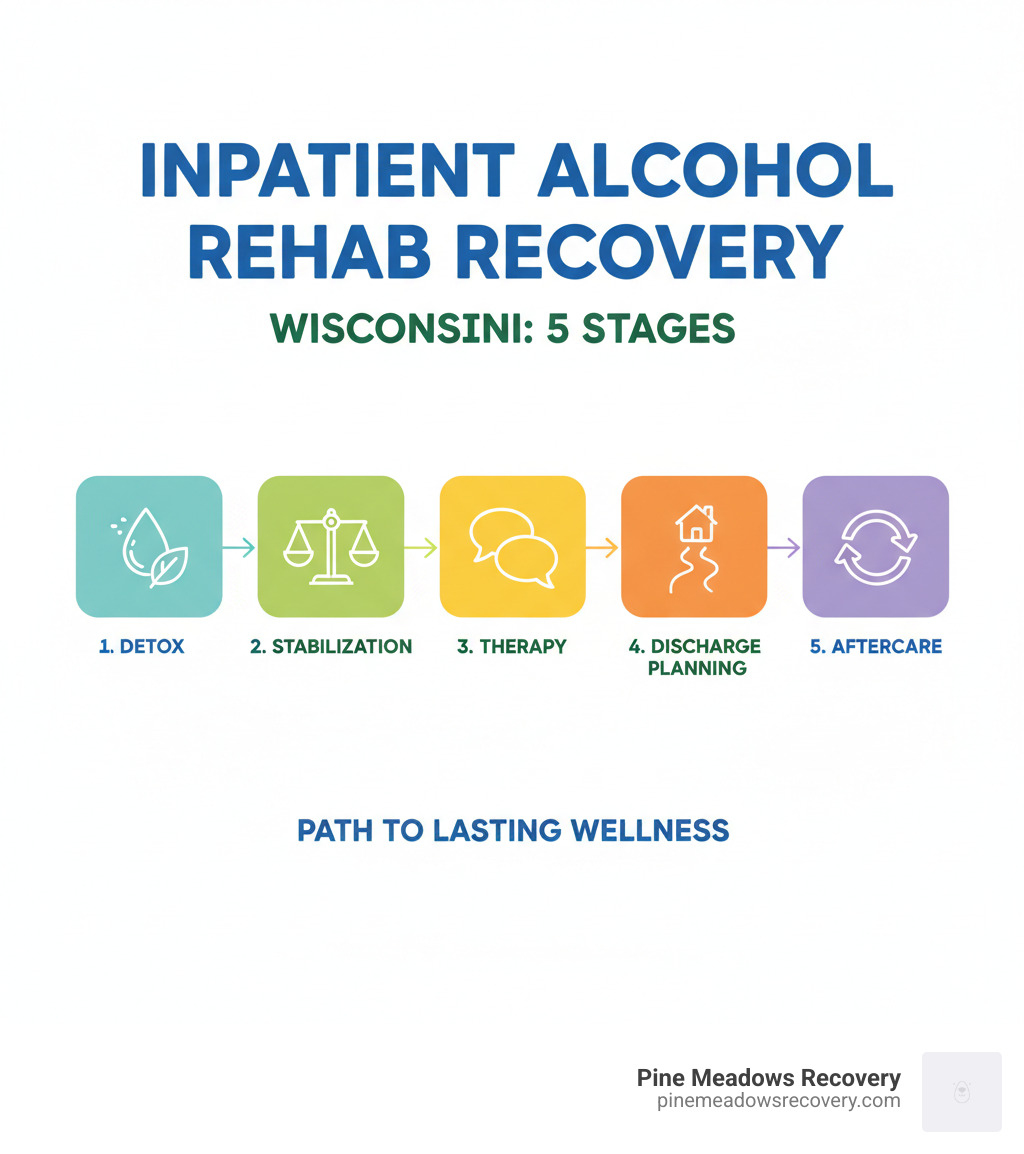
Important inpatient alcohol rehab Wisconsin terms:
Understanding Inpatient Alcohol Rehab Wisconsin
When we talk about inpatient alcohol rehab Wisconsin, we are referring to the most intensive level of care available. Unlike outpatient programs where you go home at the end of the day, inpatient (or residential) treatment provides a safe, controlled environment where the primary focus is 100% on healing.
In Wisconsin, these facilities are strictly regulated. The state licenses and oversees substance use treatment programs based on Wis. Admin. Code ch. DHS 75. These regulations ensure that every licensed facility meets high standards for safety, medical staffing, and clinical quality.
The core of an inpatient stay is medical stabilization. For many, this begins with withdrawal management. Because alcohol withdrawal can be medically complex—and in some cases, fatal—having 24/7 medical supervision is not just a luxury; it is a safety requirement.
| Feature | Inpatient Rehab | Outpatient Rehab |
|---|---|---|
| Housing | On-site residence | Live at home |
| Medical Supervision | 24/7 clinical staff | During scheduled appointments |
| Environment | Controlled and drug-free | Subject to outside triggers |
| Intensity | High (Full-day programming) | Moderate (A few hours per week/day) |
| Best For | Severe addiction, high relapse risk | Mild-to-moderate addiction |
Tip 1: Recognize the Signs That Residential Care is Necessary
How do you know if a weekly meeting or an outpatient counselor isn’t enough? For many Wisconsinites, the “do-it-yourself” approach is a point of pride, but addiction doesn’t care about willpower.
The most critical sign that you need inpatient alcohol rehab Wisconsin is the presence of severe physical dependency. If you experience tremors (the “shakes”), intense nausea, or heart palpitations when you stop drinking, your body has become chemically dependent. At this stage, attempting to quit “cold turkey” at home can lead to seizures or delirium tremens (DTs), which are medical emergencies.
Other signs include:
- Failed Outpatient Attempts: If you’ve tried to cut back or attend outpatient therapy but found yourself returning to the bottle, a change of environment is likely necessary.
- Co-occurring Disorders: If you are struggling with depression, anxiety, or PTSD alongside your drinking, you need the integrated support that only residential care can provide.
- Safety Risks: If your drinking has led to suicidal thoughts, aggressive behavior, or a complete inability to manage self-care, a 24/7 structured environment is the safest place for you.
If you are seeing these signs in yourself or a loved one, looking into Pine Meadows Recovery: Kenosha Alcohol Treatment can be the first step toward a managed, clinical intervention.
Tip 2: Prioritize Evidence-Based Therapies and Dual Diagnosis Support
Not all rehab programs are created equal. When researching inpatient alcohol rehab Wisconsin, you want to look for programs that utilize “gold-standard” care plans. This means the treatment isn’t just based on opinions—it’s based on decades of clinical research.
We believe that true healing requires a “whole-person” approach. This involves combining medical science with emotional support. Effective programs often include:
- Trauma-Informed Care: Recognizing that many people use alcohol to mask past trauma.
- Medication-Assisted Treatment (MAT): Using FDA-approved medications to reduce cravings and manage withdrawal symptoms.
- Holistic Healing: Incorporating activities like mindfulness, art therapy, or fitness to heal the body and spirit alongside the mind.
The Role of CBT and DBT in Inpatient Alcohol Rehab Wisconsin
Two of the most powerful tools in our clinical arsenal are Cognitive Behavioral Therapy (CBT) and Dialectical Behavior Therapy (DBT).
- CBT helps you identify the specific thought patterns that lead to drinking. If you think, “I had a bad day, I need a drink,” CBT helps you challenge that thought and replace it with a healthier coping skill.
- DBT focuses on emotional regulation and distress tolerance. It’s about learning how to sit with uncomfortable feelings—like anger or sadness—without reaching for a drink to numb them.
Specialized Programs for Co-occurring Disorders
It is estimated that two-thirds of individuals struggling with addiction also have a co-occurring mental health disorder, such as depression, anxiety, or PTSD. This is known as a dual diagnosis.
In Wisconsin, the best inpatient facilities don’t just treat the drinking; they treat the underlying mental health condition simultaneously. If you only treat the alcohol use but leave the depression unaddressed, the risk of relapse remains incredibly high. Integrated treatment ensures that both conditions are stabilized at the same time.
Tip 3: Navigate Insurance and Costs for Wisconsin Facilities
One of the biggest hurdles to seeking help is the fear of the “price tag.” However, you might be surprised to learn that inpatient alcohol rehab Wisconsin is often more accessible than people think.
Most commercial insurance plans are required to cover addiction treatment to some degree. In Wisconsin, many private facilities are “in-network” with major providers like Blue Cross Blue Shield, UnitedHealthcare, Aetna, and others. Being in-network significantly reduces your out-of-pocket costs.
To avoid surprises, we recommend following these steps:
- Verify Your Benefits: Before you pack a bag, have the facility verify your insurance. You can Verify Your Insurance with Pine Meadows Recovery to get a clear picture of what your plan covers.
- Understand Coverage Limits: Some plans may cover 7 days for detox and stabilization, while others may cover a full 30-day residential stay.
- Check for “Out-of-Network” Options: Even if a facility isn’t in your primary network, some plans offer out-of-network benefits that can still cover a large portion of the cost.
While the cost of rehab may seem high, the “cost” of active addiction—lost jobs, medical bills, legal fees, and strained relationships—is almost always higher.
Tip 4: Prepare for the Daily Structure of Recovery

One of the most jarring things for someone entering inpatient alcohol rehab Wisconsin is the schedule. In active addiction, life is often chaotic. In rehab, life is structured down to the minute. This isn’t to be “strict”—it’s to help your brain relearn how to function without the chaos of alcohol.
What to Expect During Inpatient Alcohol Rehab Wisconsin
A typical day in a Wisconsin residential program might look like this:
- 7:00 AM – 8:30 AM: Morning meditation, breakfast, and morning reflection.
- 9:00 AM – 11:00 AM: Group therapy or psychoeducation (learning how addiction affects the brain).
- 12:00 PM – 1:00 PM: Nutritional lunch and a short break.
- 1:00 PM – 3:00 PM: Individual counseling or specialized sessions like DBT or CBT.
- 3:00 PM – 5:00 PM: Experiential therapy (art, music, or fitness) or wellness activities.
- 6:00 PM – 8:00 PM: Dinner followed by a 12-step meeting or peer support group.
- 9:00 PM: Evening reflection and lights out.
Amenities and Environment
While the work is hard, the environment should support healing. Many Wisconsin facilities take advantage of our state’s natural beauty, offering access to nature and serene outdoor areas.
In April 2026, many modern facilities have also updated their policies regarding technology. While some centers still ban all electronics to prevent distractions, several “device-friendly” programs allow for limited use of cell phones and laptops. This allows professionals to maintain necessary work contacts or stay in touch with family, provided it doesn’t interfere with their clinical progress.
Amenities often include:
- Private or Semi-Private Rooms: To ensure dignity and a quiet place to reflect.
- Nutritional Support: Chef-prepared meals to help repair the physical damage caused by long-term drinking.
- Fitness Facilities: Because physical movement is a key component of mental health.
Tip 5: Plan Your Aftercare and Long-Term Transition
The most dangerous day in recovery is the day you leave inpatient treatment. You go from a 24/7 supportive “bubble” back into the real world where the liquor stores are still open and the old stressors still exist.
That is why discharge planning is the most important part of your stay. In Wisconsin, top-tier programs begin planning your exit the week you arrive.
Common transition steps include:
- Partial Hospitalization (PHP): You spend the day at the clinical facility but go home (or to a sober living house) at night.
- Intensive Outpatient (IOP): Meeting for a few hours, three to five days a week.
- Sober Living: A drug-and-alcohol-free residence where you live with others in recovery.
- Community Resources: Connecting with local AA/SMART Recovery groups or using the 211 Wisconsin Addiction Recovery Helpline for ongoing support.
Success isn’t just about staying sober for the 10 days you’re in a hospital bed; it’s about having the tools to stay sober for the 10,000 days that follow.
Frequently Asked Questions About Wisconsin Rehab
How long does inpatient alcohol rehab typically last?
While every journey is different, most acute inpatient stays in Wisconsin (like those at specialized behavioral hospitals) last between 7 and 10 days. This is usually enough time for medical detox and initial stabilization. However, many people then transition to a 30-day residential program or a longer-term “extended care” facility to solidify their recovery skills.
Can I use my cell phone or laptop during treatment?
This depends entirely on the facility. Some Wisconsin centers are known for being “cell phone and laptop friendly” to help professionals maintain their careers. Other centers may restrict device use during the first few days of detox to help you focus entirely on your health. Always ask about the “electronics policy” during your intake call.
What should I bring to an inpatient facility?
Each center has a specific packing list, but generally, you should bring:
- Comfortable Clothing: Think “relaxed”—gym clothes, hoodies, and comfortable shoes. Usually, about a week’s worth of clothes is plenty.
- Identification: A driver’s license or state ID and your insurance card.
- Personal Hygiene Items: Toothbrush, shampoo, etc. (Note: Most facilities require these to be alcohol-free and in original, unopened packaging).
- Prescription Medications: In their original bottles with the labels intact.
- Prohibited Items: Do not bring anything containing alcohol (like some mouthwashes), weapons, or clothing with drug/alcohol-related imagery.
Conclusion
Taking the step to enter inpatient alcohol rehab Wisconsin is an act of profound courage. It is an admission that things have become unmanageable and a commitment to building a better life.
Whether you are looking for care in Kenosha, Madison, or Milwaukee, the resources in Wisconsin are robust. From the medical stabilization of a 7-day hospital stay to the deep psychological work of a 30-day residential program, help is available.
At Pine Meadows Recovery, we focus on personalized, evidence-based care that treats the whole person, not just the addiction. We understand the unique challenges facing Wisconsinites and are dedicated to providing a path toward long-term sobriety and mental wellness.
If you’re ready to stop the cycle of addiction and start the process of healing, we are here to help you navigate every step of the way.
Start your recovery journey at our alcohol rehab in Kenosha, Wisconsin