

What You Need to Know About Mental Health Services Kenosha County
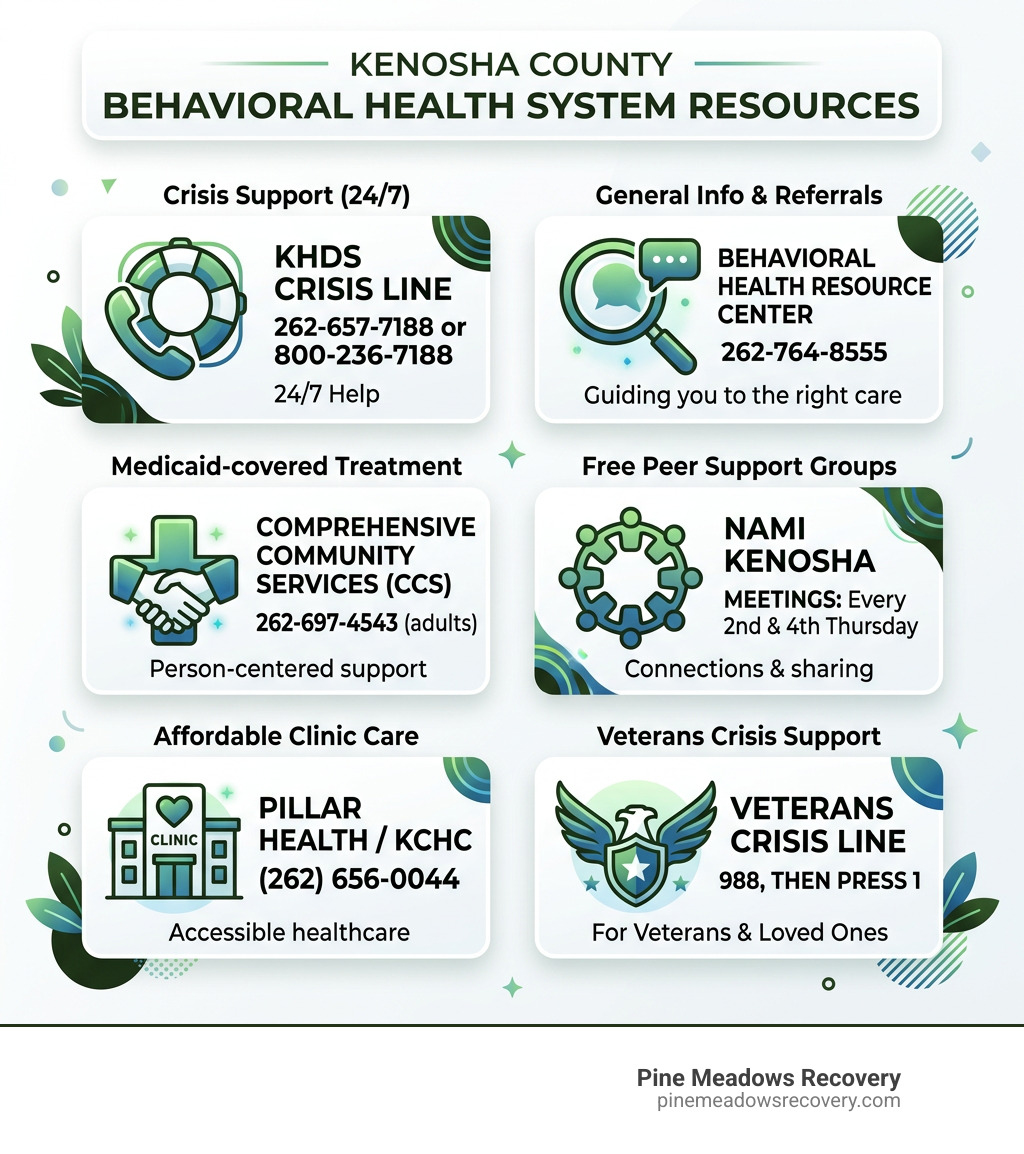
Mental Health Services Kenosha County covers a wide range of support — from 24/7 crisis lines to free peer groups to Medicaid-funded treatment programs. Here’s a quick snapshot of your most important options:
| Need | Resource | Contact |
|---|---|---|
| Crisis support (24/7) | KHDS Crisis Line | 262-657-7188 or 800-236-7188 |
| General info & referrals | Behavioral Health Resource Center | 262-764-8555 |
| Medicaid-covered treatment | Comprehensive Community Services (CCS) | 262-697-4543 (adults) |
| Free peer support groups | NAMI Kenosha | Every 2nd & 4th Thursday |
| Veterans crisis support | Veterans Crisis Line | 988, then press 1 |
Navigating mental health care can feel overwhelming — especially when you’re already struggling. Whether you’re dealing with depression, anxiety, addiction, or all of the above, knowing where to start makes a real difference.
Kenosha County handles more than 25,000 crisis contacts every year. That number is a reminder: you are far from alone, and help is closer than you think.
At Pine Meadows Recovery, we’re a Kenosha-based addiction treatment center with hands-on experience helping people access the right mental health services in Kenosha County — including those facing co-occurring disorders and substance use challenges. In this guide, we’ll walk you through five practical, no-nonsense tips to find the care you need.
Tip 1: Memorize the 24/7 Crisis Response Numbers
When a mental health emergency strikes, you don’t want to be fumbling with a search engine. In Kenosha, the frontline for immediate help is the Crisis Prevention and Intervention (24/7) line operated by Kenosha Human Development Services (KHDS).
This isn’t just a generic recording; it is answered by a live, local person who can provide immediate phone counseling or coordinate face-to-face interventions if the situation escalates. With over 25,000 crisis contacts each year, this team is highly experienced in de-escalation and safety planning.
- Local Crisis Line: 262-657-7188
- Toll-Free Option: 800-236-7188
- Location: 1202 60th St., Kenosha, WI 53140
Crisis Support for Veterans and Youth
Specific groups often require specialized approaches. If you or a loved one is a veteran, the Veterans Crisis Line is available by calling 988 and pressing 1, or by texting 838255. This connects you with responders who understand the unique challenges of military life.
For the younger members of our community, the Kauffman House provides critical youth-focused crisis services. In 2023 alone, staff handled 109 youth intakes. The goal is always stabilization and moving toward the least restrictive environment possible; notably, 82 youth were successfully discharged to less restrictive placements last year, proving that early intervention works.
Emergency Hotline Quick List:
- 988 Suicide & Crisis Lifeline: Call or text 988
- Wisconsin Emotional Support Line: Text HOPELINE to 741741
- Domestic Abuse Hotline (Women and Children’s Horizons): 262-652-9900
- National Runaway Safeline: 800-786-2929
Tip 2: Use the Behavioral Health Resource Center as Your Gateway
If you aren’t in an immediate crisis but know you need Mental Health support, the Behavioral Health Resource Center (BHRC) is your best starting point. Located at 3536 52nd St. in Kenosha, this hub acts as a navigator for the often-confusing world of healthcare.
In 2023, application counselors at the BHRC served 3,101 individuals. Their role is to listen to your specific circumstances and help you build a personalized action plan. This might include:
- Helping you apply for health insurance (Medicaid or Marketplace).
- Finding a provider that matches your needs and budget.
- Connecting you with basic needs like housing or utilities (as 2,760 individuals sought help with these essentials last year).
Differentiating KHDS and Kenosha County Services
It’s easy to get confused between Kenosha Human Development Services (KHDS) and the Kenosha County Division of Behavioral Health Services. Here is the simple breakdown:
- Kenosha County Behavioral Health: This is the government entity that provides funding, oversight, and policy. They manage programs like the Treatment Court and handle the overall “big picture” of community health.
- KHDS (Kenosha Human Development Services): This is a private, non-profit organization. While they receive significant county funding, they operate independently. They manage over 40 programs, including the 24/7 crisis line and the Resource Center. Think of them as the hands-on providers who “meet people where they are.”
Tip 3: Understand Eligibility for CCS and CSP
For those living with severe mental illness or Dual Diagnosis (co-occurring mental health and substance use disorders), Kenosha offers two “heavy hitter” programs: Comprehensive Community Services (CCS) and the Community Support Program (CSP).
These aren’t just standard outpatient therapy sessions. They are psychosocial rehabilitation programs designed to help people live fulfilling lives in the community rather than in institutional settings.
| Feature | Comprehensive Community Services (CCS) | Community Support Program (CSP) |
|---|---|---|
| Focus | Recovery-focused, person-centered | Intensive, community-based treatment |
| Eligibility | Medicaid/BadgerCare eligible + Functional Screen | Severe and persistent mental illness |
| Services | Skill development, advocacy, therapy | Medication management, 24/7 support |
| Nature | Fully voluntary | Often involves long-term case management |
Enrolling in Mental Health Services Kenosha County Programs
To enroll in CCS, you must be a Kenosha resident eligible for Medicaid or BadgerCare. The process starts with a “functional screen” conducted by an eligibility specialist to determine if your needs require this level of integrated care.
The beauty of CCS is that it is person-centered. You aren’t just assigned a therapist; you work with a service facilitator to identify your own recovery goals. Whether that’s learning daily living skills, finding employment, or managing medications, you are in the driver’s seat. To check eligibility, adults (18+) can call 262-697-4543, and families with children can call 262-697-4676.
Tip 4: Access Affordable Mental Health Services Kenosha County
Money should never be the barrier between you and your well-being. Kenosha County has several “safety net” clinics that offer high-quality behavioral health services on a sliding fee scale. These centers integrate behavioral health with primary care because they know your physical and mental health are connected. If you are uninsured, you may be eligible for sliding fee programs where costs are adjusted based on income, ensuring that essential care remains accessible.
Transportation Assistance for Appointments
Getting to your appointment shouldn’t be a source of stress. There are several ways to secure a ride:
- Medicaid-Funded (MTM/Veyo): If you have Medicaid, you can schedule non-emergency medical transportation by calling 866-907-1493.
- Care-A-Van: For those with disabilities that prevent them from using the standard bus, call 262-658-9093.
- KAFASI (Volunteer Transportation): Seniors and people with disabilities who are ambulatory can reach out to KAFASI at 262-842-7433 for volunteer-led rides.
- Kenosha Transit: All city buses are equipped with wheelchair ramps.
Tip 5: Connect with Peer Support and Substance Use Tools
Sometimes, the best help comes from someone who has “been there.” NAMI (National Alliance on Mental Illness) Kenosha is a powerhouse for peer-led support. They operate the Bridges Community Center (5718 7th Ave), a drop-in spot for adults living with mental illness or substance use challenges.
NAMI also hosts free support sessions every 2nd and 4th Thursday of the month from 6:00 pm to 7:30 pm at St. Paul’s Lutheran Church. There’s no pressure—just community.
Peer-Led Mental Health Services Kenosha County Support
Kenosha is also proactive about the opioid crisis. We believe in providing tools for safety alongside treatment. This includes:
- Narcan Training & Fentanyl Test Strips: Often available through the Kenosha County Health Department and local vending machines.
- Medication Disposal: Wisconsin is a leader in drug disposal. You can find permanent drop boxes at most local police departments, including the Kenosha Police Department (262-656-1234) and the Pleasant Prairie Police Department (262-694-7353).
- Drug Take Back Day: Keep an eye out for these events, usually held in April and October, for safe disposal and free resources like lockboxes.
Frequently Asked Questions about Kenosha Mental Health
What is the 24/7 crisis hotline number for Kenosha County?
The primary local number is 262-657-7188. You can also use the toll-free number 800-236-7188. These lines are answered 24/7 by real people trained in crisis intervention.
Who is eligible for Comprehensive Community Services (CCS)?
CCS is for Kenosha County residents who are eligible for Medicaid or BadgerCare and have a mental health or substance use diagnosis. You must also meet a “functional screen” that shows you need more support than standard outpatient counseling provides.
How can I find free or low-cost support groups in Kenosha?
NAMI Kenosha is the best resource for free mental health support groups. For substance use, local community resource centers provide referrals to 12-step groups like AA, NA, and SMART Recovery.
Conclusion
Finding your way through the local healthcare system doesn’t have to be a solo mission. From the 24/7 responsiveness of KHDS to the peer-driven empathy of NAMI, Mental Health Services Kenosha County are built to catch you when you fall and help you stand back up.
At Pine Meadows Recovery, we focus on evidence-based, holistic healing for those struggling with addiction and co-occurring mental health disorders. We believe in personalized care that looks at the whole person, not just a diagnosis. If you’re ready to take that first step toward long-term stability, we’re here to help you navigate the resources available in our community.
Start your journey with Mental Health Services Kenosha County