

Finding Hope and Healing: Your Guide to Addiction Treatment in Kenosha
Drug Rehab Centers Kenosha, WI offer a range of treatment options for individuals struggling with substance abuse and addiction. If you’re searching for help right now, here’s what you need to know:
Quick Overview: Treatment Options in Kenosha
- Inpatient/Residential Programs: 24/7 medical supervision and structured care in a safe environment
- Outpatient Programs: Flexible treatment including Intensive Outpatient (IOP) and Partial Hospitalization (PHP)
- Medication-Assisted Treatment (MAT): FDA-approved medications combined with counseling for opioid and alcohol addiction
- Specialized Services: Dual diagnosis treatment for co-occurring mental health disorders
- Payment Options: Private insurance, Medicaid, Medicare, sliding scale fees, and county-funded programs
Seeking help for addiction takes tremendous courage. As one recovery advocate puts it: “Breaking the cycle of addiction starts with asking for help.” Whether you’re struggling with opioid use, alcohol dependency, or another substance, you deserve compassionate, evidence-based care that addresses the whole person—not just the addiction.
This guide is designed to help you steer your options in Kenosha County. We’ll walk you through the types of treatment available, how to choose the right program, what to expect during intake, and how to handle the financial side of recovery. Our goal is simple: to help you find the path to long-term healing.
The statistics in Kenosha County are sobering—43 opioid deaths in 2020, 913 chronic alcohol emergency room visits in 2021, and a drug use rate that ranks 35th highest nationwide. But these aren’t just numbers. They represent lives that can be saved, families that can heal, and futures that can be rebuilt with the right support.
The Need for Addiction Treatment in Kenosha County
The challenge of substance abuse is a reality for many communities, and Kenosha, Wisconsin, is no exception. Understanding the scope of this issue locally can help us appreciate the critical need for accessible and effective addiction treatment services. Unfortunately, Kenosha faces significant problems when it comes to substance use.
Consider these impactful statistics from Kenosha County:
- High Drug Use Rate: Kenosha holds the unfortunate distinction of having the 35th highest rate of drug use nationwide among nearly 400 cities surveyed. This indicates a pervasive problem that touches many lives.
- Narcotics Violations: In 2023, Kenosha had the 121st highest number of narcotics violations out of 330 cities nationwide, with a total of 596 reported drug-related incidents that year. These numbers highlight the criminal justice aspect linked to substance abuse.
- Opioid Crisis: The opioid epidemic continues to cast a long shadow. In 2020, Kenosha County reported 43 opioid deaths. By 2021, there were 85 emergency room visits for opioids, and out of 53 toxicity deaths, 44 involved opioids. Fentanyl, a deadly opioid, and xylazine, a tranquilizer often added to drugs, contribute significantly to these tragic outcomes.
- Alcohol-Related Harm: Alcohol abuse also presents a substantial public health concern. In 2021, the rate of alcohol-attributable deaths in Kenosha County was 65.3 per 100,000 residents. The rate of binge drinking between 2016 and 2021 was 22.2 per 100,000 residents, leading to 913 chronic alcohol emergency room visits in 2021 alone.
- Cocaine Involvement: Of the 53 toxicity deaths reported in 2021, 15 involved cocaine, indicating that multiple substances contribute to the overall drug crisis.
These statistics are more than just figures; they represent individuals, families, and a community struggling with the profound impact of addiction. They underscore the urgent need for comprehensive and compassionate care from Drug Rehab Centers Kenosha, WI to help our neighbors find their way to recovery and rebuild their lives.
Signs and Symptoms of Substance Abuse
Recognizing the signs and symptoms of substance abuse and addiction is the crucial first step toward seeking help. Substance abuse refers to the misuse or overuse of drugs or alcohol, leading to negative physical, emotional, and social consequences. Addiction, on the other hand, is a chronic brain disease characterized by compulsive drug-seeking and use despite harmful outcomes. It affects the brain’s reward system, causing individuals to prioritize drug use over other important aspects of life.
Here are some common signs that might indicate a need for professional intervention:
- Behavioral Changes:
- Increased secrecy or dishonesty about activities.
- Loss of interest in hobbies, work, or school.
- Changes in friendships, associating with new groups of people.
- Financial problems, including unexplained debts or requests for money.
- Legal troubles, such as arrests for drug possession or driving under the influence.
- Neglecting responsibilities at home, work, or school.
- Physical Signs:
- Changes in appearance, such as poor hygiene or neglected grooming.
- Dilated or constricted pupils, red or glazed eyes.
- Unexplained weight loss or gain.
- Tremors, slurred speech, or impaired coordination.
- Frequent nosebleeds or track marks on arms.
- Changes in sleep patterns (insomnia or excessive sleeping).
- Psychological Symptoms:
- Mood swings, irritability, or increased anxiety.
- Depression or feelings of hopelessness.
- Paranoia or hallucinations.
- Lack of motivation or apathy.
- Denial of a problem despite clear evidence.
- Social Withdrawal:
- Avoiding family and friends.
- Becoming isolated or secretive.
- Strained relationships due to substance use.
If you observe these signs in yourself or a loved one, it’s time to consider reaching out to Drug Rehab Centers Kenosha, WI. Early intervention can significantly improve the chances of successful recovery.
Types of Rehab Programs and Key Services in Kenosha
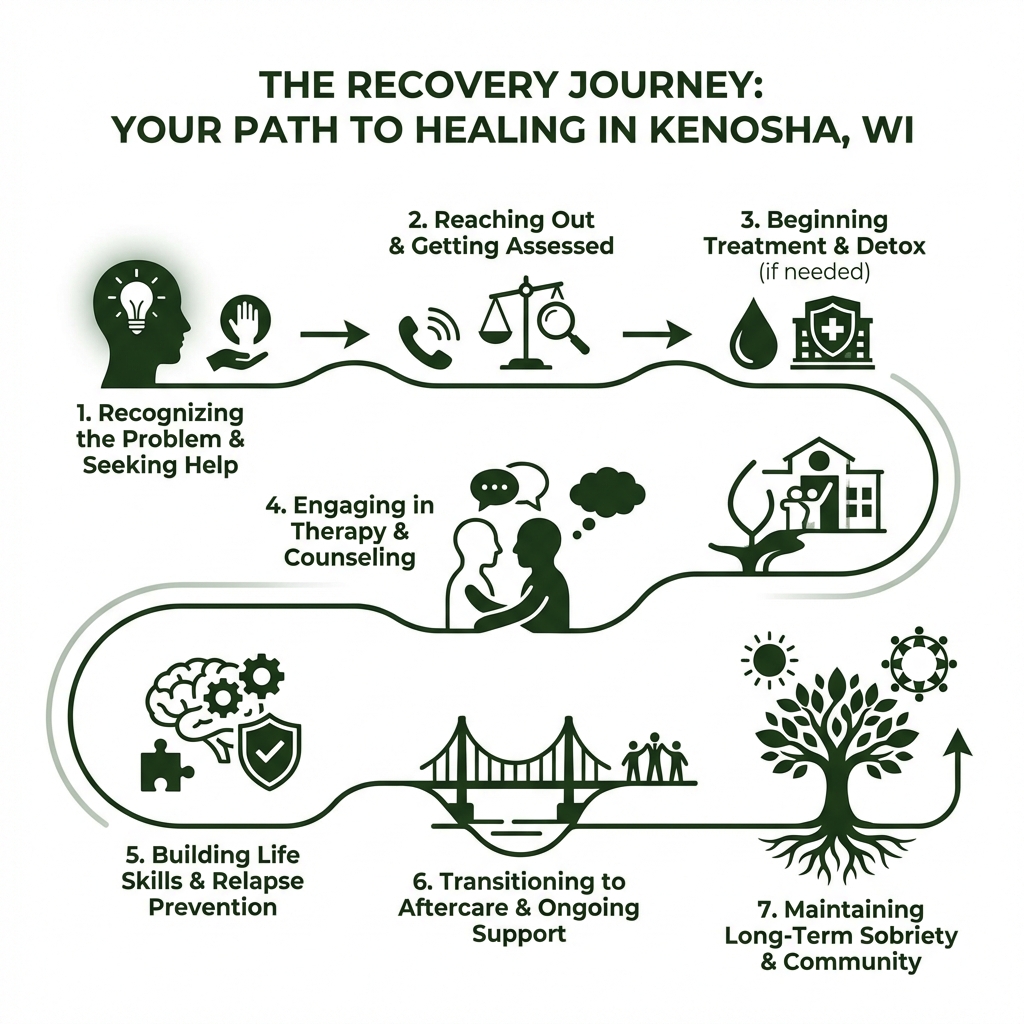
When exploring Drug Rehab Centers Kenosha, WI, you’ll find a spectrum of care designed to meet diverse needs. We understand that every individual’s journey to recovery is unique, which is why a “continuum of care” approach is essential. This means that treatment is personalized and evolves as you progress, from initial assessment to long-term sobriety. Our goal is to provide comprehensive, individualized treatment plans that address not only the substance use but also any co-occurring mental health disorders and underlying issues. The duration of treatment varies, with options for short-term (less than 30 days) and long-term (60, 90 days, or longer) programs, custom to your specific needs and goals.

Inpatient vs. Outpatient Programs
The decision between inpatient and outpatient care is a critical one, based on the severity of addiction, medical history, and personal circumstances.
Inpatient/Residential Programs: These programs offer a highly structured and immersive environment where individuals live at the facility 24/7. This level of care provides constant medical supervision and support, making it ideal for those with severe addictions, co-occurring mental health disorders, or unstable home environments. Inpatient facilities offer rehabilitative nursing 24/7, physician supervision with specialized training, and a minimum of 15 hours of patient therapy per week. The initial phase often includes detoxification, a crucial step to safely manage withdrawal symptoms as the body rids itself of substances. You can find More info about detoxification to understand this process better.
Outpatient Programs: For those who need more flexibility, outpatient programs allow individuals to continue living at home while attending scheduled therapy sessions and treatment activities. This option is suitable for individuals with strong support systems, less severe addictions, or those transitioning from inpatient care. Outpatient programs include:
- Partial Hospitalization Programs (PHPs): Offer intensive care for several hours a day, multiple days a week, providing a structured environment without requiring overnight stays.
- Intensive Outpatient Programs (IOPs): Provide a step down in intensity from PHPs, with fewer hours per week, allowing individuals to maintain work, school, or family commitments.
- Standard Outpatient Programs: The least intensive option, typically involving weekly therapy sessions.
For more details on flexible care, explore More info about intensive outpatient programs.
Here’s a quick comparison to help differentiate between the two:
| Feature | Inpatient/Residential Rehab | Outpatient Rehab |
|---|---|---|
| Intensity | High; 24/7 care and supervision | Moderate to Low; scheduled sessions, live at home |
| Environment | Structured, immersive, substance-free facility | Flexible, allows integration with daily life |
| Ideal Candidate | Severe addiction, co-occurring disorders, unstable home | Mild to moderate addiction, strong support system, work/school commitments |
| Medical Support | Constant medical monitoring, detox services | Available during scheduled hours, less intensive medical oversight |
| Cost | Generally higher due to comprehensive services | Generally lower due to less intensive care |
The Role of Counseling and Therapy
Counseling and therapy are the cornerstones of effective addiction treatment at Drug Rehab Centers Kenosha, WI. They help individuals understand the root causes of their substance use, develop coping mechanisms, and build a foundation for lasting recovery. We believe in addressing the physical, emotional, and social aspects of addiction.
Key therapeutic approaches include:
- Individual Therapy: One-on-one sessions with a therapist to explore personal issues, trauma, and triggers in a private setting.
- Group Therapy: Provides a supportive community where individuals share experiences, learn from peers, and develop social skills. This fosters a sense of belonging and reduces feelings of isolation.
- Family Involvement: Addiction affects the entire family, so we often integrate family therapy to heal relationships, improve communication, and build a unified support system for recovery.
- Evidence-Based Approaches: We use proven methods such as Cognitive Behavioral Therapy (CBT), which helps identify and change negative thought patterns, and Dialectical Behavior Therapy (DBT), which focuses on emotional regulation and distress tolerance.
- Holistic Therapies: Beyond traditional methods, many centers incorporate holistic approaches like mindfulness, art therapy, meditation, and recreational activities to promote overall well-being and stress reduction.
Our comprehensive approach ensures that every aspect of your recovery journey is supported. For a deeper dive into how we treat substance abuse, visit More info about substance abuse treatment.
Medication-Assisted Treatment (MAT) in Kenosha
Medication-Assisted Treatment (MAT) is a research-based and time-tested approach that combines FDA-approved medications with counseling and behavioral therapies. This integrated method is highly effective for treating opioid use disorder and alcohol addiction, addressing both the physical and psychological aspects of dependency.
In Kenosha, MAT services are available and recognized for their effectiveness. The Kenosha Comprehensive Treatment Center (CTC), for example, offers various MAT options including Methadone, Suboxone®, Buprenorphine, and Vivitrol® for opioid addiction. These medications help:
- Reduce Cravings: Alleviating the intense desire for the substance.
- Manage Withdrawal Symptoms: Making the detoxification process safer and more comfortable.
- Prevent Relapse: By stabilizing brain chemistry and reducing the physical urge to use.
Kenosha County authorities are actively working to expand access to MAT, even securing grant funds for medication-assisted treatment within the jail and an overdose response initiative. This commitment reflects the growing understanding that MAT is a critical component of successful long-term recovery, leading to improved physical health, employment opportunities, and reduced risk of overdose.
For those struggling with alcohol dependency, MAT also plays a vital role. Medications can help reduce heavy drinking days and maintain abstinence. To learn more about how MAT integrates into alcohol recovery programs, visit More info about alcohol abuse treatment.
How to Choose the Right Drug Rehab Centers Kenosha, WI
Choosing the right Drug Rehab Centers Kenosha, WI is a deeply personal and crucial decision. It’s about finding a place that understands your unique struggles and offers the specific type of care that will lead to lasting recovery. We believe that an informed decision is the best decision, and we’re here to help you steer this process.
What to Look for in a Reputable Center
When evaluating potential Drug Rehab Centers Kenosha, WI, several factors indicate a reputable and effective program:
- Accreditations: Look for centers accredited by recognized organizations such as CARF (Commission on Accreditation of Rehabilitation Facilities) or The Joint Commission. These accreditations signify that the facility meets rigorous standards for quality and patient safety.
- Licensed and Credentialed Staff: Ensure the center employs a multidisciplinary team of licensed professionals, including physicians, nurses, therapists, and counselors, who specialize in addiction treatment and co-occurring mental health disorders. Their expertise and experience are paramount to effective care.
- Evidence-Based and Personalized Treatment Plans: A reputable center will use treatment modalities backed by scientific research, such as CBT, DBT, and MAT. Furthermore, they should emphasize individualized treatment plans, recognizing that a “one-size-fits-all” approach is rarely effective. Recovery is not a linear path, and your treatment should adapt to your evolving needs.
- Continuum of Care: Beyond initial treatment, inquire about aftercare planning, relapse prevention strategies, and alumni programs. Long-term recovery often requires ongoing support.
Here is a list of key questions to ask an admissions counselor when you’re making inquiries:
- What accreditations does your facility hold?
- What types of therapy and counseling do you offer (e.g., individual, group, family, CBT, DBT)?
- Do you offer Medication-Assisted Treatment (MAT) for my specific substance use disorder?
- How do you develop personalized treatment plans, and how often are they reviewed?
- What is the typical duration of your programs (detox, inpatient, outpatient)?
- What is the staff-to-patient ratio?
- How do you address co-occurring mental health disorders (dual diagnosis)?
- What is included in the cost of treatment, and what payment options or financial assistance do you offer?
- What kind of aftercare planning and relapse prevention support do you provide?
- How do you involve family members in the treatment process?
What to Expect During the Intake Process
The intake process is your first step into a treatment program and is designed to be as supportive and straightforward as possible. We understand that this can be a vulnerable time, and our priority is to make you feel comfortable and understood.
- Confidential Initial Call: Typically, the process begins with a confidential phone call to discuss your situation, answer initial questions, and determine if the center is a good fit for your needs.
- Comprehensive Assessment: If you decide to move forward, you’ll undergo a thorough evaluation. This usually involves:
- Medical Assessment: A physical exam and medical history review to understand your physical health and any immediate needs, including detoxification requirements.
- Psychological Assessment: A detailed interview to assess your mental health, identify any co-occurring disorders, and understand the history and patterns of your substance use. This may take approximately four hours and includes paperwork and drug screening.
- Creation of an Individualized Treatment Plan: Based on the comprehensive assessment, our team will collaborate with you to develop a personalized treatment plan. This plan outlines the specific therapies, medications (if applicable), and support services custom to your unique recovery goals. It’s a living document that will be updated throughout your treatment journey.
Our goal during intake is to ensure that we gather all necessary information to provide the most effective and compassionate care. For more information on our holistic and client-centered approach, visit More info about our treatment approach.
Paying for Treatment and Finding Local Support
Navigating the financial aspects of addiction treatment and finding ongoing community support are essential components of a successful recovery journey. We believe that financial barriers should not prevent anyone from accessing the help they need.

Costs and Payment Options for Drug Rehab Centers Kenosha, WI
The cost of addiction treatment can vary significantly based on the type of program, its duration, the amenities offered, and the specific services provided. For Drug Rehab Centers Kenosha, WI, the average cost of addiction treatment is approximately $55,392, which is comparable to the Wisconsin average of $56,625 and the national average of $57,193. While these figures may seem daunting, several payment options are available to make treatment accessible:
- Private Health Insurance: Most health insurance plans cover a portion of addiction treatment. It’s crucial to contact your insurance provider directly to understand your specific benefits, deductibles, and co-pays. Many centers, including ours, accept a variety of private insurance plans like Aetna, UnitedHealth Group, and Cigna. You can Verify your insurance now to understand your coverage.
- State-Funded Options: For individuals with limited financial resources, state and county-funded programs can provide assistance. Kenosha County offers resources for those without insurance. You can contact the Kenosha County Behavioral Health Resource Center at Kenosha Human Development Services for county funding/insurance options. The Kenosha County’s guide to navigating treatment options is an excellent resource for this.
- Medicaid and Medicare: These government-funded health insurance programs often cover addiction treatment services. Eligibility depends on income and other factors.
- Sliding Scale Fees and Payment Assistance: Many facilities offer sliding scale payment options, where the cost of treatment is adjusted based on your income and ability to pay. Financial aid, scholarships, and payment plans can also be arranged directly with treatment providers.
- Self-Pay: For those without insurance or who prefer to pay out-of-pocket, cash payments are always an option, often with a payment plan.
Don’t let perceived costs deter you from seeking help. Our team can assist you in exploring all available options to make treatment affordable.
Community Resources for Individuals and Families
Recovery is a lifelong journey, and ongoing support is crucial for maintaining sobriety. Kenosha County offers a robust network of community resources for individuals struggling with substance abuse and their families:
- Support Groups: These peer-led groups provide a safe space for individuals to share experiences and receive encouragement. Popular options include:
- 12-Step Programs: Alcoholics Anonymous (AA) and Narcotics Anonymous (NA) are widely available, offering a structured path to recovery.
- SMART Recovery: A science-based program that helps individuals gain independence from addictive behaviors.
- Celebrate Recovery: A Christ-centered, 12-step program.
- Family Support Groups: Addiction impacts the entire family. Groups like Al-Anon and Nar-Anon offer support and guidance for loved ones, helping them cope and heal. The Hope Council’s Loved Ones Group is another local option.
- Kenosha County Behavioral Health Resource Center: Located at 3536 52nd St, Kenosha, this center provides vital information and guidance. You can call them at (262) 764-8555 or visit during operating hours (8 a.m. to 5 p.m., Monday – Friday). They also have a Substance Use Navigator (262-605-6765) to help reduce barriers to treatment.
- Hope Council on Alcohol & Other Drug Abuse, Inc.: This organization, located at 6103 – 39th Avenue, Kenosha, WI 53142 (Phone: (262) 658-8166), offers education, prevention, intervention, and referral services to reduce the impact of substance use disorders. They also provide assessment & diversion services, family services & support, and alcohol & other drug testing.
- Crisis Support: For immediate help, Kenosha Human Development Services (KHDS) offers a 24/7 crisis line at (262) 657-7188.
- Harm Reduction: Kenosha County Human Services provides NARCAN, fentanyl test strips, and xylazine test strips to prevent overdose deaths.
- Online Resources: For broader support and information, the SAMHSA’s National Helpline is a confidential resource for individuals and families facing mental and/or substance use disorders. You can also explore Kenosha County Substance Abuse Recovery Resources for a comprehensive local directory.
These resources underscore the community’s commitment to supporting individuals and families on their path to recovery.
Conclusion: Begin Your Journey to Recovery in Kenosha
The journey to recovery from substance abuse is a testament to resilience and hope. As we’ve explored, Kenosha, WI, offers a robust network of resources and Drug Rehab Centers Kenosha, WI dedicated to providing compassionate and effective care. We’ve seen that recovery is not just possible, but it’s a reality for countless individuals who take that courageous first step.
From the structured support of inpatient programs to the flexibility of outpatient options, the integration of counseling and therapy, and the medical advancements of Medication-Assisted Treatment, the pathways to healing are diverse and personalized. Kenosha County’s commitment to addressing substance use is evident in its local statistics, community resources, and the dedication of its treatment providers.
At Pine Meadows Recovery, we are proud to be a part of Kenosha’s solution, offering evidence-based, holistic, and personalized programs for substance abuse and co-occurring disorders. Our focus is on long-term healing and client-centered care, because we believe everyone deserves a chance to rebuild their life and achieve lasting sobriety.
If you or a loved one are struggling, help is available, and a brighter future is within reach. Take the first step towards a new life today.
Explore our comprehensive treatment programs