
Understanding Substance Abuse Trends in Kenosha County
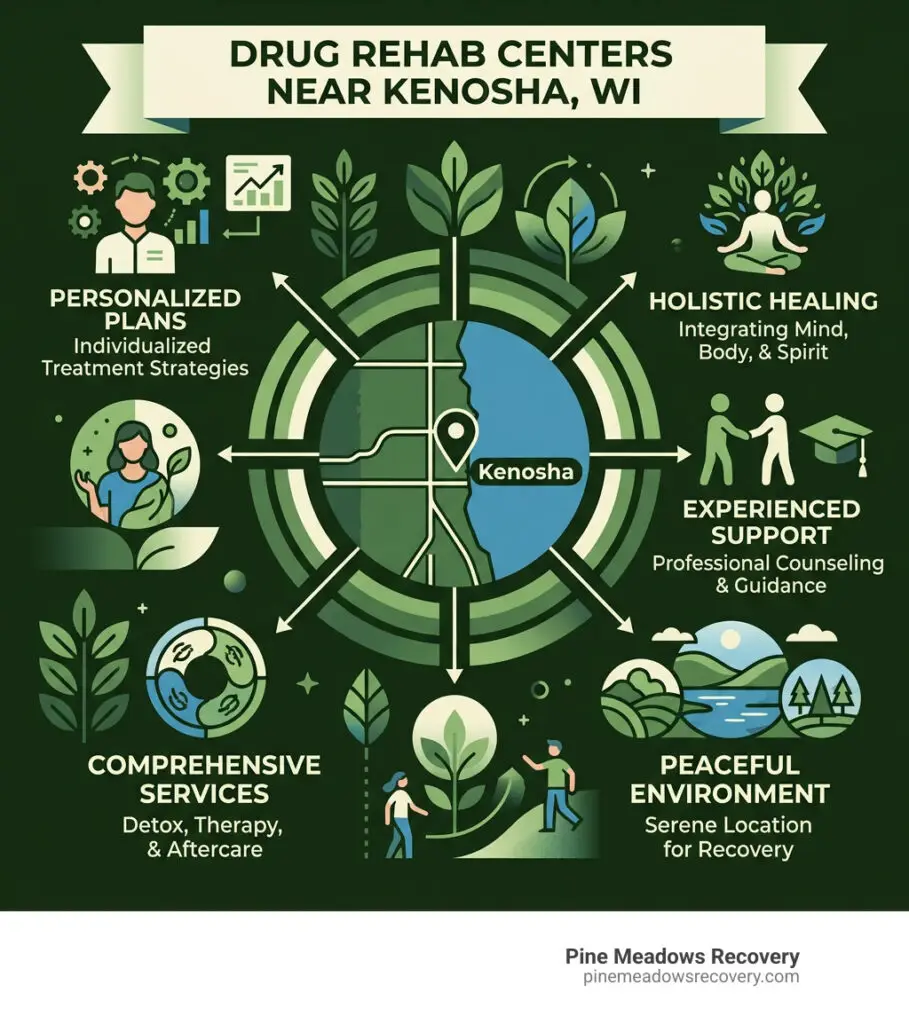
Finding the best drug rehab near Kenosha WI doesn’t have to be overwhelming. Here’s a quick overview of your top local options:
| Facility | Treatment Types | Insurance Accepted |
|---|---|---|
| Pine Meadows Recovery | PHP, IOP, Outpatient | Most major insurances |
| Kenosha Comprehensive Treatment Center | MAT, Outpatient | Medicaid, private |
| Rogers Behavioral Health | Inpatient, Outpatient | Most major insurances |
| WisHope Recovery | Residential, MAT, Outpatient | Most major insurances |
| CleanSlate Centers | Outpatient, MAT | Medicaid, private |
Kenosha County is facing a serious addiction crisis. In 2021, there were 53 toxicity deaths — 44 involving opioids. That same year, over 900 people visited the ER for chronic alcohol-related issues. These aren’t just numbers. Behind each one is a real person and a family in pain.
The good news? Help is closer than you think. Whether you’re dealing with opioid dependence, alcohol addiction, or both alongside a mental health condition, there are real, proven programs available near you.
At Pine Meadows Recovery, we are a dedicated addiction treatment center right in Kenosha, Wisconsin, with hands-on experience helping individuals find the right level of drug rehab near Kenosha WI — from partial hospitalization to outpatient care. Our team is ready to help you take the next step toward lasting recovery.
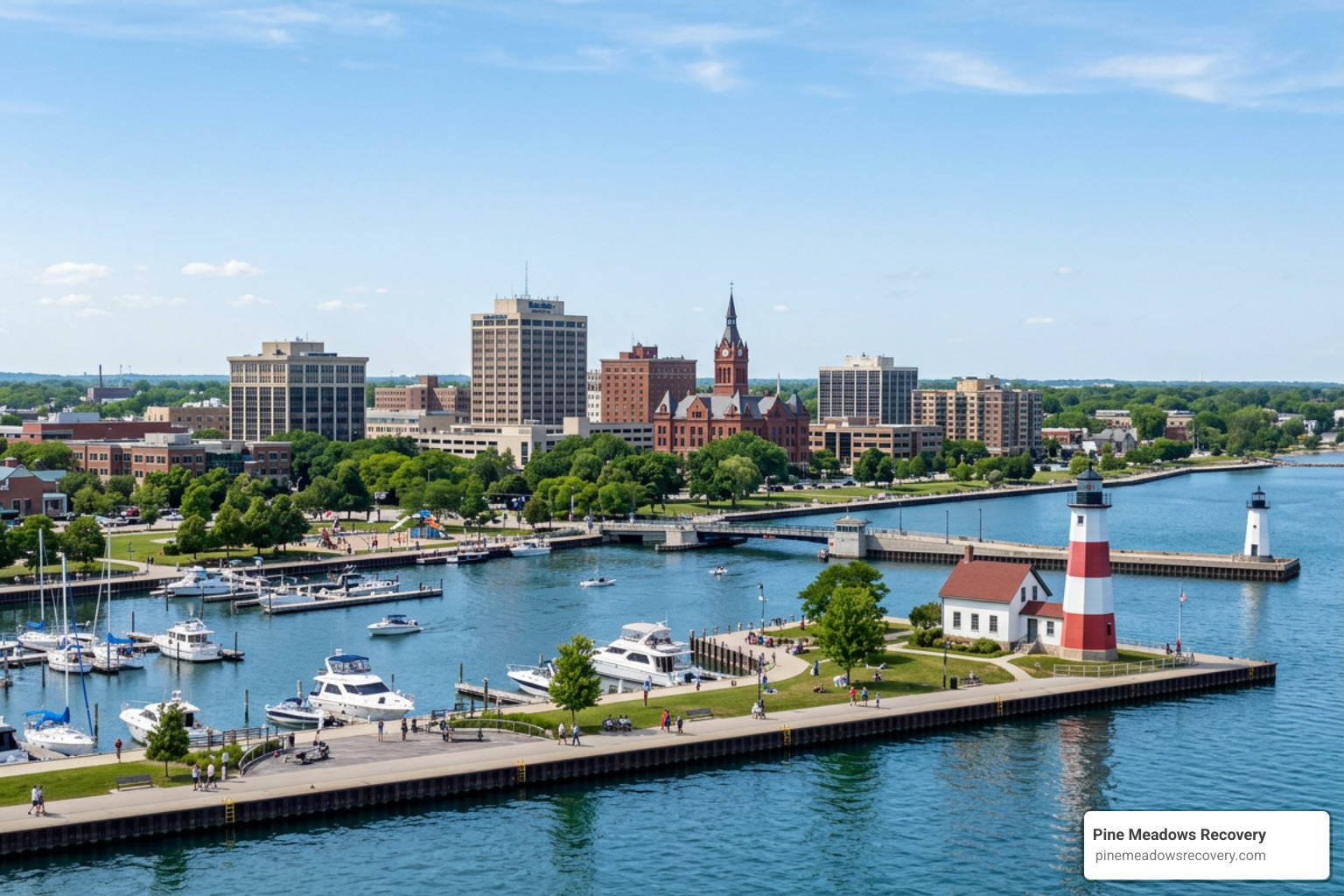
When we look at the data for our community, the numbers can be sobering. Kenosha sits in a beautiful spot along Lake Michigan, but like many Midwestern hubs, we have seen a significant rise in substance use disorders over the last decade.
According to recent health reports, the rate of alcohol-attributable deaths in our area reached 65.3 per 100,000 residents in 2021. Binge drinking is also a major concern, with a rate of 22.2 per 100,000 residents recorded between 2016 and 2021. This isn’t just “social drinking”; it’s a pattern that led to 913 chronic alcohol-related emergency room visits in a single year.
The opioid crisis has hit home here as well. In 2020, Kenosha County saw 43 opioid-related deaths. By 2021, of the 53 reported toxicity deaths, a staggering 44 involved opioids, and 15 involved cocaine. Fentanyl remains a leading factor in these tragedies, often appearing in substances where the user least expects it.
If you or a loved one is struggling, the Substance Abuse and Mental Health Services Administration (SAMHSA) website provides a wealth of information on national trends and help-seeking strategies. Locally, the Wisconsin public behavioral health system served 658 Kenosha County residents in 2020 alone, proving that you are far from alone in this fight. For a deeper dive into what these numbers mean for your health, you can read more info about substance abuse treatment on our dedicated resource page.
Finding the Right Drug Rehab Near Kenosha WI
Choosing a facility is one of the most important decisions you will ever make. It’s not just about finding a building; it’s about finding a philosophy of care that resonates with your needs. When searching for a drug rehab near Kenosha WI, we recommend looking for specific “gold standard” markers of quality.
Reputable centers should hold accreditations from organizations like The Joint Commission or CARF (Commission on Accreditation of Rehabilitation Facilities). These certifications ensure the facility meets rigorous safety and clinical standards. Additionally, look for SAMHSA certification, which indicates the program follows federal guidelines for substance use treatment.
Evidence-based care is the backbone of successful recovery. This means the treatments used—such as Cognitive Behavioral Therapy (CBT) or Dialectical Behavior Therapy (DBT)—have been scientifically proven to work. We believe in transparency, which is why we encourage families to read patient reviews and ask about the credentials of the clinical staff. For a step-by-step walkthrough on how to vet a facility, check out An Essential Guide to Finding Addiction Help.
Specialized Care at a Drug Rehab Near Kenosha WI
Addiction rarely travels alone. Approximately 50% of people with a substance use disorder also experience a co-occurring mental health condition, such as depression, anxiety, or PTSD. This is known as a dual diagnosis. If a rehab only treats the drug use and ignores the underlying mental health struggle, the risk of relapse is much higher.
We provide specialized treatment for co-occurring disorders to ensure that the “whole person” is healing. Beyond mental health, many residents in Kenosha require specialized tracks, such as:
- Veterans Programs: Addressing the unique traumas and experiences of those who served.
- LGBTQ+ Support: Providing a safe, affirming environment free from judgment.
- Women-Only Tracks: Focusing on gender-specific trauma and recovery needs.
- Opioid-Specific Care: If you are struggling with pain medication or heroin, following 5 simple steps to opioid addiction treatment in Kenosha WI can simplify the path to getting help.
How to Access a Drug Rehab Near Kenosha WI via Insurance
The cost of treatment is a common barrier, but it shouldn’t be the reason you stay stuck. Most facilities in the Kenosha area accept a wide range of payment options. Under the Affordable Care Act, substance abuse treatment is considered an essential health benefit, meaning most private insurance plans are required to provide coverage.
Whether you have a PPO plan, Wisconsin Medicaid (BadgerCare), or Medicare, there is likely a path to affordable care. Many local providers also offer sliding scale options based on income for those without traditional insurance.
We highly recommend starting with Insurance Verification to see exactly what your provider covers. For more general information on state-funded options, you can visit Substance Use: Care and Coverage – dhs.Wisconsin.gov. Understanding the fine print is key, so we’ve put together a guide on decoding your policy: what private health insurance really covers for rehab to help you avoid surprise bills.
5 Best Types of Addiction Treatment Programs Near Kenosha
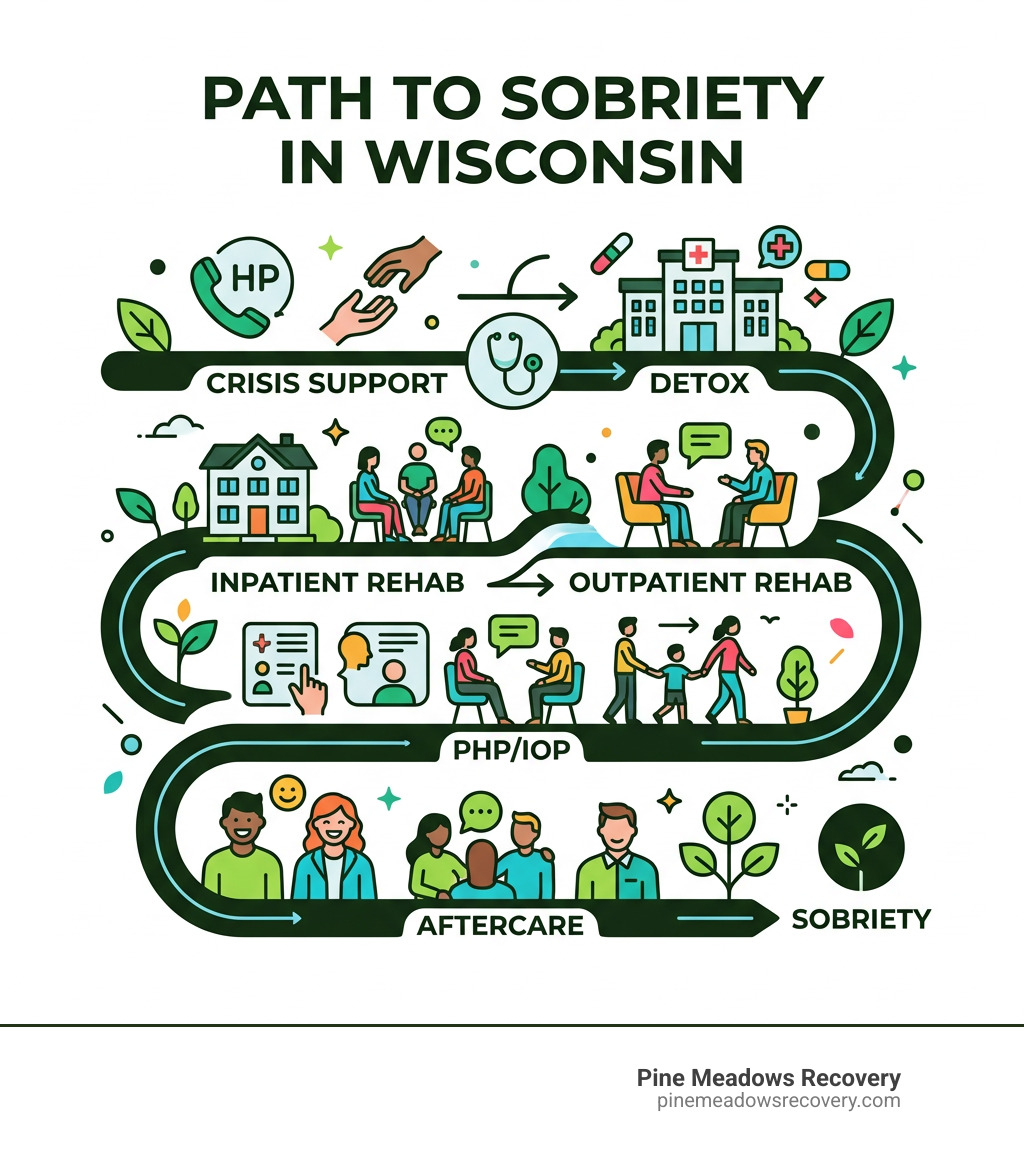
Every recovery journey is unique. Some people need 24/7 supervision to stay safe, while others need a program that allows them to return home to their families at night. Here are the five primary levels of care you’ll find when looking for a drug rehab near Kenosha WI:
- Medical Detoxification: This is the first step for many. It involves 3–7 days of medically supervised withdrawal to clear substances from your system safely. If you’re nervous about this stage, read our guide on the best medical detoxes for beginners.
- Residential Treatment: Also known as inpatient rehab, this involves living at the facility for 30, 60, or 90 days. It provides a structured environment away from local triggers. You can learn more about our 30-day inpatient rehab Kenosha WI options.
- Partial Hospitalization Program (PHP): This is a “day treatment” model. You spend the majority of your day at the center receiving intensive therapy but return home or to a sober living environment in the evening.
- Intensive Outpatient Program (IOP): A step down from PHP, IOP usually involves 9–15 hours of therapy per week. It’s ideal for those transitioning back to work or school. Check out the top 10 outpatient addiction services in Kenosha WI for more local options.
- Holistic Recovery: We believe that healing requires more than just talk therapy. Holistic programs incorporate yoga, meditation, nutrition, and fitness to rebuild the body and spirit. Explore our holistic addiction treatment Kenosha WI guide to see how these methods complement clinical care.
Local Kenosha Resources and Crisis Support
Sometimes, you aren’t ready for a full rehab program, or you’re in the middle of an immediate crisis. Kenosha has several community-funded resources designed to keep residents safe and supported.
- Crisis Intervention: Kenosha Human Development Services (KHDS) Crisis Intervention offers 24/7 support. If you are in immediate distress, call (262) 657-7188.
- Harm Reduction: The Kenosha County Division of Health provides Narcan (naloxone) distribution and fentanyl test strips. These tools save lives by reversing overdoses and preventing accidental ingestion of synthetic opioids.
- Peer Support: Recovery coaches—individuals with lived experience in recovery—are available through local resource centers to provide mentorship and guidance.
- Sober Living: Post-treatment housing is vital for long-term success. We offer various sober living options to provide a bridge between rehab and independent life.
For a broader list of facilities across the state, the directory at Alcohol & Drug Rehabs in Wisconsin – Addictions is a helpful starting point.
Frequently Asked Questions about Kenosha Rehab
What is the difference between inpatient and outpatient rehab in Kenosha?
The main difference is where you sleep. Inpatient (residential) rehab requires you to live at the facility full-time, which is best for those with severe addictions or unstable home environments. Outpatient rehab (like PHP or IOP) allows you to live at home while attending therapy sessions several times a week.
Does Wisconsin Medicaid cover drug and alcohol detox?
Yes, Wisconsin Medicaid (BadgerCare Plus) typically covers medically necessary detoxification and various levels of substance abuse treatment. However, the specific facility must be a Medicaid-enrolled provider. It’s always best to verify your specific benefits before enrolling.
How do I find a dual diagnosis center near Kenosha County?
Look for facilities that explicitly mention “co-occurring disorders” or “integrated treatment.” At Pine Meadows Recovery, we specialize in this dual-track approach, ensuring that your mental health is treated alongside your addiction for a more sustainable recovery.
Conclusion
Recovery is a marathon, not a sprint, and having the right team in your corner makes all the difference. Kenosha is a community of resilient people, and the resources available here are designed to help you reclaim your life from the grip of addiction.
Whether you need the intensity of a partial hospitalization program or the flexibility of outpatient therapy, we are here to walk that path with you. Don’t let another day slip away to the cycle of substance use. Your journey to a healthier, happier version of yourself can begin today.
If you’re ready to take the first step, we invite you to reach out. Start your journey to recovery today and discover the personalized, compassionate care you deserve right here in Kenosha.