
Medically Reviewed By: David Jefferson, expert in Cognitive behavioural therapy (CBT) and Alcohol & Substance Detox.
If you’ve ever wondered how long alcohol detox lasts, you are not alone. Maybe you are considering cutting back and are doing some research for yourself. Or maybe you are worried about someone you care about and want to know what to expect. Whatever your reason, the not knowing can be overwhelming. Will the detox be a day? Two? Three? Will I be able to do it at home? Those are all perfectly reasonable questions, but the truthful answer is that detox varies by individual. However, there are a few predictable trends, and you will be surprised how useful they are in reducing that anxiety. We will step through the detox timeline, explain what influences it, and tell you what to anticipate afterward because detox is simply the starting line, not the finish.
What Is Alcohol Detox and Why Does Your Body Need It?
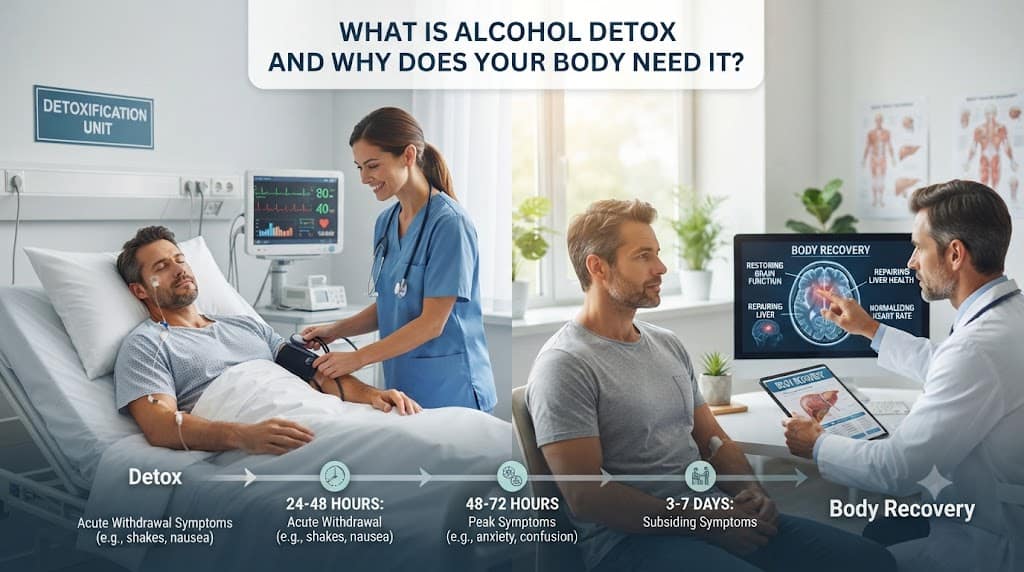
Alcohol detox is the process of your body removing alcohol from your system while experiencing symptoms of alcohol withdrawal. Alcohol is a depressant that impacts brain chemistry. After an extended period of alcohol use, your brain gets used to functioning with the alcohol in your system; once it’s no longer there, you enter a state of hyperactivity that leads to shaking, sweating, anxiety, etc.
The Alcohol Detox Timeline: What to Expect Day by Day
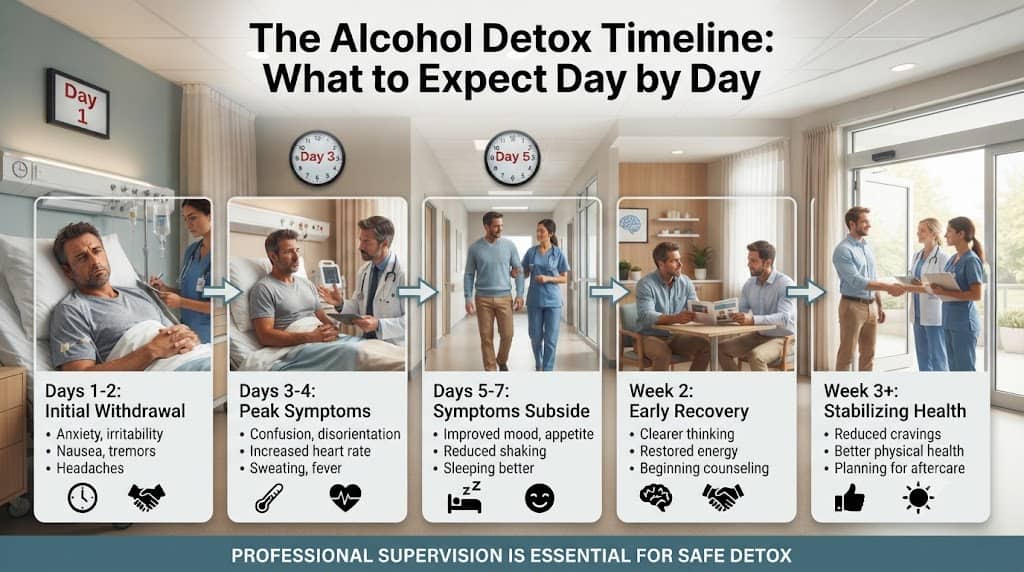
There’s a good chance that most people experience withdrawal in stages. Here’s a broad overview, but individual reports can differ.
- 6 to 12 hours after last drink: The above symptoms typically begin to occur. You might be anxious, irritable, nauseous, or shaky. Headaches, sweating, and sleep disturbances are also common.
- 12 to 24 hours: Effects may peak. Mild hallucinations: Seeing or hearing things that are not real, while still knowing something is wrong.
- 24 to 72 hours: Often referred to as the time period when symptoms are at their worst. Blood pressure, pulse, and temperature may increase. The seizure risk peaks during this period, from 48 hours after the last drink, but in some cases, the withdrawal can lead to a state called delirium tremens (DTs), a dangerous disorder that includes fever and hallucinations and may be fatal.
- 4 to 7 days: For most, these are the days when symptoms seem to settle. Sleep may still be inconsistent and mood may feel a little more fragile, but the storm of physical symptoms is subsiding.
- More than 1 week out: These symptoms can linger, feeling like low energy, anxiety, low mood and poor sleep. This is sometimes referred to as post-acute withdrawal syndrome (PAWS), and can last for weeks or, in some cases, months. It is not fun, but it will get better.
Now, to the real answer: it usually takes 5-7 days to get to the point of acute alcohol detox. Physical and emotional stabilization (not necessarily the same thing) takes longer.
Factors That Can Make Detox Shorter or Longer
Not all schedules work for everyone. There are a few factors that influence how detox plays out:
- Amount and duration of use: More of a substance for a longer time leads to more severe withdrawal.
- Previous withdrawal experiences: One round can increase the strength of the following round.
- General health: Issues such as liver disease, heart problems or illness.
- Mental health: Emotions such as anxiety, depression and trauma can alter the sensation of symptoms.
- Other drugs: Combining alcohol with sedatives or other drugs increases the risk.
For this reason, it doesn’t make a whole lot of sense to compare your plan to someone else’s.
Why Medical Supervision Matters During Alcohol Withdrawal
It’s not the same as other drugs: alcohol withdrawal is not to be taken lightly. Seizures and DTs can occur rapidly and out of nowhere, so doing a self-detox at home puts you in jeopardy if you are a heavy drinker, especially with long-term use.
Your clinical team is there to watch over your vital signs, make sure you are well hydrated and may give you medications to alleviate the symptoms and possibly prevent certain complications. They are able to intervene immediately if anything changes. Do not stop suddenly by yourself, speak to your doctor or treatment provider if you want to stop.
What Happens After Detox: Treatment and Ongoing Recovery Support
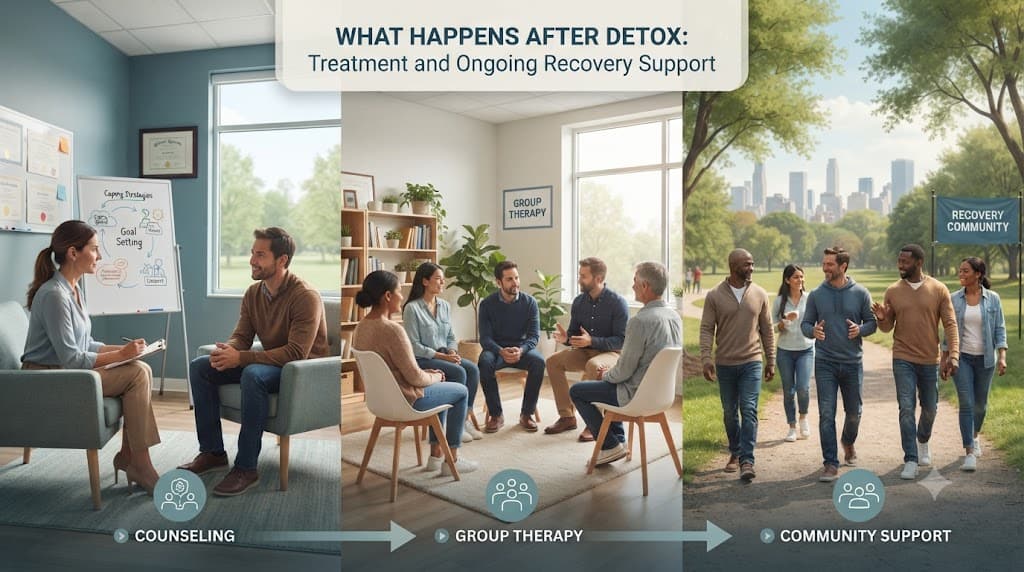
Here’s something many people don’t realize: detox clears alcohol from your body, but it doesn’t address why you started drinking or how to stay sober. That’s where the next phase comes in.
After detox, most people benefit from some form of continued treatment, such as:
- Residential or InPatient Treatment: A live-in, highly structured treatment program with therapies, education, and peer support.
- Partial hospitalization or intensive outpatient programs: A few hours of therapy a few days a week. Although you live at home.
- Ongoing outpatient care: Ongoing therapy that is tailored to accommodate a family and work schedule.
Therapy is a key component. For example, cognitive behavioral therapy (CBT) can teach you to identify and manage triggers, and motivational interviewing can reinforce your desire to change. Many individuals also turn to prescription medications approved by the Food and Drug Administration (FDA) to decrease cravings for and discourage relapse to alcohol use.
Continuous care or support groups such as Alcoholics Anonymous or SMART Recovery offer a sense of community and accountability. Sleep, diet, exercise, and repairing relationships may be crucial to long-term recovery as well. Because cravings and emotional swings can persist for some time, having an aftercare plan makes a difference.
Conclusion: Detox Is the First Step, Not the Whole Journey
Alcohol detox takes roughly one week but recovery lasts much longer than that. That first week may be hard but if it’s managed with medical assistance and guidance, it’s something that can be made through and from there is where the real recovery can set in. Whether you’re the loved one in need of a way out or the one who’s ready to ask for help with the fight, Pine Meadows Recovery is here to help you get the treatment that’s going to help you win.
Contact Details
- Website: Pine Meadows Recovery
- Phone: (262) 233-4168
- Email: info@pinemeadowsrecovery.com
- Address: 4633 Washington Rd., Kenosha, WI 53144, USA
FAQs
How long does alcohol detox take?
The maximum days for most people are 5 to 7 days, which is the number of days it takes for severe withdrawal symptoms to get to their worst. Symptoms tend to begin 6-12 hours after the last drink, peak in 24-72 hours, and then resolve. However, this can be longer for some.
Why does it take that long?
Your brain gets used to the persistent alcohol. You take alcohol away, and your entire nervous system is suddenly firing away until it resets, and that reset can take days.
Is it safe to detox at home on my own?
No, it can even be deadly. Unlike other substances, withdrawal from alcohol can cause seizures and delirium tremens (DTs), which can be deadly. It is important to speak to a doctor before quitting if you are a daily drinker or heavy drinker, have a history of alcohol withdrawal, or other health issues.
Do I really need medical supervision?
Outpatient detox may be possible if you have mild symptoms and a low-risk history, with a doctor’s approval for check-ins. If you have a history of seizures, DTs, serious withdrawal symptoms, or if you drink heavily, a supervised detox is highly advisable.
What are the warning signs that I need emergency help?
Contact emergency services or proceed immediately to the ER if you experience seizures, extreme confusion, hallucinations, rapid heartbeat, high fever or uncontrolled vomiting.
What happens during medical detox?
Medical staff check your vitals and may give you medicines, such as benzodiazepines, to prevent seizures and alleviate symptoms. You will typically also receive fluids, nutritional support, and thiamine (vitamin B1). The focus is on keeping you safe and as comfortable as possible.
What symptoms should I expect?
Some common ones are anxiety, tremors, sweating, nausea, headaches, sleep difficulty, irritability, and cravings. Symptoms can range from mild to severe.
Will it hurt or feel awful?
It might be uncomfortable, but the medical teams have good tools for minimising the symptoms. Many people say it was easier than they feared when they had support.
Will I still have symptoms after the week is over?
Maybe. There are post-acute withdrawal symptoms such as sleep problems, mood swings, anxiety, and lethargy, which can persist for weeks or even months. They do get better over time and with good sleep, exercise, diet, and social connection.
When will I start feeling like myself again?
Most people will experience improvements in sleep, energy and mental function within weeks. Recovery of the entire body is a longer process that can take several months and that’s normal.