
Understanding Wisconsin’s Alcohol Treatment Landscape
Wisconsin alcohol treatment centers offer a range of evidence-based programs to help individuals overcome alcohol addiction, from medical detox and residential care to outpatient therapy and aftercare support. With 199 licensed facilities statewide, Wisconsin provides options for every budget and recovery need—including specialized programs for veterans, LGBTQ+ individuals, and those with co-occurring mental health conditions.
Top Wisconsin Alcohol Treatment Centers at a Glance:
| Feature | What to Look For |
|---|---|
| Licensing | DHS 75 certification and Joint Commission accreditation |
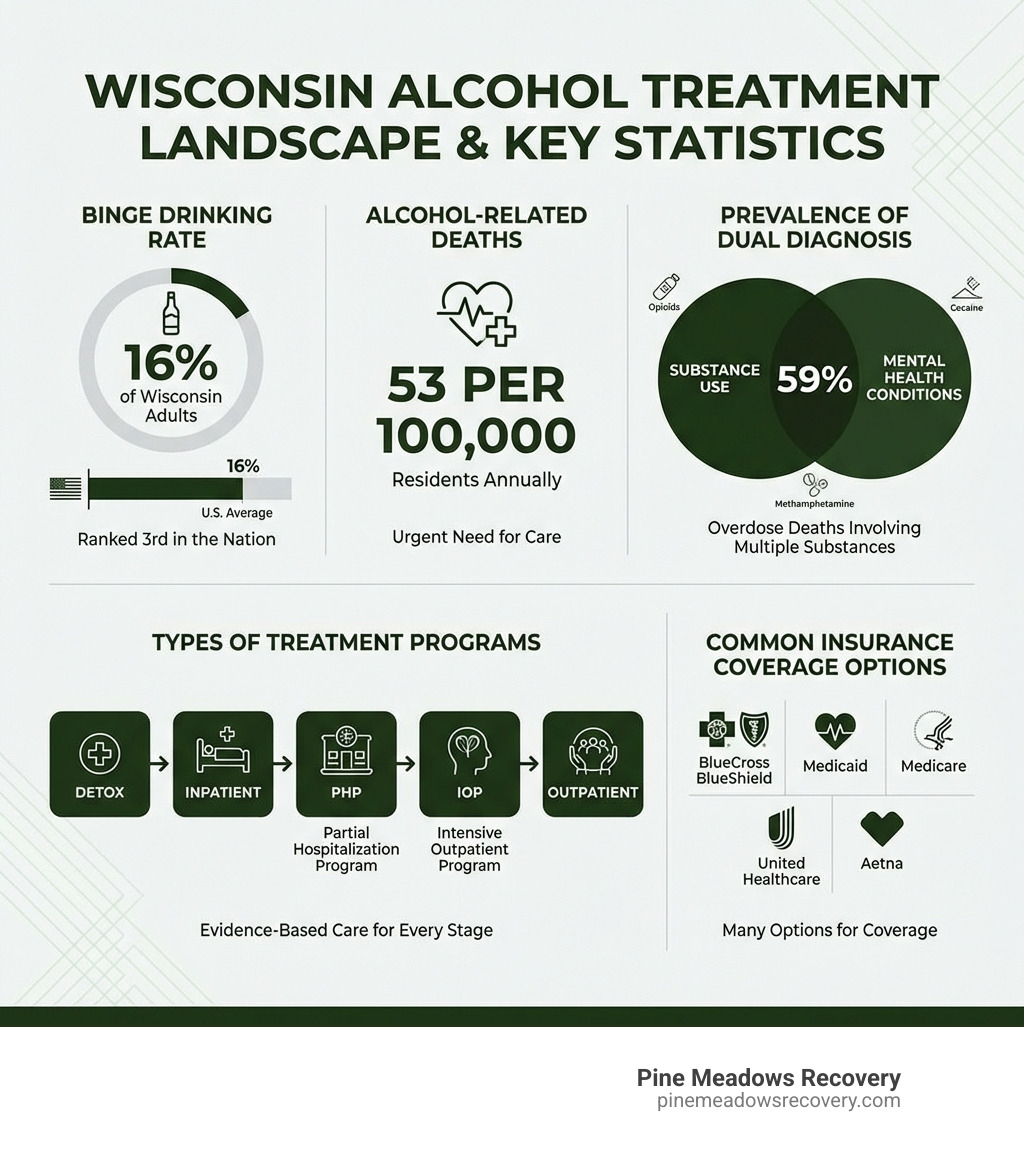
| Treatment Levels | Medical detox, inpatient, PHP, IOP, and outpatient care |
| Insurance | Accepts BlueCross BlueShield, Medicaid, Medicare, United Healthcare, Aetna |
| Specialized Care | Dual diagnosis support, trauma-informed therapy, medication-assisted treatment |
| Location Options | Milwaukee, Madison, Kenosha, Green Bay, and rural communities |
The need for quality care in Wisconsin is urgent. Alcohol is responsible for at least 53 deaths per 100,000 residents in the state, and 16% of all Wisconsin adults engage in binge drinking—ranking third in the nation. Even more concerning, approximately 59% of all overdose deaths in Wisconsin involve multiple substances, often including alcohol combined with opioids, cocaine, or methamphetamine.
At Pine Meadows Recovery, we specialize in comprehensive Wisconsin alcohol treatment through our partial hospitalization, intensive outpatient, and outpatient programs in Kenosha. Our evidence-based approach addresses the root causes of addiction while providing the flexible, compassionate care you need to build lasting recovery.
10 Essential Features of Top-Tier Wisconsin Alcohol Treatment
When we consider what makes a Wisconsin alcohol treatment center truly stand out, we look for a combination of clinical excellence, compassionate care, and a commitment to long-term recovery. It’s not just about stopping drinking; it’s about healing the whole person. Here are the ten essential features we believe define top-tier alcohol treatment in Wisconsin:

- Evidence-Based Care: The foundation of effective treatment lies in methods proven to work. This includes therapies like Cognitive Behavioral Therapy (CBT), Dialectical Behavioral Therapy (DBT), motivational interviewing, and other approaches approved by the Substance Abuse and Mental Health Services Administration (SAMHSA). These practices help individuals identify triggers, develop coping mechanisms, and change problematic thought patterns.
- Medical Detox Services: For many individuals struggling with alcohol addiction, the first crucial step is safely managing withdrawal symptoms. Medical detox provides 24/7 medical supervision to ensure comfort and safety during this challenging period. Alcohol withdrawal can be dangerous, even life-threatening, without professional care, making medical detox a necessary component for those with a physiological dependence.
- Dual Diagnosis Support: Often, alcohol addiction co-occurs with other mental health conditions like anxiety, depression, PTSD, or bipolar disorder. Top programs recognize this and offer integrated dual diagnosis treatment, addressing both the substance use disorder and the underlying mental health issues simultaneously for more effective and lasting recovery.
- Trauma-Informed Therapy: Many individuals with addiction have experienced trauma. Trauma-informed care acknowledges the role trauma plays in addiction and integrates therapies like Eye Movement Desensitization and Reprocessing (EMDR), Brainspotting, and Psychodrama to help process past experiences and heal.
- 12-Step Integration: For decades, 12-step programs like Alcoholics Anonymous (AA) have provided a powerful framework for recovery, emphasizing peer support, spiritual growth, and personal accountability. Many leading Wisconsin treatment centers integrate 12-step principles into their programs, offering guidance and fostering community connections. Some even offer unique interpretations and specialized curricula designed to make 12-step principles more accessible and effective, which can lead to higher abstinence rates.
- SMART Recovery Options: Recognizing that one size doesn’t fit all, the best centers also offer alternatives to 12-step programs, such as SMART Recovery. This self-management and recovery training approach focuses on self-empowerment, self-reliance, and cognitive-behavioral tools to manage urges and achieve sobriety.
- Family Involvement: Addiction impacts the entire family unit. Comprehensive programs include family therapy and educational components to help loved ones understand addiction, heal relationships, and build a supportive environment for recovery. This broad view of “family” can extend beyond immediate relatives to include any strong support system.
- DHS 75 State Licensing: In Wisconsin, the state licenses and regulates substance use treatment programs under Wis. Admin. Code ch. DHS 75. This ensures that facilities meet specific standards for safety, quality of care, and professional conduct. We always recommend choosing a licensed facility. The Wisconsin Department of Health Services provides a directory of these regulated programs.
- Aftercare Planning: Recovery is a lifelong journey, not just a destination. High-quality programs prioritize robust aftercare planning to prevent relapse. This includes connecting individuals with sober living options, support groups, individual counseling, and alumni programs to maintain sobriety and steer challenges after completing primary treatment.
- Experienced Clinical Staff: The expertise and compassion of the treatment team are paramount. Look for centers staffed by qualified nurses, dieticians, psychiatrists, and counselors who specialize in addiction and mental health. Their dedication and experience can make a profound difference in the recovery process.
Comparing Inpatient vs. Outpatient Wisconsin Alcohol Treatment
When considering Wisconsin alcohol treatment, one of the first decisions an individual or family faces is choosing between inpatient and outpatient settings. Both have distinct advantages, and the “best” option depends entirely on individual needs, the severity of the addiction, and personal circumstances.
- Residential Care (Inpatient Rehab): This is the most intensive level of care, where individuals live at the treatment facility 24/7 for a period typically ranging from 30 to 90 days. Inpatient programs offer a highly structured environment, removing individuals from triggers and providing constant medical and therapeutic support. This setting includes daily schedules packed with individual and group therapy, educational sessions, and recreational activities. For those with severe addiction, co-occurring mental health disorders, or unstable home environments, inpatient care provides the necessary immersion and supervision to initiate recovery. Expect belongings to be searched upon arrival to ensure safety, creating a secure space for healing.
- Partial Hospitalization Programs (PHPs): Often referred to as “day treatment,” PHPs offer a step-down from inpatient care or a more intensive alternative to standard outpatient. Participants attend therapy sessions for several hours a day, multiple days a week, but return home or to a sober living environment in the evenings. PHPs provide significant structure and support while allowing individuals to maintain some connection to their daily lives.
- Intensive Outpatient Programs (IOPs): IOPs offer a flexible treatment option for those who require structured support but can manage without 24/7 supervision. They involve fewer hours per week than PHPs, typically attending therapy sessions three to five days a week for a few hours per day. IOPs are ideal for individuals transitioning from higher levels of care or those with strong support systems at home who need to balance treatment with work, school, or family responsibilities.
- Standard Outpatient: This is the least intensive level of care, involving weekly therapy sessions and support groups. It’s suitable for individuals with mild substance use disorders, those in stable recovery who need ongoing support, or as a long-term aftercare option. It offers the most treatment flexibility, allowing individuals to fully integrate therapy into their daily routines.
24/7 Supervision is a hallmark of inpatient and medical detox settings, crucial for managing severe withdrawal symptoms and providing a safe, controlled environment. This level of oversight significantly reduces the risk of relapse during the critical early stages of recovery.
Treatment Flexibility, on the other hand, is a key benefit of outpatient programs. These options allow individuals to continue living at home, attending work or school, and maintaining family responsibilities while receiving the necessary therapeutic support. This flexibility can make long-term recovery more sustainable and integrated into daily life.
To determine the most appropriate setting, a professional diagnosis of a substance use disorder is essential. According to the DSM-5, a substance use disorder is diagnosed by a professional assessing if at least two specific criteria (such as using more than intended, craving, or continued use despite negative consequences) occurred within a 12-month period. The severity (mild, moderate, or severe) is determined by the number of symptoms present, guiding the recommendation for the most effective level of care.
Specialized Wisconsin Alcohol Treatment for Diverse Populations
At Pine Meadows Recovery in Kenosha, we understand that recovery is not a one-size-fits-all journey. Different individuals face unique challenges and require custom approaches. This is why many Wisconsin alcohol treatment centers offer specialized programs designed to meet the specific needs of diverse populations.
- Veteran-Specific Care: Our veterans often carry the invisible wounds of war, including PTSD, anxiety, and depression, which can contribute to substance use disorders. Specialized programs for veterans, sometimes offered through VA-run facilities, address military-specific trauma and provide a supportive environment where shared experiences can foster healing and camaraderie.
- LGBTQ+ Inclusive Programs: Members of the LGBTQ+ community are about twice as likely to struggle with substance use disorders compared to the general population, often due to experiences of discrimination, stigma, and lack of acceptance. SocialWorkToday community insights highlight the need for safe, affirming spaces. LGBTQ+ inclusive programs offer culturally competent care, addressing unique challenges and providing a supportive environment free from judgment.
- Gender-Specific Tracks: Many individuals find comfort and feel more open to sharing in gender-specific settings.
- Men-Only Rehabs can provide a space for men to express vulnerability, address issues like societal pressures or anger management, and build supportive relationships without the perceived need to maintain a certain image.
- Women-Only Rehabs often address issues specific to women, such as domestic violence, intimate partner violence, trauma, or maternal responsibilities. These programs can foster a sense of safety and sisterhood, allowing women to focus on healing without distractions.
- Age-Appropriate Teen Programs: Adolescents face unique developmental challenges, peer pressure, and academic stress that can contribute to substance use. Teen-specific programs are designed with age-appropriate therapies and activities, helping young people develop healthy coping tools and address academic difficulties while navigating their transition to adulthood.
- Faith-Based Recovery: For individuals whose faith is central to their lives, faith-based programs integrate spiritual principles, prayer, and religious texts into the recovery process. These programs offer a holistic approach that nurtures the spirit alongside the mind and body.
The pros of specialized programs are clear: they provide a more targeted, empathetic, and effective treatment experience by addressing specific cultural, social, and psychological factors. The cons might include limited availability in certain geographic areas or a narrower focus that might not suit everyone. However, for those who fit the criteria, these programs can be incredibly powerful in fostering a sense of belonging and understanding, which is crucial for lasting recovery.
Costs, Insurance, and Financial Assistance for Rehab
Understanding the financial aspects of Wisconsin alcohol treatment can feel overwhelming, but we want you to know that quality care is accessible. Cost should never be a barrier to seeking help.
- Private Health Insurance: Many private insurance plans offer substantial coverage for addiction treatment. Thanks to the Mental Health Parity and Addiction Equity Act (MHPAEA), insurers are required to cover mental health and substance use disorder benefits comparably to medical and surgical benefits. When using private insurance, it’s crucial to understand your plan’s specifics, including deductibles, co-pays, and whether a facility is in-network or out-of-network. In-network providers typically result in lower out-of-pocket costs. At Pine Meadows Recovery, we offer a straightforward insurance verification process to help you understand your benefits quickly and confidentially.
- Medicaid Coverage: Wisconsin Medicaid (BadgerCare Plus) provides comprehensive coverage for substance use disorder treatment for eligible residents. This can include detox, inpatient, outpatient, and residential services. While Medicaid covers essential treatment components like assessment, counseling, and medication management, it’s important to note that it typically does not cover room and board expenses in residential settings. Always verify with the specific facility to confirm their acceptance of Medicaid.
- Medicare Parts A and B: Medicare also offers coverage for alcohol addiction treatment, though the specifics depend on the part of Medicare you have.
- Medicare Part A (Hospital Insurance) can cover inpatient alcohol addiction treatment, including the costs of a semi-private room, meals, nursing services, and other hospital services for up to 60 days.
- Medicare Part B (Medical Insurance) helps cover outpatient services, such as doctor visits, individual and group therapy, and other medical services. Typically, Part B covers 80% or less of the approved cost after you meet your deductible.
- Sliding Scale Fees: Many treatment centers, particularly non-profit organizations, offer programs with sliding scale fees. This means the cost of treatment is adjusted based on your income and ability to pay, making care more affordable for those with limited financial resources.
- Rehab Scholarships: Some facilities or non-profit organizations offer scholarships or grants to help cover the cost of treatment for individuals who cannot afford it. These can be facility-provided, corporate-funded, or offered by charitable organizations. Inquiring directly with treatment centers about scholarship opportunities is a great first step.
- State-Funded Grants: Wisconsin, like other states, receives federal and state grants to support addiction treatment services. These funds often go towards state-funded facilities or programs that offer free or low-cost treatment to eligible individuals, typically requiring proof of residency, income level, and lack of health insurance. The Wisconsin Department of Health Services can provide information on these resources.
We believe that financial concerns should never prevent someone from getting the help they need. Our team at Pine Meadows Recovery is dedicated to helping you steer these options.
Wisconsin Substance Use Statistics and Legal Protections
Understanding the current landscape of alcohol and drug use in Wisconsin, along with the legal framework surrounding it, is crucial for anyone seeking or providing Wisconsin alcohol treatment.
Wisconsin faces significant challenges with substance use.
- Binge Drinking Rates: The state ranks third in the nation for binge drinking, with 16% of all Wisconsin adults engaging in this risky behavior. This high rate contributes to the fact that alcohol was attributed to at least 53 deaths per 100,000 residents in Wisconsin as of 2020.
- Multi-Substance Overdose Data: A stark reality in Wisconsin is that approximately 59% of all overdose deaths were caused by multiple substances, often involving alcohol alongside opioids, cocaine, and methamphetamine. This highlights the complex nature of addiction and the need for comprehensive treatment approaches that address polydrug use. Between 2018 and 2020, opioid-related deaths in Wisconsin increased by 45.6%, and emergency room visits for opioid-related overdoses rose by 23.6%. Cocaine-related deaths also saw a significant increase, with 397 deaths in 2020 alone.
Beyond the statistics, Wisconsin has implemented important legal protections and initiatives for individuals facing substance use challenges:
- Good Samaritan Law Immunity: Wisconsin’s Good Samaritan Law Amendment, passed in 2013, provides limited immunity from prosecution for individuals who call 911 in response to a substance overdose. This law aims to encourage people to seek life-saving help without fear of legal repercussions, prioritizing saving lives over minor drug offenses.
- Naloxone Access: A Wisconsin statute from May 2021 allows for the administration of naloxone (Narcan), an opioid overdose reversal medication, without a prescription. This means trained bystanders can legally carry and administer naloxone, significantly increasing the chances of survival during an opioid overdose, which often involves multiple substances.
- Client Rights: Individuals seeking or receiving substance use treatment in Wisconsin are protected by specific client rights under state law, including Wis. Stat. §§ 51.30 and 51.61. These statutes ensure privacy, dignity, and the right to informed consent, among others. The Client Rights Office provides advice and assistance to those receiving services for mental health or substance use, and offers a channel for complaints.
- Opioid Settlement Fund Allocation: While efforts are underway to combat the opioid crisis, some observers have voiced concerns about the allocation of Wisconsin’s opioid settlement funds. For instance, only a small portion of the initial $31 million went directly to prevention and intervention programs. Instead, some funds were directed towards initiatives like vending machines for testing strips and gun locks. While harm reduction is vital, the sentiment among some experts is that more direct intervention programs are needed statewide, particularly in underserved rural areas.
These laws and insights paint a picture of a state actively struggling with substance use, striving to provide both treatment and protection for its citizens.
Frequently Asked Questions About Alcohol Rehab in Wisconsin
We often hear similar questions from individuals and families beginning their search for Wisconsin alcohol treatment. Let’s address some of the most common ones to help clarify the path forward.
How do I find a suitable alcohol rehab center in Wisconsin?
Finding the right alcohol rehab center in Wisconsin involves a few key steps to ensure the program meets your unique needs:
- Assess Your Needs: Consider the severity of the addiction, any co-occurring mental health conditions, your living situation, and personal preferences (e.g., gender-specific, faith-based, 12-step vs. SMART Recovery).
- Use State Resources:
- The Wisconsin Addiction Recovery Helpline (call 211, text your ZIP code to 898211, or visit addictionhelpwi.org) is an excellent starting point. This toll-free service can help you find licensed facilities near you and offers online chat.
- The Wisconsin Department of Health Services (DHS) provides a directory of licensed community substance use services providers. You can view this directory as an Excel or PDF document on their website.
- The Provider Search tool on the 211 Wisconsin website allows you to filter results for specific types of facilities, including substance use treatment.
- Explore Online Directories: Resources like the Shatterproof Treatment Atlas allow you to compare treatment facilities based on quality of care, protocols, types of treatments offered, and accepted payment options.
- Consider Location: Do you want to stay close to home, perhaps in Kenosha where Pine Meadows Recovery is located, or travel to a different part of the state for a fresh start? Traveling for rehab can sometimes provide a necessary change of environment, removing individuals from triggers and negative influences.
- Verify Licensing and Accreditation: Always ensure a facility is licensed by the Wisconsin DHS (under Wis. Admin. Code ch. DHS 75) and ideally accredited by reputable bodies like The Joint Commission.
- Inquire About Insurance and Cost: Discuss payment options and verify your insurance coverage upfront. Don’t hesitate to ask about sliding scale fees, scholarships, or payment plans.
By taking these steps, you can confidently steer the options and find a Wisconsin alcohol treatment center that’s the right fit for you or your loved one.
Does insurance cover alcohol addiction treatment in Wisconsin?
Yes, generally, insurance does cover alcohol addiction treatment in Wisconsin, largely due to federal and state mandates designed to ensure access to care.
- Federal Mandates: The Mental Health Parity and Addiction Equity Act (MHPAEA) requires most group health plans and health insurance issuers to ensure that financial requirements (like co-pays and deductibles) and treatment limitations (like visit limits) for mental health and substance use disorder benefits are no more restrictive than those for medical and surgical benefits. This means your insurance should cover addiction treatment on par with other medical conditions.
- Private Insurance: Most private health insurance plans, including major providers like Blue Cross Blue Shield, UnitedHealthcare, Aetna, Cigna, and Humana, offer coverage for various levels of alcohol addiction treatment, from detox and inpatient care to outpatient programs. Coverage specifics, such as in-network vs. out-of-network benefits and out-of-pocket maximums, will vary by plan. It’s always best to call your insurance provider directly or use a facility’s insurance verification service to understand your exact benefits.
- Medicaid (BadgerCare Plus): Wisconsin’s Medicaid program, BadgerCare Plus, covers comprehensive substance use disorder treatment services for eligible individuals. This includes residential, inpatient, and various outpatient programs. While it covers the clinical aspects of treatment, it typically does not cover room and board for residential care.
- Medicare: Medicare also provides coverage for alcohol addiction treatment.
- Part A covers inpatient hospital stays, including medically necessary detox and residential treatment.
- Part B covers outpatient services, such as doctor visits, individual and group therapy, and other medical services provided in an outpatient setting.
- Low-Cost and Free Options: For those without insurance or with limited financial means, Wisconsin offers state-funded rehab programs, grants, and facilities with sliding scale fees. The Wisconsin Addiction Recovery Helpline can connect you with these resources.
We at Pine Meadows Recovery encourage you to check your coverage; it’s likely more comprehensive than you think, and our team is here to help you understand your benefits.
What is medical detox and when is it necessary?
Medical detox, or medically supervised detoxification, is the process of safely and comfortably withdrawing from alcohol under the care of medical professionals. It’s often the crucial first step in Wisconsin alcohol treatment for many individuals.
- What it is: During medical detox, a team of doctors and nurses monitors your vital signs 24/7, administers medications to alleviate withdrawal symptoms, and provides supportive care. The goal is to manage the physical symptoms of withdrawal, prevent complications, and prepare you for the next phase of treatment.
- When it’s necessary: Medical detox is highly recommended, and often essential, for individuals with moderate to severe alcohol dependence. Chronic or heavy alcohol use can lead to significant physiological changes, and suddenly stopping can trigger a range of withdrawal symptoms, including:
- Tremors (shaking)
- Nausea and vomiting
- Headaches
- Sweating
- Anxiety and agitation
- Hallucinations (auditory, visual, or tactile)
- Seizures
- Delirium Tremens (DTs), a severe and potentially fatal form of alcohol withdrawal characterized by confusion, rapid heart rate, and fever.
Attempting to detox from alcohol alone or without medical supervision can be dangerous and even life-threatening due to the risk of seizures, DTs, and other severe complications. Medical detox ensures your safety and comfort, making the withdrawal process as manageable as possible before you transition into therapy and long-term recovery. At Pine Meadows Recovery, we understand the importance of safe detox and can guide you to appropriate services before beginning our evidence-based treatment programs.
Conclusion
The journey to recovery from alcohol addiction is a profound one, and finding the right Wisconsin alcohol treatment is a critical first step. As we’ve explored, Wisconsin offers a diverse landscape of treatment options, from intensive inpatient care to flexible outpatient programs, all underpinned by a commitment to evidence-based practices and compassionate support. The state’s unique challenges with binge drinking and multi-substance use underscore the urgent need for accessible, high-quality care, and its legal protections aim to support those seeking help.
Recovery is not a sprint, but a marathon. Long-term sobriety is built on a foundation of comprehensive treatment, robust aftercare, and ongoing support. Options like sober living environments, regular participation in support groups, individual counseling, and alumni programs are vital for relapse prevention and maintaining a healthy, fulfilling life beyond treatment.
At Pine Meadows Recovery in Kenosha, we are dedicated to guiding individuals through this transformative process. Our evidence-based, holistic, and personalized programs for alcohol abuse and co-occurring disorders are designed to address the root causes of addiction, equipping you with the tools and resilience needed for lasting healing. We understand the complexities of addiction and are here to offer the compassionate, client-centered care you deserve.
If you or a loved one are ready to take the courageous step towards a healthier future, we invite you to start your journey with Wisconsin alcohol abuse treatment with us. Recovery is possible, and a brighter horizon awaits.