
Finding the Right Intensive Outpatient Programs (IOP) in Kenosha WI
Intensive Outpatient Programs (IOP) in Kenosha WI give people battling addiction or mental health challenges a way to get serious, structured treatment — without putting their entire life on hold. When searching for the best care in the Kenosha area, it is important to find a provider that offers a comprehensive range of services tailored to your specific recovery needs.
If you’re struggling with addiction or a mental health condition, IOP could be the right level of care for you — especially if you need more support than weekly therapy but don’t require a residential stay.
IOP programs typically involve:
- 3–5 days per week of structured treatment sessions
- 2–4 hours per session of group and individual therapy
- Evidence-based therapies like CBT and DBT
- Flexible morning, afternoon, or evening scheduling
Most major insurance plans — including Medicaid and private insurers — cover IOP treatment in Wisconsin.
At Pine Meadows Recovery, we’re an addiction treatment center based right here in Kenosha, WI, offering flexible IOP alongside partial hospitalization and standard outpatient programs built around each person’s unique needs. As a local provider of Intensive Outpatient Programs (IOP) in Kenosha WI, we’ve helped individuals address the root causes of addiction through personalized, evidence-based care. We’ll break down the essential components of effective treatment so you can make a confident, informed choice.
Understanding the Benefits of Intensive Outpatient Programs (IOP) in Kenosha WI
When you are standing at the crossroads of recovery, choosing the right “level of care” can feel overwhelming. You might feel that weekly therapy isn’t enough to keep you on track, but the idea of checking into a residential facility for 30 days feels impossible due to work, school, or family commitments. This is exactly where Intensive Outpatient Programs (IOP) in Kenosha WI shine.
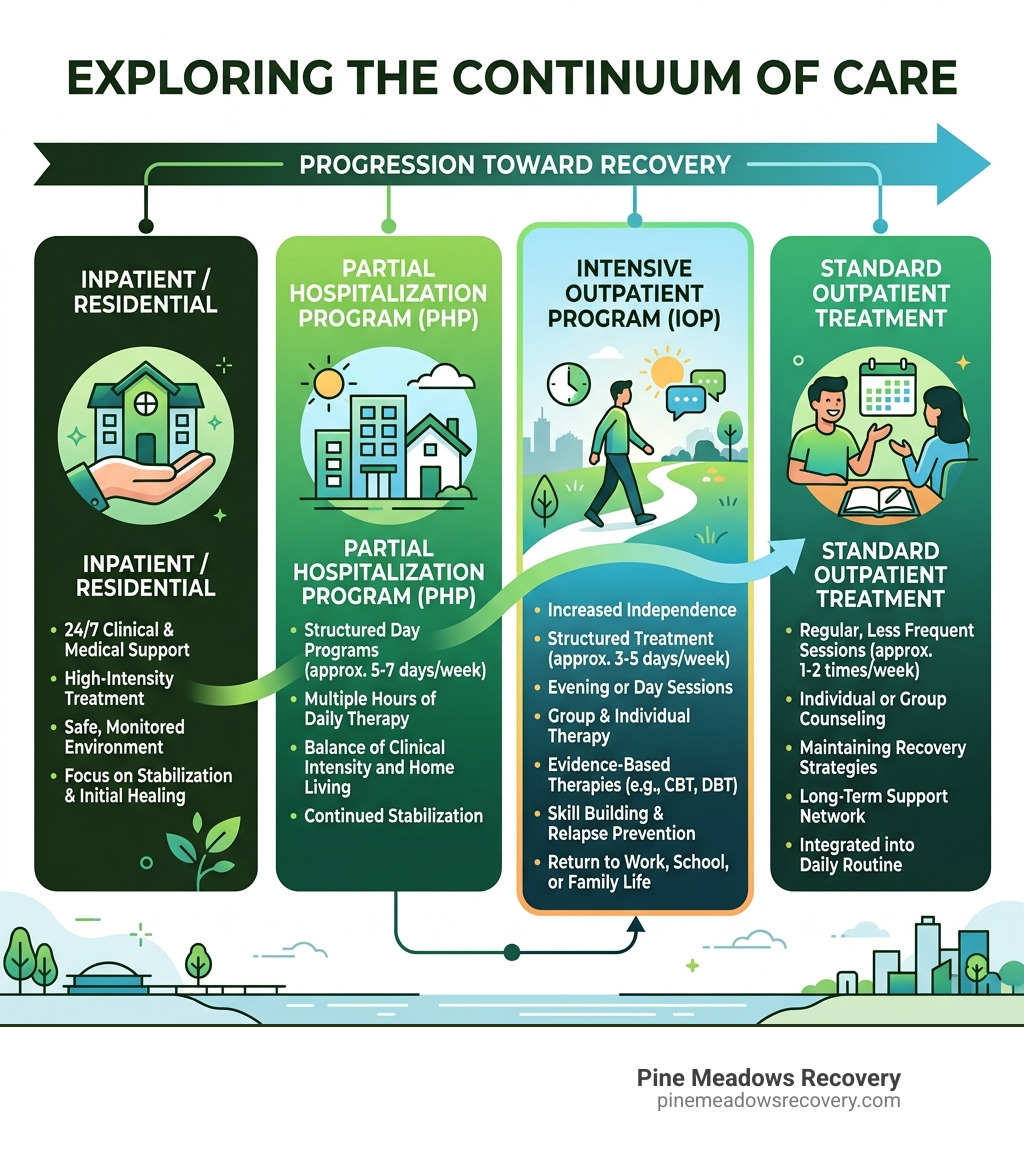
An IOP serves as a vital bridge in the continuum of care. It provides a high level of clinical support and structure while allowing you to sleep in your own bed at night. For many in our Kenosha community, this balance is the “sweet spot” that makes long-term recovery sustainable. Typically, these programs last between 8 to 12 weeks, though the duration is often adjusted based on your personal progress and clinical needs.
The primary benefit of an IOP is the ability to practice recovery skills in real-time. When you learn a new coping mechanism in a morning group session, you can go home that evening and apply it to a real-world stressor. This immediate application helps “cement” the lifestyle changes necessary for lasting behavioral health. More info on the Intensive Outpatient Program can help you determine if this structured yet flexible approach aligns with your current recovery goals.

Understanding Intensive Outpatient Programs (IOP) in Kenosha WI
To truly understand Intensive Outpatient Programs (IOP) in Kenosha WI, it helps to look at how they differ from other treatments. Unlike standard outpatient care, which might only involve one hour of therapy a week, an IOP requires a significant time commitment—usually 9 to 15 hours per week. This intensity allows for a “deep dive” into the underlying issues driving substance use or mental health struggles.
At the same time, it offers far more life balance than inpatient treatment. You aren’t cut off from the world. You can continue to walk your dog, cook dinner for your family, or even maintain a part-time job. It is evidence-based care that respects your autonomy. Explore Pine Meadows Recovery’s IOP options to see how we integrate these clinical hours into a schedule that works for local residents.
What to Expect in an Intensive Outpatient Program (IOP) in Kenosha WI
If you decide to enroll in an IOP, your days will be structured around several core therapeutic pillars. You won’t just be sitting in a circle talking; you will be actively building a “toolbox” of skills.
- Cognitive Behavioral Therapy (CBT): This is the gold standard for many programs. It helps you identify the connection between your thoughts, feelings, and behaviors. By changing the thought patterns that lead to cravings or depressive episodes, you change the outcome.
- Dialectical Behavior Therapy (DBT): Often used for emotion regulation and distress tolerance, DBT is incredibly helpful for those who feel overwhelmed by their feelings. It teaches mindfulness and how to navigate relationships more effectively.
- Group Therapy: This is the heart of the IOP experience. In Kenosha, these groups provide a safe, non-judgmental space where you can realize you aren’t alone. Peer support is a powerful motivator for change.
- Individual Counseling: While groups are essential, you also need one-on-one time with a therapist to process private concerns and tailor your treatment plan.
Learn more about our Behavioral Health Care to see how these modalities come together to create a comprehensive healing environment.
Key Features of Effective IOPs in Kenosha
Not all Intensive Outpatient Programs (IOP) in Kenosha WI are created equal. When comparing your options, look for programs that offer a “whole-person” approach. This means they don’t just look at the substance you are using; they look at your physical health, your emotional state, and your social support system.
| Feature | Importance in Recovery |
|---|---|
| Holistic Approach | Addresses mind, body, and spirit (yoga, nutrition, mindfulness). |
| Evidence-Based Therapy | Uses proven methods like CBT, DBT, and EMDR. |
| Dual Diagnosis Support | Simultaneously treats addiction and mental health (depression, anxiety). |
| MAT Availability | Offers Medication-Assisted Treatment for opioid or alcohol cravings. |
| Family Involvement | Includes family therapy to heal the entire support system. |
| Aftercare Planning | Ensures a “warm handoff” to support groups after the program ends. |
A standout feature in modern Kenosha programs is the inclusion of “experiential” therapies. This might include art therapy, which provides an outlet for expression when words aren’t enough, or skill-building workshops that focus on practical life skills like job interviewing or financial budgeting. Discover Pine Meadows Recovery’s Outpatient Addiction Services to see how we incorporate these essential features into our local programming.
Specialized Support for Co-occurring Disorders
Many people struggling with substance use are also dealing with an undiagnosed or untreated mental health condition, such as PTSD, bipolar disorder, or generalized anxiety. This is known as a dual diagnosis.
Effective Intensive Outpatient Programs (IOP) in Kenosha WI recognize that you cannot treat one without the other. If you only treat the addiction but ignore the underlying depression, the risk of relapse is significantly higher. Specialized programs offer integrated care, which includes medication management and trauma-informed sessions. Furthermore, for those struggling with opioid use disorder, Medication-Assisted Treatment (MAT) is often integrated into the IOP schedule to help alleviate withdrawal symptoms and reduce cravings, allowing the patient to focus fully on the therapeutic work.
Flexible Scheduling and Telehealth Options
In 2026, flexibility is no longer just a “perk”—it is a necessity. Local providers in Kenosha have adapted to meet the needs of a diverse workforce. Whether you are a parent who needs a morning session while the kids are at school, or a professional who needs an evening track after work, there are options available.
Virtual IOP and telehealth accessibility have also become standard. This is a game-changer for those with transportation barriers or those who live in the more rural parts of Kenosha County. Telehealth allows you to engage in high-quality group and individual therapy from the privacy of your own home, ensuring that work-life integration remains a priority throughout your recovery journey.
Eligibility and Admission for Intensive Outpatient Programs (IOP) in Kenosha WI
So, how do you know if you are eligible for an IOP? The process usually begins with a professional clinical assessment. A licensed counselor will sit down with you to discuss your history, current symptoms, and recovery goals.
To be admitted into an IOP, there generally needs to be a “medical necessity.” This doesn’t mean you have to be in a crisis; it simply means that a lower level of care (like once-a-week therapy) isn’t sufficient to help you meet your goals. IOPs in Kenosha serve a wide range of demographics, including:
- Adults looking to regain control of their lives and careers.
- Adolescents struggling with school, social pressure, or substance use.
- Veterans seeking specialized support for service-related trauma and moral injury.
The admission process is designed to be supportive, not intimidating. Explore Pine Meadows Recovery’s Outpatient Program options to learn more about how to take that first step toward an assessment.
Insurance and Financial Assistance Options
Cost should never be the barrier that stands between you and your health. Most Intensive Outpatient Programs (IOP) in Kenosha WI work with a variety of insurance providers. Common carriers accepted in the Wisconsin area include:
- Medicaid (ForwardHealth)
- Aetna
- BlueCross BlueShield / Anthem
- UnitedHealthcare
- TRICARE (for military families)
If you are uninsured or underinsured, many Kenosha clinics offer a “sliding scale” fee structure, where the cost of treatment is based on your income. Always ask for a “Verification of Benefits” (VOB) during your first call; the facility can usually tell you exactly what your out-of-pocket costs will be before you ever walk through the door.
Frequently Asked Questions About Kenosha IOPs
Can I continue working while in an IOP?
Yes! This is one of the primary reasons people choose Intensive Outpatient Programs (IOP) in Kenosha WI. Many programs offer “Evening Tracks” (often starting around 5:00 PM or 6:00 PM) specifically designed for working professionals. By maintaining your job, you keep your financial stability and a sense of routine, both of which are vital for long-term sobriety.
What conditions are commonly treated in these programs?
While many people associate IOP with drug and alcohol addiction, these programs are equally effective for primary mental health concerns. In Kenosha, you will find specialized tracks for:
- Depression and Mood Disorders
- Anxiety and Panic Disorders
- OCD (Obsessive-Compulsive Disorder)
- PTSD and Trauma-related issues
- Eating Disorders (Anorexia, Bulimia, Binge Eating)
How does IOP differ from Partial Hospitalization (PHP)?
The difference is mainly about time and intensity.
- PHP (Partial Hospitalization): Often called “Day Treatment,” this usually requires 5 to 6 hours a day, 5 days a week. It’s a step down from residential care.
- IOP (Intensive Outpatient): Usually 3 hours a day, 3 to 5 days a week. Many people use IOP as a “step-down” care level after completing a PHP or residential program to ensure they don’t lose momentum.
Conclusion: Taking the Next Step Toward Healing
Recovery is a journey, not a destination, and having the right map makes all the difference. Intensive Outpatient Programs (IOP) in Kenosha WI provide the structure, clinical expertise, and community support needed to navigate the challenges of addiction and mental health.
At Pine Meadows Recovery, we believe that every person deserves a personalized treatment plan that respects their unique story. Our holistic approach ensures that you aren’t just “quitting a habit”—you are building a new, fulfilling life. Whether you need the intensive support of a dual-diagnosis program or the flexibility of evening sessions, help is available right here in our Kenosha community.
You don’t have to do this alone. If you’re ready to break the cycle and start your journey toward long-term healing, start your journey with an Intensive Outpatient Program today. Reach out, ask questions, and take that first brave step toward the life you deserve.