Why Medication Assisted Treatment Offers Real Hope for Recovery
Medication Assisted Treatment (MAT) combines FDA-approved medications with counseling and behavioral therapies to treat substance use disorders.
What makes MAT different is that it supports recovery on multiple levels at once. Many people want to quit but feel trapped between painful withdrawal, intense cravings, and the stressors that contributed to substance use in the first place. MAT helps reduce those physiological barriers so you can fully engage in the day-to-day work of treatment, relationships, and rebuilding stability.
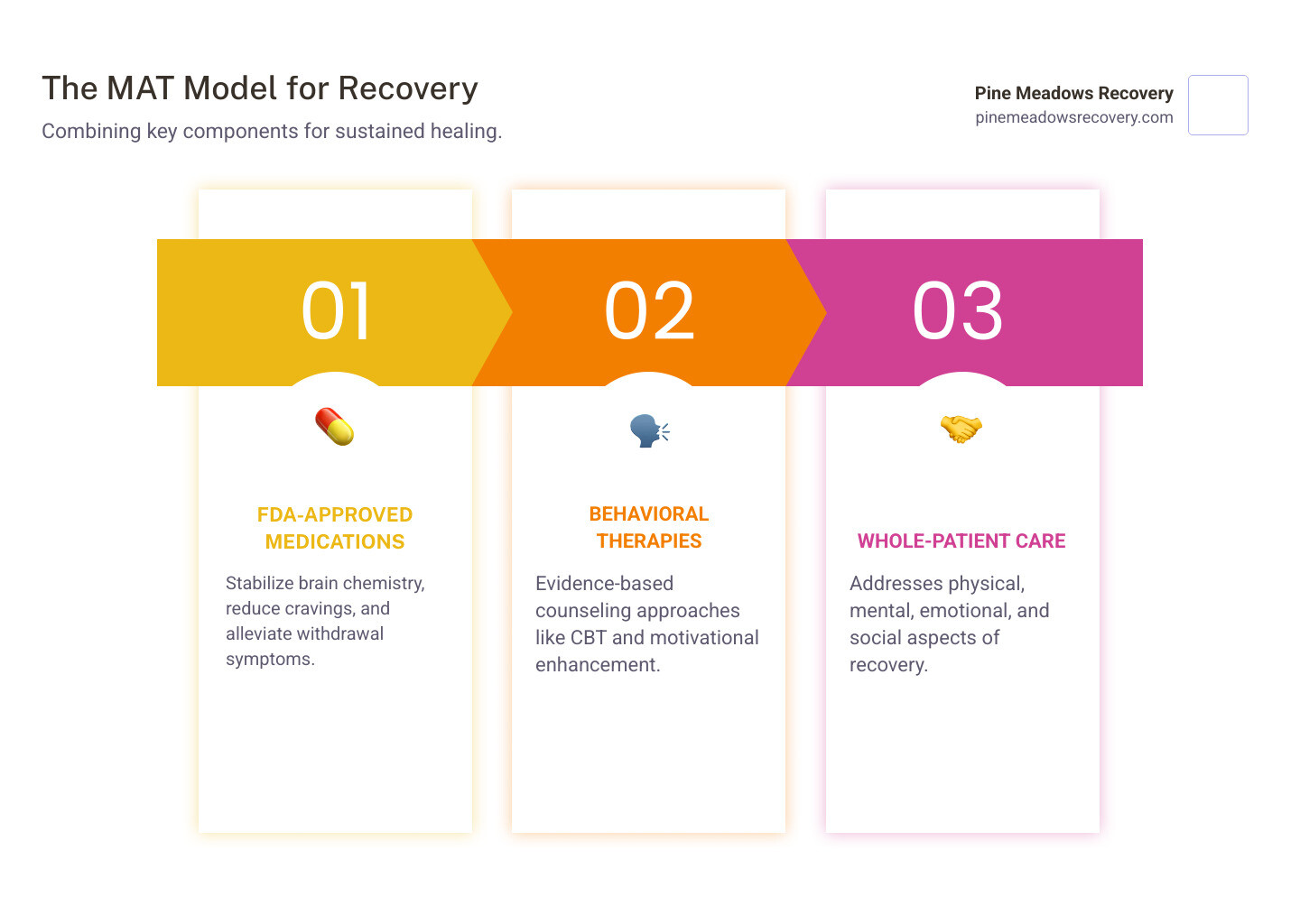
Key Components of MAT:
- Medications: FDA-approved drugs that normalize brain chemistry and prevent withdrawal.
- Behavioral Therapies: Evidence-based counseling like CBT and motivational improvement.
- Whole-Patient Approach: Addresses physical, mental, and social aspects of recovery.
Primary Benefits:
- Improved patient survival and treatment retention.
- Decreased illicit drug use and criminal activity.
- Reduced risk of overdose and infectious disease transmission.
- Better employment and birth outcomes.
MAT has been shown to improve survival rates and help people reclaim their lives. Despite the opioid epidemic claiming 47,600 lives in 2017, only 11% of patients with opioid use disorder receive FDA-approved medication. Research shows MAT can reduce emergency department visits by 51%.
The science is clear: medications do not replace one addiction with another. They restore more stable brain function, which can make it possible to participate in counseling, strengthen coping skills, and sustain healthy routines long enough for real change to take hold.
At Pine Meadows Recovery in Kenosha, Wisconsin, we integrate MAT into personalized treatment plans when clinically appropriate, combining pharmacological support with comprehensive therapies to address the root causes of addiction and support long-term recovery.
Understanding Medication Assisted Treatment
Medication Assisted Treatment (MAT) is an evidence-based approach combining pharmacological treatments with behavioral therapies. This “whole-patient” model is customized to address the multifaceted challenges of substance use disorders (SUDs).
The primary goals of MAT include:
- Normalize Brain Chemistry: Restores balance to reduce intense cravings and withdrawal symptoms.
- Alleviate Withdrawal: Eases physical discomfort, making the process safer. Explore our detoxification services.
- Reduce Cravings: Allows individuals to focus on recovery work without constant urges.
- Block Euphoric Effects: For OUD, some medications block the “high” associated with misuse.
- Improve Survival Rates: Significantly reduces the risk of overdose deaths.
- Increase Retention: Patients who feel physically stable are more likely to stay in treatment.
- Social Stability: Leads to decreased criminal activity and improved employment outcomes.
- Health Outcomes: Improves birth outcomes for pregnant women and reduces infectious disease transmission.
Extensive research, including guidelines from the Canadian Research Initiative in Substance Misuse (CRISM), supports MAT as a critical tool for managing OUD. Learn more about scientific research on OUD clinical management.
FDA-Approved Medications for AUD and OUD
MAT medications are clinically driven tools that stabilize brain chemistry and alleviate withdrawal. Prescriptions follow a thorough assessment, including physical exams and medical history reviews, managed by qualified professionals.
In rural areas like Kenosha, Wisconsin, access can be difficult; 30% of rural residents lack a buprenorphine provider. Integrating MAT into family medicine can bridge this gap. Explore scientific research on rural MAT implementation.
Medication Assisted Treatment for Alcohol Use Disorder
For alcohol use disorder (AUD), medications are combined with therapy to prevent relapse. Learn more about our alcohol abuse treatment.
- Acamprosate: Used after detoxification to reduce the emotional and physical distress of abstinence.
- Disulfiram: Creates an unpleasant physical reaction if alcohol is consumed, serving as a deterrent.
- Naltrexone: Blocks opioid receptors to reduce the pleasurable effects and cravings of alcohol.
| Medication | Mechanism of Action | Primary Benefit | When It’s Used |
|---|---|---|---|
| Acamprosate | Normalizes brain activity. | Reduces post-acute withdrawal distress. | After detox. |
| Disulfiram | Interferes with metabolism. | Deterrent to drinking. | For complete abstinence. |
| Naltrexone | Blocks opioid receptors. | Decreases cravings/reward. | During drinking or abstinence. |
Medication Assisted Treatment for Opioid Use Disorder
MAT for OUD helps individuals regain control by normalizing brain chemistry. Learn more about substance abuse help.
- Buprenorphine: A partial agonist that reduces cravings without a high. Often combined with naloxone (Suboxone) to prevent misuse.
- Methadone: A full agonist that prevents withdrawal; dispensed through certified programs.
- Naltrexone: An antagonist that blocks opioid effects; used after 7-10 days of being opioid-free.
- Naloxone: A life-saving medication used to reverse opioid overdoses.
The Whole-Patient Approach: Combining Medication with Therapy
At Pine Meadows Recovery, we combine medication with behavioral therapies to treat the “whole person.” Medication stabilizes the body, while therapy addresses the psychological triggers of addiction. This combination is more effective than medication alone.
Key therapies include:
- Cognitive Behavioral Therapy (CBT): Helps change negative thought patterns and develop coping skills.
- Contingency Management (CM): Uses rewards to reinforce positive behaviors like abstinence.
- Community Reinforcement Approach (CRA): Aims to make a sober lifestyle more rewarding than substance use.
- Motivational Improvement (ME): Strengthens the individual’s internal motivation to change.
- Group Therapy: Provides a supportive environment for sharing experiences and learning social skills.
This holistic care is vital for those with co-occurring disorders. We offer specialized dual diagnosis care and intensive outpatient programs for structured support.
The Journey of Recovery: Phases and Duration of MAT
MAT is a journey with distinct phases. Duration is individualized based on addiction severity and recovery progress. OUD is a chronic illness, and medications are safe for long-term use.
- Induction: The initial phase where medication starts. For buprenorphine, patients must be in moderate withdrawal (assessed via the COWS scale) to avoid discomfort.
- Stabilization: The dosage is adjusted to maintain comfort and prevent relapse, allowing the patient to focus on therapy.
- Maintenance: The longest phase, supporting long-term recovery. Research suggests 12-18 months, though some continue indefinitely. Tapering is a collaborative decision with a healthcare team.
It is important to distinguish between physical dependence (the body’s adaptation to a drug) and Opioid Use Disorder (compulsive use despite harm). MAT targets the disorder to restore healthy functioning. Our partial hospitalization programs provide intensive support during these critical phases.
Overcoming Barriers to Access and Insurance Coverage
Geographic barriers and provider shortages often limit MAT access in rural Wisconsin. DEA waiver requirements for buprenorphine, involving specialized training for providers, also restrict the number of patients treated in underserved areas.
Fortunately, the Mental Health Parity and Addiction Equity Act (MHPAEA) requires most insurance plans to cover MAT at the same level as medical care. At Pine Meadows Recovery, we assist with insurance verification to help you understand how your insurance likely covers rehab.
Resources for finding treatment include:
- SAMHSA’s National Helpline: 1-800-662-HELP (4357).
- FindTreatment.gov: Online locator for state-licensed providers.
- Buprenorphine Practitioner Locator: Tool to find authorized practitioners.
- Opioid Treatment Program Directory: Lists certified methadone programs.
Primary care physicians play a pivotal role in expanding MAT access, especially in rural communities.
Frequently Asked Questions about MAT
How long does Medication Assisted Treatment typically last?
MAT duration is highly individualized. It can last months, years, or a lifetime. Medications like buprenorphine are safe for long-term use and provide the best outcomes when continued as long as needed to prevent relapse. Tapering should only occur under medical supervision.
Does insurance cover the cost of MAT?
Yes, most plans cover MAT due to federal parity laws. This includes private insurance and many Medicaid programs. We can help you verify your specific benefits at Pine Meadows Recovery.
How does MAT help in preventing overdose deaths?
MAT stabilizes brain chemistry and reduces cravings, significantly lowering the use of illicit opioids like fentanyl. By reducing illicit use and providing a protective effect on brain receptors, MAT transforms a high-risk situation into a manageable chronic condition.
Conclusion
Medication Assisted Treatment offers a powerful, evidence-based pathway to recovery for individuals struggling with alcohol and opioid use disorders. It’s a testament to the scientific advancements in addiction medicine, combining the stabilizing effects of medication with the transformative power of behavioral therapies. This “whole-patient” approach addresses the complex interplay of biological, psychological, and social factors that contribute to substance use, offering a comprehensive solution for lasting healing.
At Pine Meadows Recovery in Kenosha, Wisconsin, we are committed to providing personalized, compassionate, and effective care. We integrate Medication Assisted Treatment into our diverse range of programs, ensuring that each individual receives the custom support they need to achieve and maintain sobriety. Our team of dedicated professionals understands the unique challenges faced by those in recovery and is here to guide you every step of the way. We believe in your ability to heal and thrive, offering a supportive environment where long-term recovery is not just a hope, but a tangible reality.
If you or a loved one are ready to accept a life free from the grip of substance use, we invite you to explore the possibilities that Medication Assisted Treatment can offer. Your journey to personalized healing and sustained well-being starts here.