
Opioid Addiction Treatment in Kenosha, WI: What You Need to Know
Opioid addiction treatment in Kenosha WI is more accessible than many people realize — and getting help is a process you can start today.
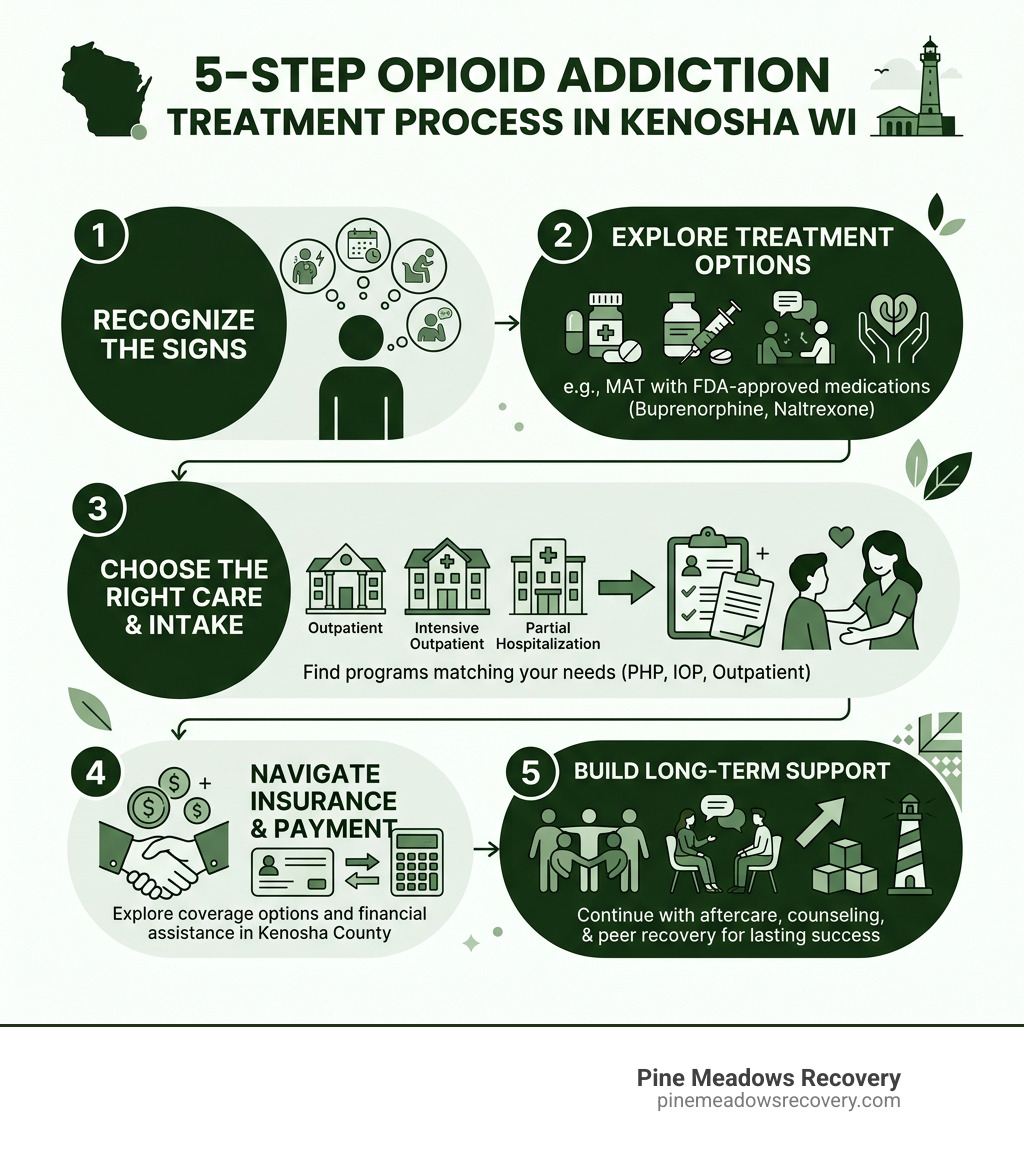
Here are the 5 steps to getting opioid addiction treatment in Kenosha, WI:
- Recognize the signs of opioid use disorder (OUD)
- Explore your treatment options, including medication-assisted treatment (MAT)
- Choose the right level of care and complete the intake process
- Navigate insurance and payment options to cover costs
- Build long-term support through aftercare, counseling, and peer recovery
Kenosha County has multiple dedicated treatment programs offering FDA-approved medications like methadone, buprenorphine (Suboxone), and naltrexone (Vivitrol), combined with counseling and support services. Whether you’re struggling with heroin, fentanyl, or prescription painkillers, effective, evidence-based help is available close to home.
Recovery is not a straight line — but it is possible. As one former patient put it: “This place saved my life. Yes it was hard and yes it took time, but you know it’s all worth it if you want to change.”
At Pine Meadows Recovery, we are a Kenosha-based addiction treatment center with deep experience providing opioid addiction treatment in Kenosha WI through flexible programs including Partial Hospitalization (PHP), Intensive Outpatient (IOP), and standard Outpatient care. Our team is here to guide you through every step of the recovery process, starting right now.
Step 1: Recognize the Signs of Opioid Use Disorder
The first step toward healing is acknowledging that a problem exists. Opioid Use Disorder (OUD) is a chronic brain disease, not a lack of willpower. In Kenosha County, we have seen the devastating impact of the opioid epidemic firsthand, with substances like fentanyl making the stakes higher than ever before. Fentanyl is a synthetic opioid so potent that even a tiny amount can be fatal, often found mixed into other illicit drugs without the user’s knowledge.
Recognizing the signs early can save a life. Physical symptoms often include:
- Noticeable drowsiness or “nodding out”
- Pinpoint pupils and slurred speech
- Changes in sleep patterns or sudden weight loss
- Frequent flu-like symptoms (nausea, sweating, shaking) when the drug wears off
Behavioral changes are equally telling. You might notice a loved one withdrawing from family activities, losing interest in hobbies they once loved, or experiencing sudden financial difficulties. There is often a “doctor shopping” phase for prescription pills or a shift toward more dangerous street drugs when prescriptions run out.
If you or someone you love is showing these signs, it is important to understand that what we treat encompasses the full spectrum of substance use. According to scientific research on OUD, early intervention significantly improves the chances of long-term success. Don’t wait for a “rock bottom” that might involve a dangerous overdose; the best time to seek help is the moment you realize something is wrong.
Step 2: Explore Opioid Addiction Treatment in Kenosha WI Options
Once you’ve identified the need for help, the next step is looking at the medical tools available. In Kenosha, we utilize Medication-Assisted Treatment (MAT), which is considered the “gold standard” for opioid recovery. MAT isn’t just “trading one drug for another”; it is the use of FDA-approved medications to stabilize brain chemistry, block the euphoric effects of opioids, and relieve the agonizing symptoms of withdrawal.
The most common medications used in Opioid addiction treatment in Kenosha WI include:
- Methadone: A long-acting opioid agonist that prevents withdrawal and reduces cravings. It has been used successfully for decades in highly structured clinic settings.
- Buprenorphine (Suboxone): A partial agonist that “fills” the brain’s opioid receptors just enough to stop cravings without producing a high. It often contains naloxone to prevent misuse.
- Naltrexone (Vivitrol): An antagonist that completely blocks opioid receptors. If someone uses an opioid while on Vivitrol, they won’t feel any effect. It is often administered as a once-monthly injection.
Comparison of MAT Medications
| Medication | Type | Administration | Primary Benefit |
|---|---|---|---|
| Methadone | Full Agonist | Daily Liquid/Pill | Highly effective for long-term heavy use |
| Suboxone | Partial Agonist | Daily Film/Tablet | Can be prescribed for home use; lower misuse risk |
| Vivitrol | Antagonist | Monthly Injection | Non-addictive; blocks all opioid effects |
If you are looking for a provider specifically for buprenorphine, you can find a practitioner near you through the national registry. Wisconsin currently has more than 700 health care professionals licensed to prescribe these life-saving medications.
The Role of MAT in Opioid Addiction Treatment in Kenosha WI
How does MAT actually work? Think of it as a bridge. When someone is addicted to opioids, their brain chemistry is physically altered. Quitting “cold turkey” causes intense physical pain and psychological distress that often leads straight back to use.
MAT stabilizes the brain, allowing the individual to focus on the “why” of their addiction through counseling. It reduces the risk of overdose and improves the likelihood that a person will stay in treatment long enough to heal. We believe that comprehensive substance abuse treatment must address both the physical dependence and the underlying emotional triggers.
Step 3: Select the Right Level of Care and Intake Process

Not every recovery journey looks the same. Choosing the right level of care depends on the severity of the addiction, the presence of co-occurring mental health issues, and the person’s home environment. In Kenosha, options range from high-intensity residential programs to flexible outpatient services.
- Inpatient/Residential Rehab: This involves living at a facility 24/7. It is often the best choice for those with a high risk of relapse or those who need a safe, drug-free environment to start their journey. You can explore 30-day inpatient rehab in Kenosha for more intensive needs.
- Partial Hospitalization Program (PHP): This is a “day treatment” model where you receive intensive therapy for several hours a day but return home at night.
- Intensive Outpatient Program (IOP): A step down from PHP, offering several sessions a week. This allows you to maintain work or school commitments while receiving professional support.
- Outpatient Treatment: Regular counseling and medical check-ins that fit into a standard daily routine.
The intake process at most Kenosha clinics is designed to be thorough but efficient. Usually, an intake appointment takes about four hours and includes a physical exam, a drug screening, and a deep dive into your medical history. This helps us create a personalized plan tailored specifically to you. For a deeper look at how this works, check out our guide to addiction treatment resources.
Specialized Opioid Addiction Treatment in Kenosha WI for High-Risk Groups
We recognize that certain populations face unique challenges. For example, Wisconsin law prioritizes pregnant women for admission into substance use programs because of the risks to both mother and child. Furthermore, many people struggling with opioids also deal with depression, anxiety, or PTSD. This is known as a “dual diagnosis.”
Treating only the addiction while ignoring the mental health component is like trying to fix a leaky roof while the foundation is crumbling. We provide integrated treatment for mental health and addiction to ensure that all aspects of your well-being are addressed simultaneously.
Step 4: Navigate Insurance and Payment Options
One of the biggest hurdles to starting Opioid addiction treatment in Kenosha WI is the fear of the bill. However, there are more payment options today than ever before. Most facilities in Kenosha, including ours, work with a wide variety of insurance providers to make care accessible.
Commonly accepted payment methods include:
- Private Health Insurance: Plans from employers or the marketplace (Aetna, Anthem, Blue Cross, etc.).
- Medicaid and Medicare: State and federal programs that cover a significant portion of addiction services.
- TRICARE: Coverage for military members and their families.
- Self-Pay: Many clinics offer sliding scale fees or payment plans for those without insurance.
Before you start, it’s a good idea to verify your insurance coverage so there are no surprises. You might be surprised to find that insurance likely covers rehab under the Mental Health Parity and Addiction Equity Act, which requires insurers to provide the same level of benefits for addiction as they do for medical and surgical care.
Step 5: Establish Long-Term Support and Aftercare
The day you finish a formal treatment program isn’t the end of the journey — it’s the beginning of a new lifestyle. Long-term success in Opioid addiction treatment in Kenosha WI depends heavily on the support system you build.
Aftercare plans often include:
- Individual Counseling: Continuing to work through personal triggers and stress management.
- Peer Recovery Support: Connecting with “Recovery Coaches” — individuals who have lived experience with addiction and can provide unique, non-judgmental guidance.
- Mutual Support Groups: Organizations like Narcotics Anonymous (NA) or SMART Recovery provide a community of people who understand exactly what you’re going through.
- Narcan (Naloxone) Distribution: Every person in recovery and their family members should have access to Narcan, a life-saving medication that can reverse an opioid overdose. Many local Kenosha health departments distribute this for free.
If you are currently in a crisis or need immediate help finding a local resource, the Wisconsin Addiction Recovery Helpline is available 24/7 by calling 211. For many, the very first step of aftercare actually begins with detoxification services to ensure the body is clear of toxins before moving into long-term therapy.
Frequently Asked Questions about Opioid Recovery
How do I find free or low-cost addiction resources in Kenosha?
Kenosha County offers several resources for those with limited financial means. You can contact the Kenosha Human Development Services (KHDS) crisis line at (262) 657-7188 or visit the Resource Center on 52nd St. Additionally, the Wisconsin Addiction Recovery Helpline (211) can connect you with state-funded programs that accept patients regardless of their ability to pay.
What is the difference between inpatient and outpatient treatment?
Inpatient treatment requires you to live at the facility, providing a highly structured environment and 24/7 medical supervision. Outpatient treatment allows you to live at home and continue with your daily responsibilities while attending scheduled therapy and medical appointments. Outpatient care is often more affordable and flexible but requires a stable, supportive home environment.
Can I continue working while receiving medication-assisted treatment?
Yes! In fact, one of the primary goals of MAT and outpatient programs like ours is to help you return to a productive life. Because medications like Suboxone or Vivitrol stabilize your symptoms without making you “high,” many people find they are actually better employees once they start treatment because they are no longer consumed by the cycle of withdrawal and seeking drugs.
Conclusion
Recovery from opioid addiction is a marathon, not a sprint. It requires courage, the right medical tools, and a community that cares. At Pine Meadows Recovery, we are proud to be part of the Kenosha community, offering evidence-based, holistic care that treats the whole person, not just the symptoms of addiction.
If you or a loved one is struggling, please know that you don’t have to navigate this alone. From your first physical exam to your final aftercare session, we are here to support your journey toward long-term healing.
Take that first step today. Contact us for help or start your treatment journey by exploring our programs. A better, healthier life in Kenosha is waiting for you.