What to Know About Drug and Alcohol Rehab in Racine County, WI
Drug and Alcohol Rehab in Racine County, WI is available through multiple programs — from medical detox and inpatient residential care to outpatient and medication-assisted treatment (MAT).
Here are the key options at a glance:
| Level of Care | Best For | Common Duration |
|---|---|---|
| Medical Detox | Safe withdrawal management | 3-7 days |
| Inpatient/Residential | Severe addiction, 24/7 support | 30-90 days |
| Partial Hospitalization (PHP) | Step-down from inpatient | 2-4 weeks |
| Intensive Outpatient (IOP) | Structured care, live at home | 4-12 weeks |
| Standard Outpatient | Mild addiction, maintenance | Ongoing |
| MAT (Suboxone, Vivitrol) | Opioid/alcohol dependence | Varies |
Racine County has been hit especially hard by the addiction crisis. Heroin overdose deaths rose by over 1,100% between 2002 and 2017. In 2022 alone, EMTs responded to nearly 300 opioid-related ambulance calls. The crisis is real — and so is the help available.
Most programs accept BadgerCare (Medicaid), Medicare, private insurance, and TRICARE. Sliding scale and self-pay options exist too, so cost doesn’t have to be a barrier.
At Pine Meadows Recovery, we’ve spent years helping individuals in the Kenosha-Racine area overcome substance use disorders through flexible, evidence-based programs — including PHP, IOP, and standard outpatient care tailored to each person’s needs. As a trusted provider near Racine County, we understand the local addiction landscape and are here to guide you toward the right level of Drug and Alcohol Rehab in Racine County, WI for your situation.
1. The Current State of Substance Abuse in Racine County

Understanding the landscape of addiction in our community is the first step toward addressing it. Racine County has faced significant challenges over the last two decades, with statistics that highlight a growing need for accessible Drug and Alcohol Rehab in Racine County, WI.
The data is sobering. Between 2002 and 2017, Racine County saw a staggering 1,122% increase in heroin overdose deaths. During that same period, fatalities involving benzodiazepines (like Xanax or Valium) rose by 925%, and synthetic opioid deaths—largely driven by fentanyl—surged by 784%. These aren’t just numbers; they represent our neighbors, friends, and family members.
In 2022, the crisis remained acute. Local EMTs administered nearly 400 doses of naloxone (Narcan) to reverse overdoses, and there were nearly 300 ambulance runs specifically for opioid-related emergencies. Perhaps most concerning is that the highest rate of overdose-related emergency department visits and deaths occurs among young adults aged 25 to 34.
When looking for help, it is vital to find programs that adhere to SAMHSA-compliant care standards. These standards ensure that treatment is evidence-based and focused on the whole person, rather than just the symptoms of use. At Pine Meadows Recovery, we keep these trends in mind, offering programs that specifically address the dangers of high-potency synthetic opioids and the complexities of poly-substance use.
2. Navigating Options for Drug and Alcohol Rehab in Racine County, WI
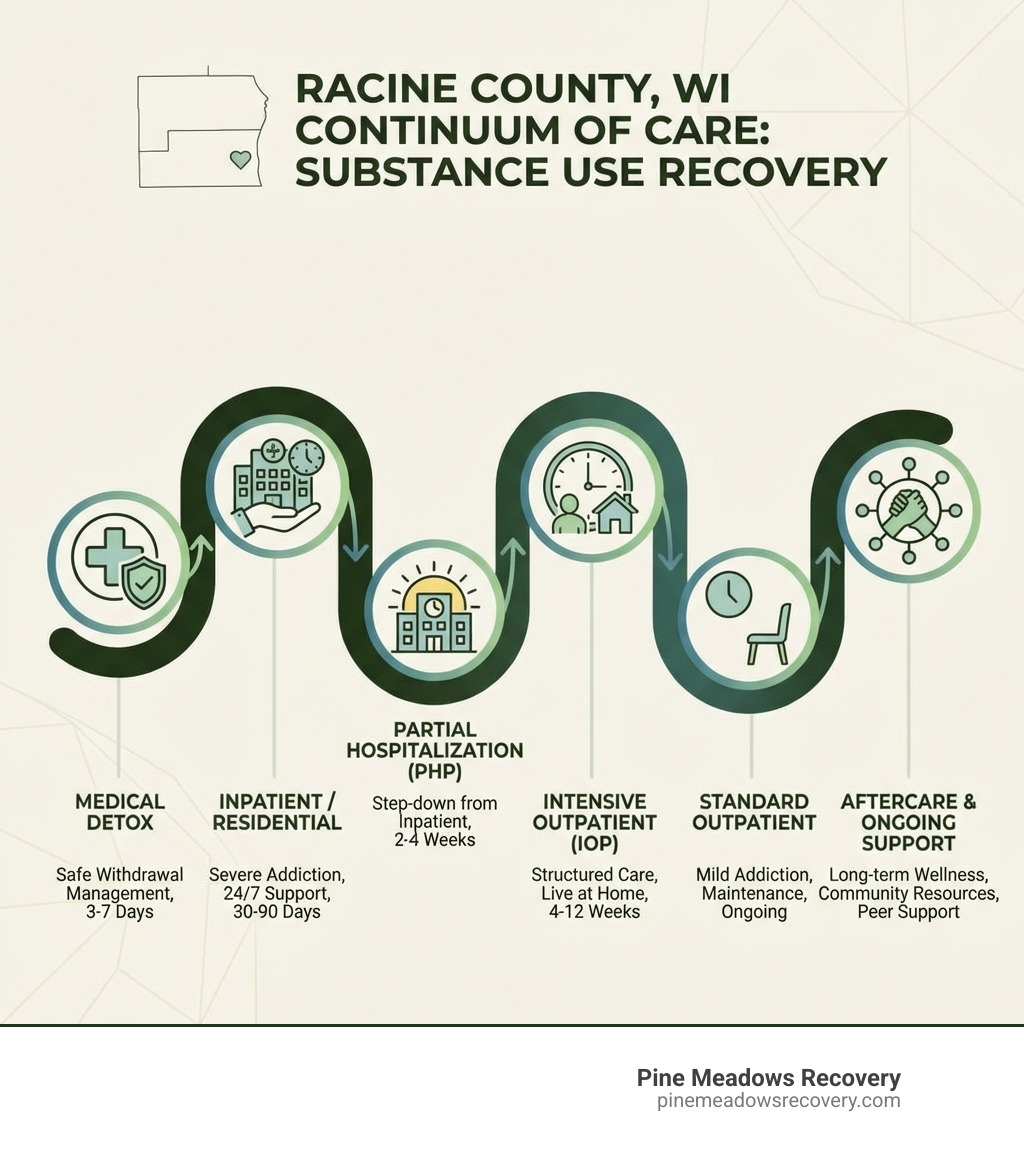
Finding the right level of care can feel like trying to learn a new language. However, the “continuum of care” is designed to meet you exactly where you are. Whether you need 24/7 supervision or a program that allows you to keep working, there is a path for you.
- Medical Detox: This is often the first step. It provides a safe, supervised environment to manage withdrawal symptoms. If you’re curious about the process, you might find these 5 common questions about drug detox helpful.
- Inpatient/Residential: You live at the facility for 30 to 90 days. This is ideal for those who need to get away from local triggers and require a high level of structure.
- Partial Hospitalization (PHP): You receive intensive treatment during the day but return home (or to a sober living environment) at night.
- Intensive Outpatient (IOP): This usually requires at least 9 hours of therapy per week. It’s a great option for those transitioning from higher levels of care or those with strong support systems at home.
- Medication-Assisted Treatment (MAT): This uses FDA-approved medications like Suboxone (buprenorphine/naloxone) or Vivitrol (naltrexone) to reduce cravings and withdrawal symptoms. Some providers operate as high-volume clinics, while others, like us, integrate MAT into a broader holistic therapy program.
Specialized Care and Drug and Alcohol Rehab in Racine County, WI
Addiction doesn’t look the same for everyone, which is why specialized care is so important. Many residents in Racine require “dual diagnosis” treatment, which addresses both substance use and co-occurring mental health issues like depression, anxiety, or PTSD. Research suggests that about 50% of people with a substance use disorder also have a co-occurring mental health condition.
We also recognize the unique needs of specific populations:
- Veterans: Programs that understand the specific traumas and stressors associated with military service.
- Pregnant Women: Specialized MAT protocols using buprenorphine to ensure the safety of both mother and child.
- Gender-Specific Treatment: Many people feel more comfortable discussing sensitive issues in men-only or women-only environments.
When you compare top Wisconsin treatment centers, look for those that offer trauma-informed care. This approach assumes that most people seeking treatment have a history of trauma and ensures that the clinical environment doesn’t inadvertently re-traumatize them.
3. Understanding Insurance, Costs, and Wisconsin Laws
One of the biggest hurdles to starting Drug and Alcohol Rehab in Racine County, WI is the fear of the “bill.” However, there are more ways to pay for treatment than many realize.
Insurance and Financial Aid
- Private Insurance: Most major plans (Aetna, Blue Cross Blue Shield, UnitedHealthcare, etc.) cover addiction treatment.
- BadgerCare Plus (Medicaid): Wisconsin’s Medicaid program covers many forms of substance use treatment, including outpatient services and MAT.
- Medicare and TRICARE: These federal programs provide coverage for seniors and military families, respectively.
- Sliding Scale: Some county-funded and non-profit facilities offer fees based on your income, ensuring that even those without insurance can get help.
Local Laws and Protections
Wisconsin has several laws designed to save lives and encourage people to seek help:
- Good Samaritan Law: This protects bystanders who call 911 for an overdose from being prosecuted for drug possession. The goal is to make sure fear of the law never stops someone from saving a life.
- Naloxone Access: In Wisconsin, you can obtain Narcan without a personal prescription from a doctor.
- OWI Assessments: If you have been convicted of an OWI in Racine County, you are required to undergo a confidential assessment to develop a Driver Safety Plan. This is managed through the Intoxicated Driver Program (IDP).
If you are looking for top regional rehabs that navigate these insurance and legal requirements daily, our team in nearby Kenosha can help clarify your coverage and local obligations.
4. Harm Reduction and Local Support Systems
Recovery isn’t just about what happens inside a clinic; it’s about the safety nets available in the community. Racine County has invested heavily in harm reduction to prevent fatal overdoses while individuals are on their journey toward sobriety.
Harm Reduction Resources
Residents can access free Narcan and fentanyl test strips at various locations across the county. There are even 24/7 outdoor Narcan vending machines at sites like the Western Racine County Service Center and the Racine Public Library. These tools are essential for keeping people alive so they have the chance to choose recovery.
County Support Services
The Racine County Behavioral Health Services (BHS) office on Taylor Avenue offers several low-barrier options:
- Intoxicated Driver Program (IDP): Helping residents regain their driving privileges through mandated assessments.
- Group Therapy: Focusing on coping strategies, emotional regulation, and peer accountability.
- IOP Services: Providing at least 9 hours of structured care per week.
If you are specifically looking for alcohol rehab options in the region, you’ll find that Racine and Kenosha counties work closely together to provide a network of support that includes both government-funded and private options.
Community Resources and Drug and Alcohol Rehab in Racine County, WI
Beyond clinical treatment, Racine offers a wealth of peer-led support:
- AA and NA Meetings: Alcoholics Anonymous and Narcotics Anonymous meetings are held throughout the week at various clubs and churches in Racine and Burlington.
- College Counseling: Students at Gateway Technical College or UW-Parkside can access specialized substance use counseling through their campus health centers.
- Sober Living: Transitional housing that provides a drug-free environment for those leaving residential treatment.
Finding the best drug rehab centers in the area often means looking for facilities that help you connect with these community resources for long-term aftercare.
5. Preparing for Your Stay: Amenities and Logistics
If you or a loved one are preparing for Drug and Alcohol Rehab in Racine County, WI, knowing what to expect can ease the anxiety of the first day. Modern rehab is less about “locking people away” and more about providing a comfortable, healing environment.
- Technology Policies: Many modern programs are now “tech-friendly.” At Pine Meadows Recovery, we understand that maintaining contact with family or managing work obligations can actually reduce stress during treatment. We offer laptop and phone access within certain guidelines.
- Telehealth: For those who cannot commute to Racine or Kenosha every day, telehealth options for outpatient therapy have become a standard and effective way to stay connected to care.
- Transportation: Racine is easily accessible via I-94. For those coming from out of town, the Milwaukee (MKE) airport is a short drive away, and the Amtrak station in nearby Sturtevant provides easy access from Chicago.
- Holistic Therapies: Look for programs that offer more than just “talk therapy.” Yoga, mindfulness, and even local outings can help rebuild the mind-body connection.
While you’re in the area, Racine has plenty of local charm to offer visiting family members. You can’t visit without trying a famous Danish Kringle (a local pastry tradition) or taking a walk through the Racine Zoo. These small comforts can make the process feel less like a clinical “sentence” and more like a fresh start.
Frequently Asked Questions about Racine Rehab
How long does addiction treatment typically last in Racine?
Treatment is highly individualized. Medical detox usually takes 3 to 7 days. Residential programs typically last 30 to 90 days. Outpatient programs like PHP or IOP can last anywhere from 4 weeks to several months, depending on your progress and goals.
Does BadgerCare (Medicaid) cover residential rehab?
Yes, BadgerCare Plus and other Medicaid plans in Wisconsin cover many substance use treatment services. However, specific coverage for residential “room and board” can vary. It is always best to have the facility perform a free insurance verification before you arrive.
Where can I get free Narcan in Racine County?
Free Narcan is available at the Racine County Behavioral Health office, the Racine Public Library, and the Western Racine County Service Center. Some locations offer 24/7 access through outdoor vending machines. You can also call the Racine County Opioid Resource Line at 262-638-6375 for training and supplies.
Conclusion
Recovery is a marathon, not a sprint, and having the right team by your side makes all the difference. Whether you are looking for the high-intensity support of a residential program or the flexibility of an outpatient center, Drug and Alcohol Rehab in Racine County, WI offers a path forward for everyone.
At Pine Meadows Recovery, we are proud to serve the Racine and Kenosha communities with personalized, evidence-based care. We believe that addiction is a treatable chronic condition, and with the right combination of therapy, community support, and medical care, long-term healing is possible.
If you or someone you love is ready to take the first step, don’t wait for a “perfect” time. The best time to start is now. Start your treatment journey today and let us help you rediscover the life you deserve.