
Medically Reviewed By: David Jefferson, expert in Cognitive behavioural therapy (CBT) and Alcohol & Substance Detox.
So you have made up your mind regarding quitting alcohol. Now you want to know if detoxification will suffice. This is a perfectly sensible question that many people have asked before. Detoxification seems to be the troublesome part of the process, and hence, it is natural to think that once you are rid of alcohol, you are free from the vice. However, the reality is that detoxification does nothing but cleanse the body after which you will still have to deal with all your habits, triggers, and cravings that led you to drinking in the first place. So if you have undergone detox before to find yourself back where you started once again, now you know why that happens. Let us look at the differences between alcohol abuse treatment vs detoxification and when you should use each of these.
What Alcohol Detox Actually Does (And What It Doesn’t)

Starting off with an alcohol detox program is the very first step towards recovery. An alcohol detox program is not the full treatment but a medically supervised process that takes three to seven days, during which the body cleanses itself of alcohol and minimizes the discomfort of withdrawal symptoms such as tremors, anxiety, nausea, and, in severe cases like seizures or delirium tremens.
Detox is important in ensuring physical safety. The process of withdrawal from alcohol can put one’s life at risk if not properly managed with professional help. This is the reason doctors always recommend going through supervised detox in case of heavy drinking or alcohol use every day. However, detox deals with the physical dependency on alcohol. No psychological, emotional, and behavioural issues of the addiction are dealt with. This is exactly what a complete program for alcohol addiction treatment is aimed at.
Signs Detox Alone Won’t Be Enough for You
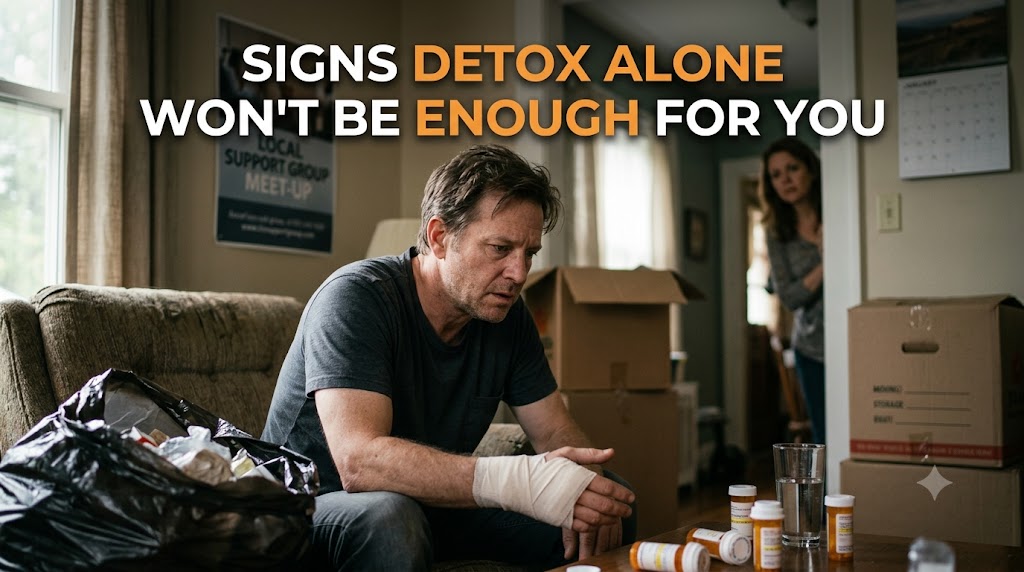
Not all drug or alcohol users will require months of intensive therapy, however, there are some indications that detox alone could predispose a person to relapse. Ask yourself if you identify with any of these signs:
- In the past you have tried to eliminate alcohol only to fall back into drinking shortly afterward
- Alcohol has impacted your professional life, relationship life, or financial stability, in addition to your health
- You drink to deal with stress, trauma, anxiety, or depression
- You may have attempted to eliminate alcohol from your system by willpower but have failed to do so
- You may experience cravings even without physical withdrawal symptoms
- You may be suffering from other mental issues while you are drinking
If these criteria are met, you need more than just medical treatment for a few days.
Alcohol Abuse Treatment vs Detox: A Side-by-Side Comparison

| Factor | Alcohol Detox Program | Alcohol Abuse Treatment Program |
| Primary Goal | Securely manage physical withdrawal | Address root causes and prevent relapse |
| Normal Duration | 3 to 7 days | Contains 30 days to several months |
| Medical Supervision | Yes, of course, with close monitoring for withdrawal | Ongoing, alongside therapy |
| Therapy Included | Minimal to none | For individual, group, and family therapy |
| Relapse Control Tools | Not included | It is main focus of the program |
| Addresses Mental Health | Rarely | Especially in dual diagnosis care |
| Long Term Recovery Support | Limited | Structured aftercare planning |
| Best Suited for | For anyone who is physically dependent | Anyone with a pattern of alcohol misuse or prior relapse |
What a Full Continuum of Care Looks Like After Detox
If detox is the first phase, the following question becomes: what is the next phase? Real alcohol addiction treatment does not just happen once; it is a sequence of steps wherein a person gains more and more autonomy and abilities. Various stages in treatments include:
- Partial Hospitalization Program (PHP): PHP is the highest-level alternative to detoxification and comprises daytime treatment with return to stable accommodation in the evening.
- Intensive Outpatient Program (IOP): The IOP is a flexible schedule with multiple sessions in a week which allows resumption of work, family, or school activities while continuing receiving clinical support.
- Outpatient Program (OP): OP is the lowest level of ongoing care as it usually comprises weekly sessions aimed at the continuation of the prevention of relapse in the post-acute treatment period.
One of the most frequent causes of relapse in the initial months is when people try to transition right from detox to their normal routine without going through each step in between.
Alcohol Treatment Statistics You Should Know
| Statistic | Figure | Source |
| Adulsts aged 18 and above with AUD within the last 12 months | 27.1 million with 10.3% | NIAAA — AUD in the U.S., 2024 NSDUH |
| Adults suffering from AUD who underwent either psychiatry or therapy | 7.6% | SAMHSA — 2024 NSDUH Detailed Tables |
| Young adults aged 18–25 diagnosed with AUD in the past 12 months | 14.4% | NIAAA — Alcohol and Young Adults 18–25 |
How to Decide Which Path Is Right for You
If this is the first instance of alcohol use treatment for you and if there is no record of extensive relapse, a monitored alcohol detox program could be a good option for the beginning. On the other hand, if you have gone through detox before, if alcohol consumption is connected to other psychological conditions, or in case willpower is not working for you, an alcohol abuse treatment program would provide with structured system, treatment, and means unavailable through regular detox program.
In other words, detox only does the work of eliminating alcohol from the body, whereas the treatment will get it away from your life.
Final Thoughts
When faced with the choice of detox vs. full treatment, you need to think carefully about what it is you are actually considering. That means asking yourself which option will actually help you solve the questions of your alcohol use. In particular, it’s important to ensure that you pursue an option that is going to ensure your sobriety after you have completed detoxification procedures. If the answers to some of these questions make you feel like detox alone is not enough, it may be time to consider the benefits of a full treatment program.
If you or someone you know is trying to find your way through the maze of recovery options available, take a minute to learn about the services offered by Pine Meadows Recovery, as they do not only help people with withdrawal symptoms related to alcohol, but they also provide them with psychological help and support in recovery.
Frequently Asked Questions
Is detox the same thing as rehab?
To be more clear, detoxification is a process of removing alcohol from your body while detox management is the process of handling withdrawal symptoms. While rehab, which refers to the rehabilitation process, is the therapy part of alcohol addiction treatment that follows detoxification.
Can I go straight into treatment without doing detox first?
If you are struggling with alcohol dependence, abstaining from detox can be unsafe for you. Most programs will often consist of detox as part of their treatment processes or require that clients complete it before accepting them into the program when withdrawal is not medically managed.
How do I know if I actually need treatment, or if I can just quit on my own after detox?
In an honest way: have you attempted to get sober from alcohol in the past and returned to drinking? Is drinking affecting your relationships, your job, or your mental well-being? If so, then a detoxification program by itself is not sufficient and you would benefit from more structured support.
Will insurance cover an alcohol abuse treatment program?
Alcohol use disorder is officially a medical condition, hence many insurance companies offer some level of support for rehab. However, the amount of coverage is determined individually by the company and plan so it is recommended to verify directly with the rehab facility.
How long does treatment usually take after detox?
The duration of treatment is determined by your own requirements. However, you should expect that the most common treatment programs will be a couple of weeks or months long since many of them include the stages of PHP, IOP, and outpatient care with increased stability.
What happens if I only do detox and skip treatment?
You will most probably experience improvements in physical feeling after a week or two; however, cravings, triggers, and coping mechanisms that may have incited drinking will remain unaddressed. Such scenarios are among the leading causes for relapses occurring soon after detox.
What if I’ve relapsed after treatment before, does that mean it won’t work this time?
Yes. Going through a relapse happens commonly, and it isn’t necessarily a sign that the treatment did not help; often, it simply indicates that your care plan needs to be changed. Many people need several attempts; however, each episode or round of treatment will equip patients with knowledge they can use next time.
Do I have to go to a residential facility, or can I keep living at home during treatment?
It is not required. There are treatments like PHP and IOP that are meant for people who wish to remain at home while receiving several hours of treatment each week.