

Why Men’s Addiction Recovery in Kenosha County Can’t Wait
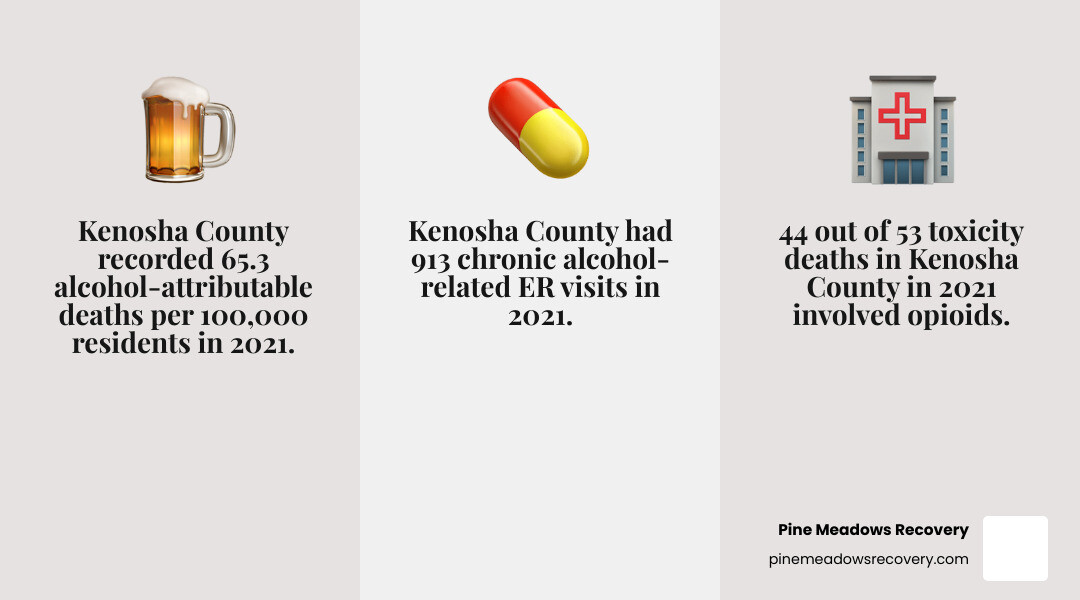
Men’s addiction recovery Kenosha County is one of the most urgent health challenges facing the region right now. In 2021 alone, Kenosha County recorded an alcohol-attributable death rate of 65.3 per 100,000 residents — and 44 of 53 total toxicity deaths involved opioids.
Here’s a quick snapshot of what men in Kenosha County need to know about getting help:
- Local programs exist — including residential, outpatient, PHP, IOP, and Medication-Assisted Treatment (MAT)
- Dual diagnosis care is available for men dealing with addiction and mental health issues like depression, anxiety, or PTSD
- Sober living options like Oxford Houses provide structured, drug-free housing during and after treatment
- Insurance often covers treatment — including Medicaid, Medicare, and most private plans
- Free and low-cost options are available for men who are uninsured or underinsured
- Crisis support is available 24/7 — you don’t have to wait to get help
- Reentry resources exist for men coming out of incarceration who need housing, employment, and recovery support
The numbers are stark, but recovery is absolutely possible — and the right program makes all the difference.
At Pine Meadows Recovery, we are a Kenosha-based addiction treatment center with direct experience guiding men through every stage of men’s addiction recovery in Kenosha County, from initial assessment through outpatient care and beyond. Our programs — including PHP, IOP, and standard outpatient — are built around personalized, evidence-based treatment designed to address the root causes of addiction. Whether you’re just starting to ask questions or you’re ready to take the next step, this guide will walk you through exactly what you need to know.
1. Understanding Local Addiction Statistics and Trends
To understand the landscape of Men’s addiction recovery Kenosha County, we have to look at the hard data. The numbers tell a story of a community facing significant hurdles, particularly regarding alcohol and opioids. In 2021, the rate of alcohol-attributable deaths in Kenosha County reached 65.3 per 100,000 residents. This isn’t just a statistic; it represents fathers, sons, and brothers lost to a preventable disease.
According to reports from the Wisconsin Department of Health Services, the consequences of alcohol consumption are far-reaching. In Kenosha County alone, there were 913 chronic alcohol-related emergency room visits in 2021. Furthermore, binge drinking remains a persistent issue, with a rate of 22.2 per 100,000 residents recorded between 2016 and 2021. If you find yourself struggling, knowing the details of alcohol rehab in Kenosha, Wisconsin can help you understand the medical care and tools available to stop drinking.
The opioid crisis has also hit our home hard. In 2020, there were 43 opioid-related deaths in the county. By 2021, the situation became even more focused: of the 53 toxicity deaths reported, 44 involved opioids, and 15 involved cocaine. These trends highlight why specialized substance abuse treatment is so vital for the men in our community. We aren’t just fighting a “habit”; we are fighting a public health crisis that requires professional intervention.
2. Specialized Programs for Men’s Addiction Recovery Kenosha County
Men often face unique social and psychological barriers when seeking help. Traditional “one-size-fits-all” models don’t always account for the specific ways men process trauma or handle accountability. That’s why specialized programs for Men’s addiction recovery Kenosha County are so effective.
In our region, men can access several levels of care:
- Residential Treatment: For those who need a 24/7 supportive environment to break the cycle of use. Many find that a 30-day inpatient rehab in Kenosha, WI provides the necessary “reset” to focus entirely on healing.
- Partial Hospitalization Program (PHP): This offers a high level of structure during the day while allowing you to return home or to a sober living environment at night.
- Intensive Outpatient Program (IOP): Ideal for men who need rigorous therapy but must maintain some work or family commitments.
- Medication-Assisted Treatment (MAT): Utilizing FDA-approved medications like Suboxone or Vivitrol to manage cravings and withdrawal symptoms, combined with counseling.
Finding the best drug rehab centers in Kenosha, WI means looking for facilities that offer these diverse levels of care. At Pine Meadows Recovery, we focus on a client-centered approach, ensuring that every man receives a plan tailored to his specific history and goals.
3. The Critical Role of Dual Diagnosis Treatment
We often see men who have been “self-medicating” for years without realizing they have an underlying mental health condition. This is known as a co-occurring disorder or dual diagnosis. It is estimated that approximately 50% of people with a substance use disorder also struggle with a mental health issue.
Common co-occurring issues for men include:
- Depression: Often masked by anger or irritability.
- Anxiety: Leading to the use of alcohol or benzos to “calm down.”
- PTSD and Trauma: Especially prevalent among veterans and those who have experienced childhood adversity.
If you only treat the addiction and ignore the depression, the risk of relapse is incredibly high. That is why mental health services in Kenosha County must be integrated into the recovery process.
Our approach to what we treat involves trauma-informed care. This means we don’t just ask “what’s wrong with you?” but rather “what happened to you?” By addressing the root causes through individual and group therapy, men can develop the emotional tools needed for lifetime recovery.
4. Utilizing Sober Living and Oxford Houses
Recovery doesn’t end when you finish a 30-day program. In fact, the transition back to “real life” is often where the most support is needed. This is where sober living options, particularly the Oxford House model, play a massive role in Men’s addiction recovery Kenosha County.
Oxford Houses are democratically run, self-supporting, and drug-free recovery homes. In Kenosha, there are multiple locations specifically for men. These houses typically hold between 6 and 15 residents who hold each other accountable. Because they are self-governed, they foster a sense of leadership and responsibility that is crucial for long-term stability.
For those looking for a residential alcohol treatment center in Kenosha, Wisconsin, integrating a plan for sober living afterward is a best practice. It provides a “middle ground” where you can practice your new coping skills in a safe environment. You can find more substance abuse recovery resources through the county’s official listings to find a house that fits your needs.
5. Navigating Insurance, Costs, and Accessibility
One of the biggest questions men ask is: “How am I going to pay for this?” We want to be clear—financial barriers should not stand in the way of your life. There are numerous ways to access addiction treatment regardless of your income.
| Feature | Inpatient/Residential | Outpatient (PHP/IOP) |
|---|---|---|
| Medical Supervision | 24/7 Monitoring | During Program Hours |
| Environment | Controlled & Immersive | Real-world Integration |
| Duration | 30 – 90 Days | 3 – 6 Months |
| Cost | Generally Higher | Generally Lower |
| Insurance Coverage | Most Private/Medicaid | Most Private/Medicaid |
Most major insurance providers, including Blue Cross Blue Shield, Aetna, and Cigna, cover addiction services. We highly recommend performing an insurance verification early in the process so you know exactly what your out-of-pocket costs might be.
For those without private insurance, Kenosha County offers a Substance Use Navigator (reachable at 262-605-6765) to help residents find affordable options. There are also low-cost affordable Christian rehabs and grant-funded initiatives designed to help those in the public behavioral health system, which served 658 Kenosha residents in 2020.
6. Reentry Resources and Employment Support
For many men, addiction has led to run-ins with the legal system. Reentering the community after incarceration is a high-risk time for relapse. Fortunately, Kenosha County has robust systems to support this transition.
The Kenosha County Treatment Court is a prime example. This program blends justice system supervision with comprehensive recovery services. It’s a phased program—progressing from orientation to wellness over about 60 weeks—that helps men avoid recidivism while getting the help they need.
Employment is a cornerstone of a stable life. Local resources provide:
- Vocational Training: Learning new trades or sharpening existing skills.
- Workforce Development: Assistance with resumes and interview prep.
- Veteran-Specific Support: If you have served, there are specialized veteran addiction treatments in Kenosha County that focus on the unique challenges of military-to-civilian transition.
Many local recovery programs also emphasize vocational training and job preparation as part of their residential model, ensuring men have a purpose to wake up to every morning.
7. Accessing Immediate Crisis and Assessment Services
If you are in the middle of a crisis, you don’t have time to read a long guide—you need help now. Kenosha County provides a 24/7 crisis line at (262) 657-7188.
For those who need to start the formal process, the Hope Council on Alcohol & Other Drug Abuse offers assessment and diversion services. They can help with the Intoxicated Driver Program (IDP) and provide referrals to the right level of care.
Before starting treatment, many men require a detox period to safely manage withdrawal symptoms. Understanding the common questions about drug detox in Kenosha, WI can demystify the process. Detox typically lasts 3 to 7 days and is a critical first step for those using alcohol, opiates, or benzodiazepines.
Community initiatives like the Kenosha County Substance Abuse Coalition work tirelessly to make resources like Narcan and fentanyl test strips available, ensuring that our community stays safe while men find their path to recovery.
Frequently Asked Questions about Recovery
What are the first steps for Men’s addiction recovery Kenosha County?
The first step is usually a professional assessment. You can contact the Kenosha County Substance Use Navigator or a local facility like Pine Meadows Recovery to determine the severity of the addiction and which level of care (inpatient vs. outpatient) is appropriate. If you are physically dependent, a medically supervised detox is the safest way to start.
Are there low-cost or free treatment options available locally?
Yes. Kenosha County utilizes grant funding for several overdose response initiatives and jail-based treatments. Various community organizations offer low-cost rehab options supported by donations and local initiatives. Additionally, Medicaid (BadgerCare) is widely accepted at many local behavioral health clinics.
How does dual diagnosis impact Men’s addiction recovery Kenosha County?
Dual diagnosis is incredibly common. When a man struggles with both addiction and a mental health disorder (like PTSD or depression), the two conditions often fuel each other. Effective addiction treatment must address both simultaneously. If you only treat the substance use, the underlying mental health triggers will often lead to a relapse.
Conclusion
Recovery is not a solo mission. For men in Kenosha, the path to a healthier life is paved with local support, evidence-based therapy, and a community that understands the struggle. Whether you are looking for a residential alcohol treatment center or a flexible outpatient schedule that allows you to keep working, the resources are here.
At Pine Meadows Recovery, we believe in treating the whole person—mind, body, and spirit. We offer personalized, holistic care right here in Kenosha to help you reclaim your life from the grip of addiction. You’ve taken the first step by educating yourself; now it’s time to take the next one.