

What Services Are Available at Mental Health Clinics in Kenosha WI?
Mental health clinics in Kenosha WI offer a wide range of services – from psychiatry and therapy to substance use treatment and crisis support. Here’s a quick overview of the types of support you can find locally:
| Clinic / Resource Type | Key Services | Insurance / Cost |
|---|---|---|
| Community health clinics | Medical, behavioral health, dental, telehealth | Often accept Medicaid, Medicare, BadgerCare, and may offer options for uninsured patients |
| Private outpatient practices | Psychiatry, therapy, psychological testing | Often accept private insurance; self-pay varies |
| Treatment programs for substance use and co-occurring disorders | PHP, IOP, outpatient, dual diagnosis | Many accept major insurance plans; benefits vary |
| Kenosha County Crisis Line (24/7) | Immediate intervention | Free |
| 988 Suicide & Crisis Lifeline | Suicide prevention, crisis support | Free |
Kenosha has more mental health resources than most people realize – including affordable clinics, crisis hotlines, peer recovery programs, and specialized treatments. But when you’re struggling, knowing where to start can feel overwhelming.
This guide breaks it all down simply and clearly.
At Pine Meadows Recovery, we’re an addiction treatment center based in Kenosha, Wisconsin, with hands-on experience helping individuals navigate local mental health and substance use resources alongside our own evidence-based programs. As part of the Kenosha mental health landscape, we understand the full spectrum of options available – and we’re here to help you find the right fit.
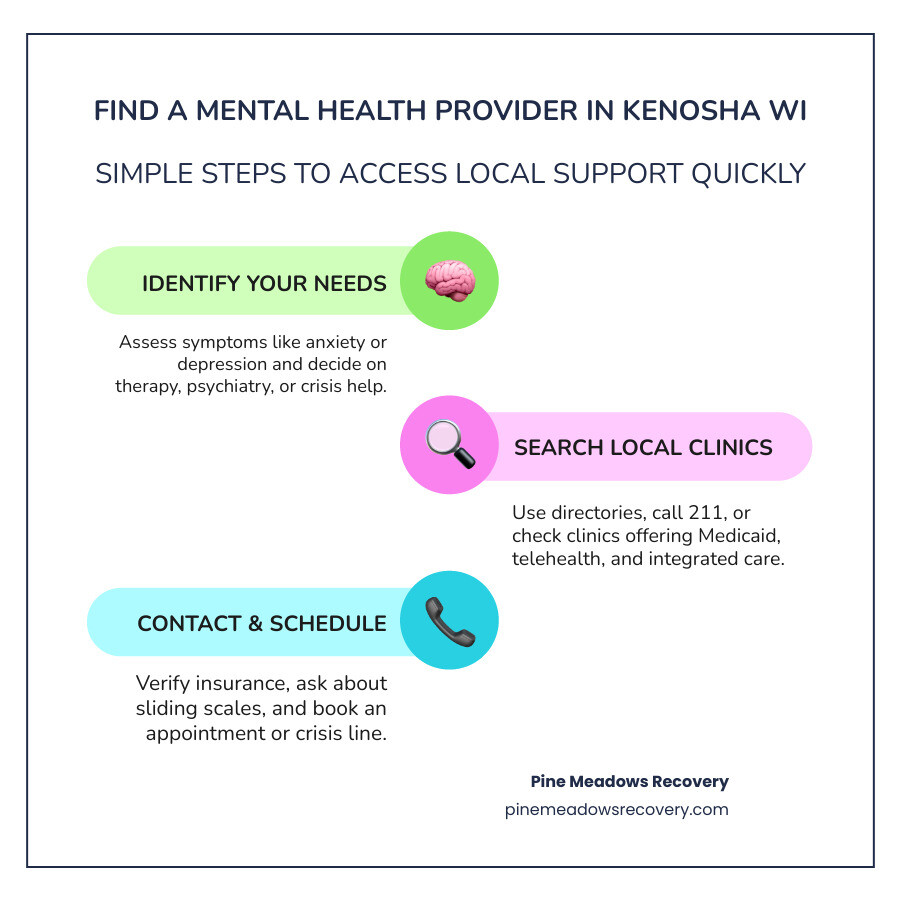
When you begin your search for mental health clinics in Kenosha WI, you’ll find that the “one-size-fits-all” approach is a thing of the past. Modern clinics in our area provide a diverse toolkit of services designed to meet you exactly where you are. Whether you need a simple check-in or intensive support, the local landscape is built to be comprehensive.
Key services typically include:
- Psychiatry: Medical doctors or nurse practitioners who specialize in diagnosing mental health conditions and managing medications.
- Psychotherapy: Talk therapy sessions that help you process emotions, change behaviors, and develop coping strategies.
- Integrated Medical Care: Treating the mind and body together, often within the same building.
- Medication Management: Ongoing monitoring to ensure your prescriptions are safe and effective.
- Case Management: Helping you navigate the healthcare system, find housing, or connect with social services.
- Telehealth: Virtual appointments that allow you to speak with a professional from the comfort of your own home.
If you are specifically struggling with the weight of constant worry, you might want to look into more info about anxiety treatment to see how local providers tailor their approach to different types of anxiety disorders.
Integrated Primary and Behavioral Health
We are seeing a wonderful shift toward “whole-person” care in Kenosha. Many local clinics now integrate behavioral health directly with primary medical care. This means you may be able to see a primary care provider, access dental care, and talk to a therapist within one coordinated system.
This collaborative treatment model helps ensure that your providers can coordinate care when appropriate. If a physical health issue is contributing to your depression, or if your dental health is impacting your self-esteem, an integrated clinic can address these factors simultaneously. It’s a patient-centered approach that treats you as a human being, not just a list of symptoms.
Specialized Therapy Modalities
Not all talk therapy is the same. Many mental health clinics in Kenosha WI now offer specialized, evidence-based modalities that go beyond traditional conversation. These include:
- Cognitive Behavioral Therapy (CBT): Focuses on identifying and changing negative thought patterns.
- Dialectical Behavior Therapy (DBT): Excellent for emotional regulation and interpersonal effectiveness.
- EMDR (Eye Movement Desensitization and Reprocessing): A powerful tool for processing traumatic memories.
- Brainspotting: A newer technique that uses the field of vision to find where a person holds trauma in their brain.
For those dealing with complex emotional needs, understanding What We Treat – Mental Health can help you identify which specific modality might be right for your journey.
How Can I Find Affordable Care and Insurance Coverage?
One of the biggest hurdles to seeking help is the fear of the bill. However, Kenosha is home to several “safety net” providers who believe that mental wellness is a right, not a privilege.
If you are a resident of Kenosha County, you have access to clinics that accept a wide variety of public and private insurance, including:
- Medicaid and BadgerCare: Many community health centers in the area are major providers for those on state-funded insurance.
- Medicare: Widely accepted by most larger clinical groups in the area.
- UnitedHealthcare and Private Plans: Many local clinics work with major commercial carriers.
- Sliding Scale Fees: For the uninsured, some clinics offer fees based on your household income, making care significantly more affordable.
For women seeking specific resources tailored to their unique biological and social needs, our Women’s Mental Health Services Kenosha County Guide provides a deep dive into local options.
Navigating Insurance and Financial Assistance
If you don’t have insurance, don’t lose hope. You can apply for coverage through the Health Insurance Marketplace at healthcare.gov or use the Wisconsin ACCESS portal for Medicaid and BadgerCare+ applications.
For medication costs, resources like NeedyMeds, RxAssist, and the Medicine Assistance Tool can help lower out-of-pocket expenses. Additionally, local community organizations offer assistance with prescription purchases for those in a financial pinch. If you feel your insurance company has unfairly denied coverage for a necessary treatment, the Wisconsin Office of the Commissioner of Insurance is there to help you file a grievance.
While navigating these systems, it’s also vital to stay informed on the most critical issues, such as the scientific research on suicide prevention, which reminds us that help is always just a call or click away.
What Specialized Treatments and Innovative Therapies Are Available?
Kenosha isn’t just about traditional clinics; it’s also a hub for innovative, physician-led care. Some local providers focus on “functional medicine,” which looks for the root cause of mental health issues—such as hormonal imbalances or chronic inflammation—rather than just treating the symptoms.
Innovative Technology at Mental Health Clinics in Kenosha WI
We are living in an era where technology can literally help rewire the brain. Some mental health clinics in Kenosha WI utilize advanced tools like TMS (Transcranial Magnetic Stimulation). This is a non-invasive technology that uses magnetic fields to stimulate nerve cells in the brain to improve symptoms of depression and OCD.
By targeting specific neurobiological pathways, these treatments offer a new path forward for people who haven’t found relief through traditional medication. Digital health tools and telehealth platforms have also made it easier than ever to stay connected to your care team between appointments.
Comprehensive Community Services (CCS)
For those with more intensive needs, the Comprehensive Community Services (CCS) program in Kenosha County provides a “person-centered” approach. This isn’t just about an office visit; it’s about:
- In-home support: Bringing the care to you.
- Skill development: Learning how to manage daily life tasks and social interactions.
- Parent education: Helping families understand and support their children’s mental health.
- Wellness management: Creating a long-term plan for a fulfilling life.
Local organizations specializing in these CCS services walk beside you on your actual path to recovery.
Where Can I Access Immediate Crisis Support and Community Resources?
Sometimes, you can’t wait for an appointment. If you or someone you love is in immediate danger or experiencing a mental health emergency, Kenosha has robust 24/7 support systems.
| Resource | Phone / Contact | Type of Support |
|---|---|---|
| Kenosha County Crisis Line | 262-657-7188 | 24/7 Local Crisis Intervention |
| 988 Suicide & Crisis Lifeline | 988 | National Suicide Prevention |
| Text HOPELINE | Text 741741 | Emotional Support via Text |
| Women & Children’s Horizons | 262-652-9900 | Domestic Abuse Support |
| Veterans Crisis Line | 988 (Press 1) | Specialized Veteran Support |
Emergency Services and Mental Health Clinics in Kenosha WI
The Behavioral Health Resource Center of Kenosha County (at KHDS) is a vital hub. While they offer a 24/7 crisis line, their doors are also open during the day for those who need help navigating insurance or finding a provider.
If you’re in a situation where you need to speak with someone but aren’t comfortable on the phone, the Wisconsin Emotional Support Line (Text HOPELINE to 741741) provides a silent, confidential way to get help. For more details on local intervention, visit the Crisis Prevention and Intervention (24/7) page.
Community Support and Peer Recovery
Recovery doesn’t just happen in a doctor’s office; it happens in community. Kenosha offers numerous peer-led groups where you can connect with others who have “been there.”
- NAMI Kenosha: Offers support groups and advocacy for individuals and families.
- GriefShare: Faith-based support for those mourning a loss.
- Al-Anon & SMART Recovery: Support for those affected by a loved one’s addiction or those seeking their own sobriety.
For more practical advice on navigating these local waters, check out our 5 No-Nonsense Tips for Mental Health Services Kenosha County.
How Do I Access Treatment for Substance Use and Dual Diagnosis?
Many people struggling with mental health also face challenges with substance use. This is known as a dual diagnosis. At Pine Meadows Recovery, we specialize in this intersection. We know that you cannot successfully treat one without addressing the other.
Kenosha offers several Medication-Assisted Treatment (MAT) options, using medications like Suboxone or Vivitrol to help manage cravings and withdrawal symptoms safely. Furthermore, Kenosha County Public Health is very proactive, offering free Narcan training and Fentanyl Test Strips through 24/7 vending machines located at community distribution sites.
If you’re curious about how we handle these complex cases, you can read more about What We Treat – Dual Diagnosis.
Recovery Support and Practical Logistics
Healing requires more than just therapy; it requires a stable environment. Kenosha provides several resources to help with the “logistics” of life:
- Medication Disposal: You can safely drop off unused meds at the Kenosha County Public Safety Building or local police departments to prevent misuse.
- Transportation: If you have Medicaid, MTM/Veyo can provide rides to appointments. For others, the Care-A-Van or Volunteer Transportation Services through KAFASI are excellent options.
- Sober Living: Local sober living houses and transitional housing programs provide the stable foundation needed for long-term sobriety.
Frequently Asked Questions about Kenosha Mental Health
Where are medication disposal sites in Kenosha?
Safe disposal is key to keeping our community safe. You can find medication drop boxes at the Kenosha Police Department, the Pleasant Prairie Police Department, and many local pharmacies. Remember to remove your personal information from the bottles before dropping them off!
Are there specialized services for veterans?
Absolutely. The Kenosha VA Clinic on 22nd Ave provides dedicated care for those who served. Additionally, local veteran peer support organizations offer environments where veterans can reconnect and support one another in a relaxed setting.
How can I access transportation for appointments?
If you’re a Medicaid member, call MTM/Veyo at 866-907-1493 to schedule a ride. For seniors or those with disabilities, Kenosha Transit’s Paratransit service and KAFASI’s Volunteer Transportation are there to ensure you never miss a session because of a lack of a ride.
Conclusion
The mental health clinics in Kenosha WI form a resilient and compassionate network designed to support every member of our community. From the innovative technologies at specialized clinics to the “boots-on-the-ground” support of our local crisis lines, help is always within reach.
At Pine Meadows Recovery, we are proud to be a part of this landscape. As an addiction treatment center in Kenosha, Wisconsin, we offer evidence-based, holistic, and personalized programs for substance abuse and co-occurring disorders. Our focus is always on long-term healing and client-centered care, ensuring that you have the tools you need to build a fulfilling, healthy life.
If you or a woman in your life is looking for specialized support, we encourage you to explore our Women’s Mental Health Services Kenosha County Guide to find the specialized care you deserve. A brighter future isn’t just possible—it’s waiting for you right here in Kenosha.