
Why Cocaine Addiction Treatment Matters Now More Than Ever
Cocaine addiction treatment offers a proven path to recovery through evidence-based therapies, medical support, and personalized care. If you or a loved one is struggling, effective treatment typically includes:
- Behavioral therapies like cognitive behavioral therapy (CBT) and contingency management
- Medical detox with professional supervision to manage withdrawal safely
- Flexible treatment levels ranging from inpatient rehab to outpatient programs
- Dual diagnosis care addressing co-occurring mental health conditions
- Ongoing support through aftercare, support groups, and relapse prevention
The numbers tell a sobering story. In 2021, over 24,000 Americans died from cocaine-involved overdoses. In the UK, cocaine deaths were nearly 10 times higher in 2023 than a decade earlier, claiming more than 1,100 lives. Yet there’s hope: about 49% of people who entered drug and alcohol treatment in 2021-2022 successfully completed their programs.
Cocaine physically alters your brain chemistry. When you use cocaine, it floods your brain with dopamine—a chemical that makes you feel good. Over time, your brain adapts to this surge and stops producing normal amounts of dopamine on its own. This creates a cycle where you need cocaine just to feel okay, let alone happy.
Breaking free from cocaine addiction is rarely something you can do alone. The cravings are intense. The withdrawal symptoms—though not typically life-threatening—can include profound depression, exhaustion, and thoughts that make recovery feel impossible. Professional treatment addresses both the physical dependence and the underlying reasons you turned to cocaine in the first place.
Treatment works differently for everyone, but research shows clear patterns. Cognitive behavioral therapy helps you identify triggers and develop coping strategies. Contingency management uses rewards to reinforce drug-free behavior. Some medications, while not FDA-approved specifically for cocaine addiction, show promise in reducing cravings and supporting recovery.
At Pine Meadows Recovery, we’ve guided countless individuals through cocaine addiction treatment with our evidence-based programs in Kenosha, Wisconsin. Our flexible treatment options—including partial hospitalization, intensive outpatient, and outpatient programs—meet you where you are in your recovery journey.
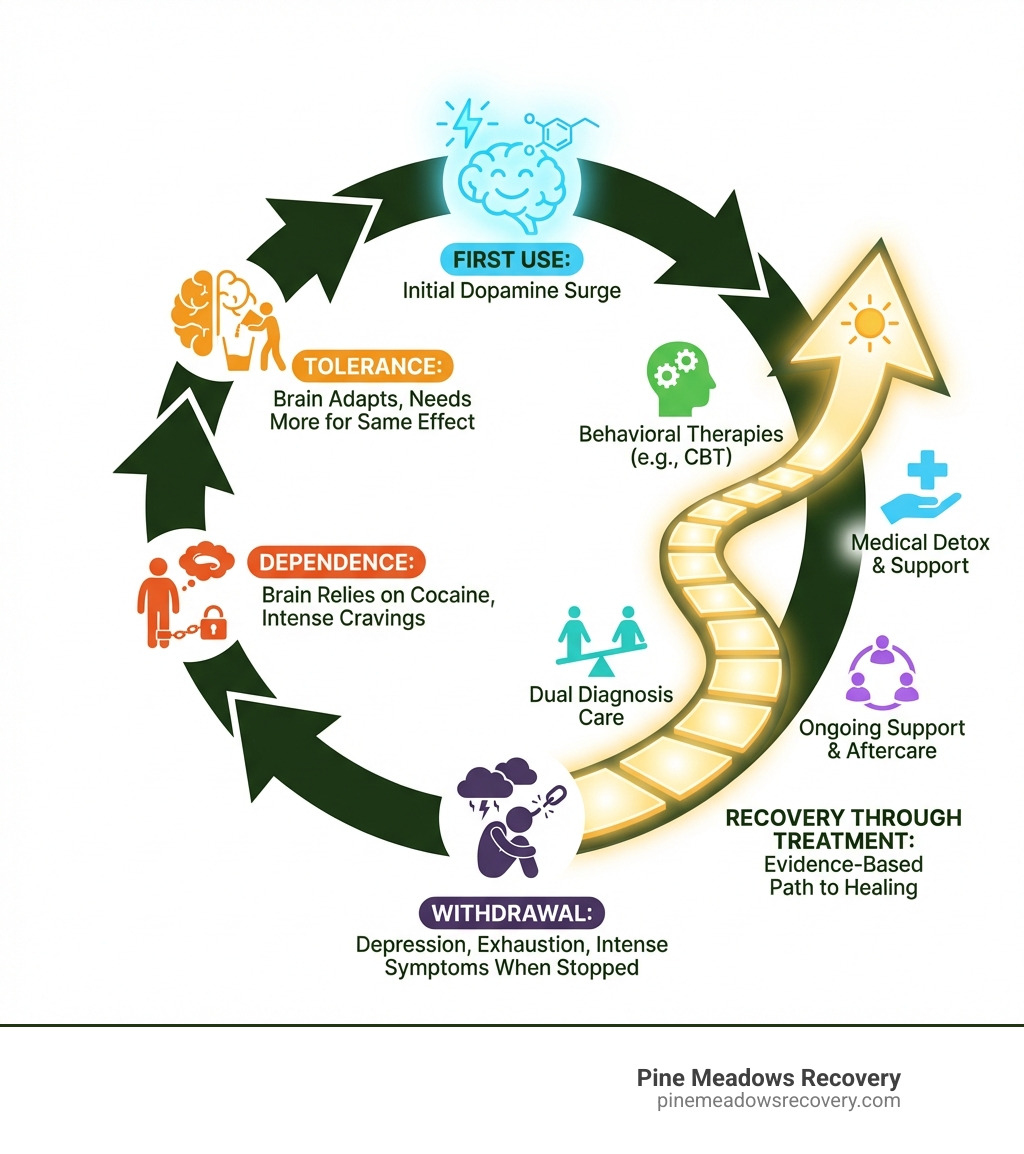
Cocaine addiction treatment terms explained:
Understanding Cocaine Addiction and Its Impact
Cocaine is a powerful stimulant derived from the leaves of the coca plant. Whether it is snorted as hydrochloride powder, dissolved and injected, or smoked in its crystallized form (crack), the drug travels quickly to the brain. Once there, it interferes with the way neurons communicate, leading to a massive buildup of dopamine.

This surge creates the intense “high” users seek, but it comes at a significant cost. Chronic use leads to physical dependence and deep-seated psychological cravings. Essentially, the brain’s neural pathways are rewired to prioritize the drug above all else—food, sleep, and even loved ones. Understanding this biological shift is the first step in realizing why professional substance abuse treatment is so vital.
How Cocaine Addiction Develops
The road to addiction often begins with tolerance. Because the brain becomes desensitized to the constant flood of dopamine, users find they need larger doses or more frequent hits to achieve the same effect. This often leads to “bingeing”—using the drug repeatedly over a short period to maintain the high.
As the drug wears off, the user hits a “crash,” characterized by intense exhaustion and depression. This discomfort triggers the reward system to demand more of the drug to feel “normal” again. This cycle eventually leads to withdrawal symptoms when the drug is unavailable, cementing the state of dependence.
Signs and Symptoms of Cocaine Use
Recognizing the signs of use can help families intervene before a crisis occurs. Physical and behavioral warning signs include:
- Physical: Dilated pupils, nasal damage or frequent nosebleeds, significant weight loss, and increased heart rate.
- Behavioral: Erratic behavior, extreme mood swings (moving from overconfidence to irritability), and social withdrawal.
- Lifestyle: Unexplained financial strain, neglecting work or school responsibilities, and legal issues.
- Psychological: Paranoia, anxiety, and in severe cases, hallucinations or “coke bugs” (the sensation of something crawling under the skin).
Immediate Dangers and Overdose Response
Cocaine use carries severe cardiovascular risks. It constricts blood vessels, increases body temperature, and forces the heart to work significantly harder. This can lead to sudden cardiac arrest, stroke, or respiratory failure, even in young, otherwise healthy individuals.
According to recent overdose statistics, the danger is compounded by the presence of synthetic opioids. In 2021, of the 24,486 cocaine-involved deaths in the U.S., more than 15,000 also involved fentanyl. Because fentanyl is 50 to 100 times more potent than morphine, users often overdose without ever knowing they consumed an opioid.
Recognizing a Cocaine Overdose
A cocaine overdose is a medical emergency. Watch for these symptoms:
- Extreme agitation or violent behavior
- High body temperature and profuse sweating
- Chest pain or pressure
- Difficulty breathing
- Seizures or tremors
- Hallucinations or extreme paranoia
Emergency Steps to Take
If you suspect someone is overdosing:
- Call 911 immediately. Be honest with dispatchers about what was taken so responders can bring the right tools.
- Use the side-lying position. If the person is unconscious, lay them on their side to prevent choking if they vomit.
- Apply cold compresses. If the person is dangerously overheated, use cool water or ice packs on their forehead and underarms.
- Stay present. Monitor their breathing and stay with them until professional help arrives. Do not leave them alone.
Evidence-Based Cocaine Addiction Treatment Options
At Pine Meadows Recovery, we believe that clinical excellence must be paired with personalized care. Because there is no “one-size-fits-all” solution, we utilize a variety of proven methods to help our clients find addiction help that actually sticks.
Behavioral Therapies for Cocaine Addiction Treatment
Since there are currently no FDA-approved medications specifically for cocaine, behavioral therapies remain the gold standard of care.
- Cognitive Behavioral Therapy (CBT): This is perhaps the most widely used therapy. CBT data shows it accounted for 44.6% of therapy courses in recent years because it is so effective at helping individuals identify high-risk situations and develop healthy coping mechanisms.
- Contingency Management (CM): This approach uses tangible rewards (like vouchers) to reinforce positive behaviors, such as submitting drug-free urine samples. Research has shown that CM is exceptionally effective for promoting initial abstinence.
- Motivational Interviewing (MI): This technique helps clients resolve their ambivalence about quitting and strengthens their internal motivation to change.
Pharmacological Approaches and Medications
While no medication is a “cure” for cocaine use disorder, several off-label options show promise in clinical trials. The science of medication-assisted treatment is evolving rapidly.
- Topiramate: Originally an anti-seizure medication, research on topiramate suggests it can help stabilize brain chemistry and reduce cravings. In one trial, 59% of subjects treated with topiramate achieved continuous abstinence for at least three weeks, compared to just 26% in the placebo group.
- Modafinil: Some studies indicate that modafinil may improve sleep and cognitive function during early recovery, helping to prevent relapse.
- Disulfiram: Though typically used for alcohol, it has shown some success in reducing cocaine use by altering how the body processes the drug.
Navigating the Levels of Care in Rehab
Choosing the right level of care depends on the severity of the addiction and the individual’s home environment.
| Level of Care | Description | Best For |
|---|---|---|
| Residential (Inpatient) | 24/7 care in a clinical setting. | Severe addiction, high relapse risk, unstable home. |
| Partial Hospitalization (PHP) | Full-day treatment, go home at night. | Those needing structure but having safe housing. |
| Intensive Outpatient (IOP) | Several hours of therapy, 3-5 days a week. | Stepping down from higher care or moderate addiction. |
| Outpatient (OP) | Weekly therapy sessions. | Maintenance and long-term recovery support. |
For many, outpatient services or intensive outpatient programs provide the flexibility needed to maintain work or family commitments while receiving high-quality care.
Medical Detox and Withdrawal Management
The first step in any cocaine addiction treatment plan is often detoxification. While cocaine withdrawal is rarely physically dangerous in the way alcohol or benzodiazepine withdrawal can be, the psychological symptoms—such as suicidal ideation and profound depression—require professional monitoring. A safe environment provides symptom relief and ensures the client doesn’t return to use simply to stop the “crash.”
Dual Diagnosis and Mental Health
It is very common for cocaine addiction to co-occur with mental health disorders like depression, anxiety, PTSD, or ADHD. At Pine Meadows Recovery, we specialize in dual diagnosis care. If you only treat the addiction and ignore the underlying depression, the risk of relapse remains high. We treat both simultaneously to ensure a stronger foundation for long-term health.
Support Systems and Long-Term Recovery
Recovery doesn’t end when rehab does. Sustained sobriety requires a lifelong commitment to healthy habits and community connection.
Mutual support groups play a massive role in this stage. Organizations like Cocaine Anonymous and Narcotics Anonymous offer a 12-step framework that provides accountability and peer support. These groups help individuals realize they are not alone and provide a roadmap for navigating life’s challenges without turning to substances.
The Role of Family in Cocaine Addiction Treatment
Families are often the first line of defense, but they can also unintentionally enable the addiction. Effective support involves:
- Setting Healthy Boundaries: Learning to say “no” to requests for money or covering up the addict’s mistakes.
- Avoiding Enabling: Recognizing that allowing the addict to face the natural consequences of their use is often the catalyst they need to seek help.
- Family Therapy: Mending broken trust and improving communication through professional guidance.
Sustaining Sobriety and Aftercare
The transition back to “normal” life is often the most vulnerable time for a person in recovery. Sober living environments can provide a bridge between the structure of rehab and the total independence of home. Other keys to success include:
- Identifying and avoiding “people, places, and things” associated with past use.
- Establishing a healthy routine including exercise and proper nutrition.
- Engaging in ongoing individual or group therapy.
Frequently Asked Questions
Does insurance cover cocaine addiction treatment?
Yes. Under the Affordable Care Act (ACA), substance use disorder treatment is considered an “essential health benefit,” meaning most insurance plans are required to cover it. The extent of coverage varies by plan, but we can help you navigate the details. You can use our insurance verification tool or read our guide on decoding rehab insurance coverage to learn more about your specific policy.
What is the success rate of cocaine rehab?
Success in recovery is measured in many ways, but treatment completion data suggests that nearly half of those who enter treatment successfully finish their programs. Long-term success is heavily influenced by the individual’s commitment to aftercare and their access to a strong support system. Relapse is often viewed as a part of the chronic nature of the disease, rather than a failure of treatment; it simply indicates that the treatment plan needs to be adjusted.
How do I find a reputable rehab center near me?
When looking for a center, look for CARF or Joint Commission accreditation, evidence-based practices, and a low staff-to-client ratio. Our guide to finding help provides a checklist of what to look for. For those in the Wisconsin area, we have compiled local Kenosha rehab resources to help you find the best care close to home.
Conclusion
Cocaine addiction is a complex, chronic brain disease, but it is treatable. At Pine Meadows Recovery in Kenosha, Wisconsin, we are dedicated to providing holistic, client-centered care that addresses the whole person—mind, body, and spirit. We understand the unique challenges of stimulant use and offer the evidence-based tools necessary to overcome them.
If you are ready to reclaim your life from the grip of cocaine, you don’t have to do it alone. Our team is here to support you every step of the way, from the first day of detox to the years of sustained sobriety that follow.
Start your journey to recovery today and discover the peace and clarity that comes with a life free from addiction.