
Why Finding Alcohol Rehab Near Kenosha WI Is Urgent Right Now
Alcohol rehab near Kenosha WI is available through several programs — here’s a quick overview of your options:
| Level of Care | Best For | Setting |
|---|---|---|
| Medical Detox | Severe dependence, withdrawal risk | Inpatient/residential |
| Residential (Inpatient) | Those needing 24/7 structured support | Live-in facility |
| Partial Hospitalization (PHP) | High intensity care, some independence | Day program |
| Intensive Outpatient (IOP) | Flexible scheduling, ongoing support | Clinic/outpatient |
| Outpatient | Mild-moderate addiction, aftercare | Clinic visits |
Kenosha County is facing a serious alcohol crisis. In 2021, the alcohol-attributable death rate reached 65.3 per 100,000 residents — and there were 913 chronic alcohol-related emergency room visits that same year. Drug and alcohol use was ranked the third most critical health concern in the county, behind only affordable healthcare and housing.
If you or someone you love is struggling, you are not alone — and effective help is closer than you think.
At Pine Meadows Recovery, we are a Kenosha-based addiction treatment center with deep experience helping individuals find lasting recovery from alcohol use disorder through alcohol rehab near Kenosha WI. Our flexible programs — from Partial Hospitalization to Intensive Outpatient — are built around your specific needs, so you get the right level of care at the right time.
Step 1: Understand the Need for Alcohol Rehab Near Kenosha WI

When we look at the landscape of our community, it is clear that the need for alcohol rehab near Kenosha WI has never been more pressing. Kenosha County faces unique challenges that make local, accessible treatment a necessity rather than a luxury.
Statistics from 2021 reveal a sobering reality: the rate of alcohol-attributable deaths in our county was 65.3 per 100,000 residents. Furthermore, the binge drinking rate between 2016 and 2021 sat at 22.2 per 100,000 residents. These aren’t just numbers; they represent our neighbors, friends, and family members. With 913 chronic alcohol-related emergency room visits in a single year, the strain on our local healthcare system is evident.
According to local health surveys, drug and alcohol use is identified as the third most critical health concern in Kenosha County. This places it right alongside affordable healthcare and housing as a top priority for our community’s well-being. For those seeking more information on state-wide initiatives, the Substance Use: Care and Coverage – dhs.Wisconsin.gov resource provides an excellent overview of how Wisconsin is addressing these issues. You can also explore a broader directory of Alcohol & Drug Rehabs in Wisconsin – Addictions to see how our region compares.
Identifying the Signs of Alcohol Use Disorder
Recognizing that a problem exists is often the hardest part of the journey. Alcohol Use Disorder (AUD) can sneak up on a person, often masked by social norms or “high-functioning” behavior. However, certain red flags indicate it is time to seek professional help.
Common signs include:
- Withdrawal Symptoms: Feeling shaky, sweaty, or nauseous when not drinking.
- Coping Mechanisms: Using alcohol as the primary way to handle stress, anxiety, or depression.
- Behavioral Changes: Neglecting responsibilities at work or home, or losing interest in hobbies once enjoyed.
- Increased Tolerance: Needing more alcohol to achieve the same effect.
At Pine Meadows Recovery, we specialize in helping individuals identify these patterns through our What We Treat – Alcohol Abuse services. Understanding these signs is the first step toward reclaiming your life.
The Gap in Wisconsin Treatment Access
There is a significant “treatment gap” in our state that we are working hard to close. According to the 2021-22 National Survey on Drug Use and Health (NSDUH), approximately 989,000 people in Wisconsin aged 12 and older needed treatment for a substance use disorder. Shockingly, only about 23.8% (236,000 people) actually received the care they required.
In 2020, the Wisconsin public behavioral health system served only 658 Kenosha County residents. This disparity highlights why local facilities are so vital. We believe that no one should have to wait for life-saving care. Our focus on What We Treat – Substance Abuse ensures that Kenosha residents have a local partner dedicated to narrowing this gap.
Step 2: Determine the Appropriate Level of Care
Choosing the right “level of care” is like finding the right prescription for a pair of glasses—it needs to be precisely tailored to your vision of recovery. Not everyone needs the same intensity of treatment, and what works for one person might not be enough for another.
| Feature | Inpatient/Residential | Outpatient (PHP/IOP) |
|---|---|---|
| Housing | On-site 24/7 | Live at home |
| Supervision | Constant medical/clinical | Scheduled sessions |
| Environment | Controlled, trigger-free | Real-world application |
| Best For | Severe addiction, unstable home | Moderate addiction, work/family duties |
Medical Detoxification and Inpatient Alcohol Rehab Near Kenosha WI
For many, the journey begins with Treatment – Detoxification. This is a critical phase where the body clears itself of alcohol. Because alcohol withdrawal can be physically dangerous—even fatal in severe cases—24/7 medical supervision is essential.
Following detox, a 30-Day Inpatient Rehab Kenosha WI program offers a structured environment where the focus is entirely on healing. This “residential” approach removes the triggers of daily life, allowing the brain to begin the long process of stabilization. If you are looking for a Residential Alcohol Treatment Center Kenosha Wisconsin, it is important to choose one that offers a multidisciplinary team of doctors, nurses, and therapists.
Exploring PHP and Intensive Outpatient Options
Not everyone can or needs to step away from their life for 30 days. This is where Partial Hospitalization Programs (PHP) and Intensive Outpatient Programs (IOP) come in.
- Partial Hospitalization (PHP): Often called “day treatment,” our Treatment – Partial Hospitalization PHP offers high-level clinical care during the day while allowing you to return home or to a sober living environment at night.
- Intensive Outpatient (IOP): Our Treatment – Intensive Outpatient Program provides more flexibility. It usually involves several sessions per week, focusing on group therapy and relapse prevention, making it ideal for those transitioning from higher levels of care or those with strong support systems at home.
Step 3: Verify Insurance and Payment Options
One of the most common barriers to seeking alcohol rehab near Kenosha WI is the concern over cost. We want to be very clear: recovery is an investment that pays dividends in every area of your life, and there are many ways to make it affordable.
When looking at Alcohol Rehab Kenosha Wisconsin options, the first step is a thorough financial assessment. Most facilities, including ours, work with a wide range of payment methods to ensure care is accessible.
Navigating Costs for Alcohol Rehab Near Kenosha WI
The cost of treatment varies based on the level of care and the duration of the program. While inpatient care is generally more expensive due to housing and around-the-clock staffing, outpatient services are often very accessible.
For those worried about the “price tag,” consider these options:
- Medicaid and Medicare: Many local programs accept state-financed insurance.
- TRICARE: For military members and their families, TRICARE often covers a significant portion of substance use treatment.
- Sliding Scale Fees: Some centers offer adjusted rates based on your income.
- Self-Payment: Many facilities offer payment plans to spread the cost over time.
For a look at the variety of services available locally, you can check out the Top 10 Outpatient Addiction Services in Kenosha WI.
Insurance Providers and Coverage Verification
Most private insurance plans are required by law to cover mental health and substance use services at the same level they cover physical health. We frequently work with major providers to verify benefits before you even walk through the door.
Our team can help you understand:
- In-Network vs. Out-of-Network: How your choice of facility affects your out-of-pocket costs.
- Deductibles and Co-pays: What you will be responsible for paying.
- Authorization: Ensuring your insurance company approves the Treatment – Outpatient Program or residential stay.
Step 4: Evaluate Facility Accreditations and Specialties
Not all rehab centers are created equal. When your life or the life of a loved one is on the line, you want to ensure you are choosing a facility that meets the highest national standards.
When comparing The 10 Best Wisconsin Alcohol Treatment Centers Compared, look for “The Gold Seal.” Accreditations from organizations like The Joint Commission or CARF (Commission on Accreditation of Rehabilitation Facilities) indicate that a center follows rigorous safety and quality protocols.
Dual Diagnosis and Co-occurring Disorder Treatment
It is incredibly common for alcohol addiction to walk hand-in-hand with mental health challenges like depression, anxiety, or PTSD. In fact, research suggests that about 50% of people with a substance use disorder also have a co-occurring mental health condition.
Treating only the alcohol use is like trying to fix a leaky pipe without turning off the water. At our Residential Alcohol Treatment Center Kenosha Wisconsin, we focus on “Dual Diagnosis.” This means we treat both the addiction and the underlying mental health issue simultaneously. This integrated approach is essential for long-term success.
The Role of Joint Commission and SAMHSA Alignment
Why do accreditations matter? They are a badge of trust. A center that is aligned with SAMHSA (Substance Abuse and Mental Health Services Administration) guidelines uses evidence-based practices—meaning the treatments they provide are proven by science to work.
When searching for the Best Drug Rehab Centers Kenosha WI, always ask about their clinical credentials. High-quality centers will be transparent about their staff qualifications and their adherence to national safety standards.
Step 5: Establish a Long-Term Aftercare Plan
Rehab isn’t the end of the journey; it’s the beginning. The “real world” doesn’t stop spinning while you are in treatment, and having a plan for when you return to your daily routine is vital for preventing relapse.
A solid aftercare plan often includes:
- Sober Living: Transitioning to a Treatment – Sober Living home can provide a middle ground between the structure of rehab and the total independence of home.
- Alumni Programs: Staying connected with the people you met in treatment provides a built-in support network.
- Ongoing Therapy: Continuing with individual or group counseling helps you navigate new challenges as they arise.
Local Support Resources and Community Care
Kenosha is a community that cares. Beyond professional treatment, there are numerous peer-led resources available:
- AA (Alcoholics Anonymous): Local meetings are held throughout Kenosha County every day of the week.
- Al-Anon: A vital resource for the family members and friends of those struggling with alcohol.
- Community Support: Kenosha continues to prioritize the expansion of local care options and support networks, ensuring that every resident has a path toward long-term wellness.
Frequently Asked Questions about Alcohol Rehab
How do I start the process of getting into alcohol rehab near Kenosha WI?
The first step is simply reaching out. You can call a local helpline or contact a facility like Pine Meadows Recovery directly. We start with a confidential clinical assessment to understand your history and needs. From there, we handle insurance verification and coordinate your intake, making the transition into care as smooth as possible.
Does Wisconsin Medicaid cover alcohol addiction treatment?
Yes, Wisconsin Medicaid (ForwardHealth) does cover many aspects of substance use treatment. Coverage typically includes detox, outpatient therapy, and sometimes residential treatment, depending on your specific plan and medical necessity. Many facilities in the Kenosha area accept Medicaid, but it is always best to verify with the intake team first.
What is the difference between residential and outpatient rehab?
Residential rehab requires you to live at the facility, providing 24/7 support and a completely sober environment. It is highly structured and intense. Outpatient rehab allows you to live at home while attending treatment sessions during the day or evening. Residential is often best for those with severe addictions or unstable home lives, while outpatient offers the flexibility to maintain work or family commitments.
Conclusion
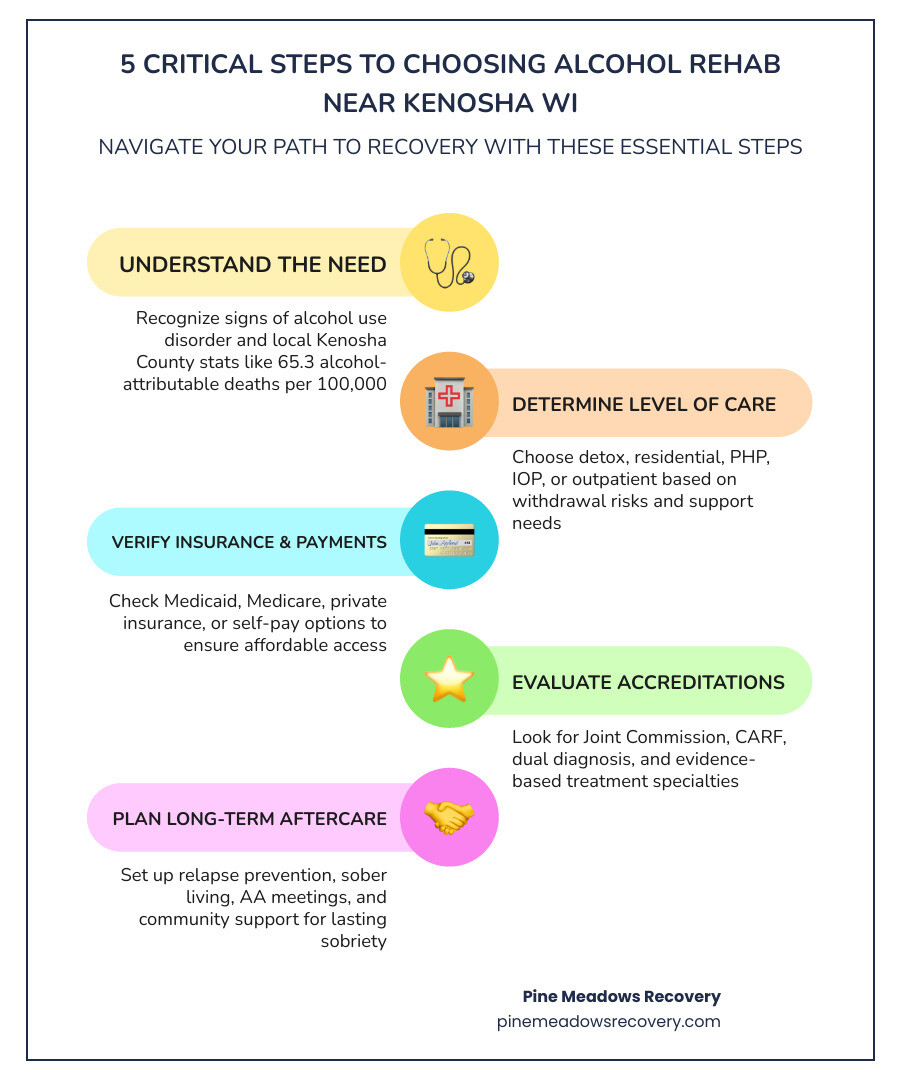
Recovery is a deeply personal journey, but it isn’t one you have to take alone. By following these five steps—understanding the need, choosing the right care, verifying your options, evaluating quality, and planning for the future—you are setting the foundation for a life free from the burden of alcohol.
At Pine Meadows Recovery, we are proud to be a part of the Kenosha community. Our holistic, evidence-based, and client-centered approach is designed to help you heal not just the symptoms of addiction, but the whole person. Whether you need the intensity of a day program or the flexibility of an evening group, we are here to support you every step of the way.
Start your journey at our Alcohol Rehab Kenosha Wisconsin center today. Your new life is waiting.