
Medically Reviewed By: David Jefferson, expert in Cognitive behavioural therapy (CBT) and Alcohol & Substance Detox.
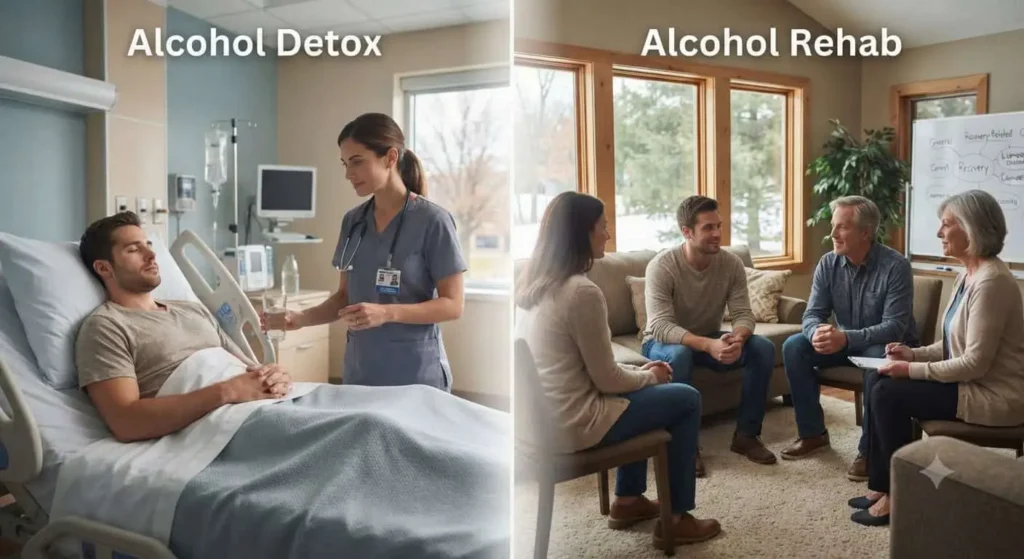
If you’ve been searching for treatment in Wisconsin, then you must have heard the terms “alcohol detox” and “alcohol rehab” being used constantly-thinking they mean the same thing, but in reality they don’t.
While knowing the difference between alcohol detoxification and rehabilitation might sound simply semantic, it goes far beyond that. It is also crucial to be aware of what you commit yourself to and choose the path that will lead you to sustained recovery from alcohol abuse, not back to where you have come from. Let’s get into more detail about the difference between alcohol detoxification and rehabilitation without using confusing medical terminology and discuss the meaning of these two terms for people who need alcohol addiction treatment in Wisconsin.
The Short Answer (For Those Who Need to Know It Simply)
Alcohol detoxification is a medical procedure aimed at removing alcohol from a person’s body and safely dealing with withdrawal symptoms. It usually takes between 3 and 14 days and primarily concentrates on the physical aspect of alcohol discontinuation.
Alcohol rehabilitation is a therapeutic process that helps to identify and deal with psychological, behavioral, and social factors that contributed to a person’s alcohol consumption. It takes approximately 28 to 90 days and is oriented on building necessary skills for maintaining a sober life.
Alcohol detoxification without rehabilitation is equivalent to towing your car out of the ditch but doing nothing. Your central nervous system goes into overdrive when you stop drinking after a period of heavy regular drinking. Alcohol is a depressant; it slows things down. When you remove it suddenly, your brain and body can react with symptoms that can make the brain feel uncomfortable or even life-threatening.
Why Alcohol Detox Is a Medical Issue
The majority of people who suddenly stop heavy drinking develop withdrawal syndrome, and there is no predictable way to tell in advance who will experience the dangerous ones.
Milder symptoms are:
- Nausea
- Sweating
- Trembling
- Anxiety
- Insomnia
These symptoms can develop 6 to 24 hours after your first drink.
More severe symptoms are
- Seizures
- Disorientation
- Hallucinations
- Delirium tremens (DT), which is a very serious symptom
Seizures usually occur 8 to 48 hours after your last drink, while DT occurs 3 to 8 days after the last one. Both of these conditions are very serious medical emergencies that may lead to death, which is the reason why medical detoxification is an absolute must if you drink regularly.
So, what does medical detox really mean?
In a medically supervised detox program in Wisconsin, you get:
- 24/7 monitoring provided by medical staff
- Medicine to prevent seizures and ease withdrawal symptoms
- Support from trained staff who actually understand what you’re going through
- Assessment to figure out what kind of care you require next
Alcohol detox in Wisconsin usually takes 5 to 14 days, which can change depending on the person.
But here is the important thing to keep in mind: detox is not addiction treatment. The official health authority of the government (SAMHSA) states that detox takes care only of the physical aspect and will not take care of the mental, emotional, or social causes of your drinking problem.
Detox only makes you stable. That is all. This is crucial but not the final step.
What Is Actually Done in Alcohol Rehabilitation?
Rehabilitation is where all action takes place, while alcohol detox is only focused on your body. Rehabilitation of alcoholism focuses on everything else-on your drinking behavior, triggers, coping mechanisms, people you hang around with, and your reality without alcohol.
Alcohol Rehabilitation in Wisconsin – Key Aspects
Effective alcohol rehabilitation in Wisconsin usually includes:
One-on-One Therapy
You consult with a professional therapist.
You analyze why you drink, you find your triggers, and you learn new ways to cope.
Group Therapy
You meet with other people who are also going through the same things as you are. This is the most powerful part. Hearing someone else say what you have been feeling and also feeling the shame, the secrets, and the feeling of being stuck helps a lot.
Family Therapy
Alcohol problems don’t just hurt the person who is drinking, but they also affect their family. Family therapy helps fix those relationships and build a home that supports your recovery.
Medicine for Alcohol Use Disorder
Some people take medicine like naltrexone; it cuts cravings and helps prevent relapse. This isn’t swapping one drug with another; it is using science to help you heal.
Relapse Prevention Training
This is where alcohol rehab is different from alcohol detox. You learn to spot risky situations, you learn how to handle cravings, and you learn how to deal with your stress without drinking.
Dual Diagnosis Treatment
Many people who drink also have depression, anxiety, or truma. Dual diagnosis treatment treats both problems at the same time; treating just one rarely works.
How Long Does Alcohol Rehab Take?
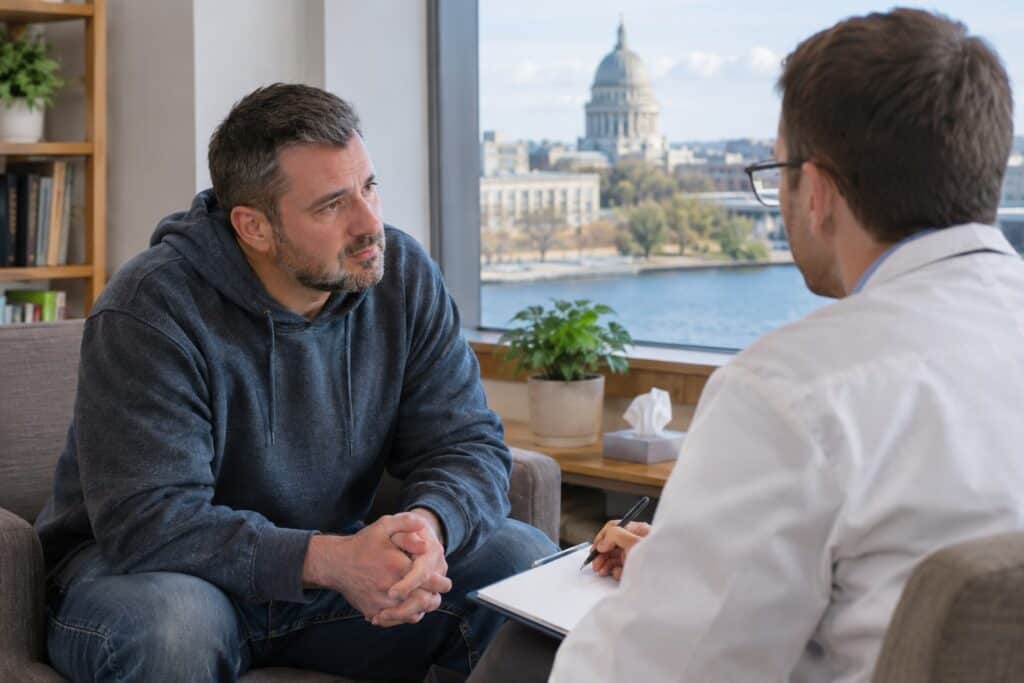
Rehab is not something that takes a one-week fix. Changing behavior takes time. Residential rehab programs in Wisconsin usually take 28 to 90 days. Longer programs can last 3 to 6 months if you need more support.
That sounds like a long time, but if you think about it, you’ve probably been drinking for years. You can’t undo years of habits in a few days only.
How Detox and Rehab Relate in Wisconsin
There are misconceptions about these two methods because many Wisconsin alcohol addiction treatment facilities offer both; however, their purpose and procedure differ greatly.
Common procedure:
For alcohol addicts who are physically dependent on alcohol, this is the process:
Medical Detox (5-14 days): Get stabilized.
Inpatient/Residential Rehab (28-90 days): Address mental/emotional aspects
Step-down Care: (Partial Hospitalization Program) – IOP (Intensive Outpatient Program) – therapy/support group meetings
Recovery: Alumni programs, support groups, and therapy as needed
Why Detox Should Always Be Followed by Rehab
Not having a proper follow-up after going through alcohol detox increases the risk of relapse dramatically. Consider this. Your body has gone through the detox process. But everything else is the same as before. Your triggers haven’t changed. Neither has your stress, lack of coping skills, or the causes for drinking.
In rehabilitation, you build on the detox process. That’s when you actually learn how to live a new life.
What Is Unique About Alcohol Addiction Treatment in Wisconsin?
If you’re searching for alcohol addiction treatment in Wisconsin, you have options, but they aren’t all alike. Here are a few things about Wisconsin:
- There are 191 alcohol rehabilitation facilities in Wisconsin operating in 85 cities. 134 of them provide medically supervised alcohol detoxification. 113 alcohol rehabs in Wisconsin offer inpatient alcohol rehab programs.
- Wisconsin offers various types of help for those who suffer from alcoholism. Among these are hospital alcohol detox programs, inpatient residential alcohol rehab programs, and various outpatient services. Also, there is dual diagnosis treatment for people who need both mental illness and substance abuse treatment.
What Program Will You Need?
This list can be used for a better understanding of which program to choose. It’s quite likely you will need an alcohol detox program if you:
- Drink heavily each day;
- Experience physical withdrawal symptoms (tremors, sweating, nausea);
- Have had seizures or withdrawal issues in the past;
- Have any physical illnesses or problems that may put you at increased risk of experiencing medical complications during withdrawal;
Need alcohol rehabilitation (and likely alcohol detox before that one) if:
- You tried quitting on your own and failed;
- Your drinking affects your life, job, or health badly;
- You drink alcohol to cope with stress and negative emotions;
- You went through alcohol detox in the past but failed to continue alcohol treatment because you did not deal
Of course, for some, like those who are not physically addicted, rehab may be enough without the need for an additional detox phase. But this is something to decide on based on professional advice, not on the basis of a quiz done online.
Are You Ready to Take That Next Step?
For those of you whose lives revolve around alcohol, you don’t have to figure everything out all by yourself.
Pine Meadows Recovery in Kenosha, Wisconsin, provides a wide range of behavioral health and substance abuse services. We realize that overcoming your alcohol problem involves more than just abstaining from drinking.
Medical detox, therapeutic rehabilitation, and dual diagnosis services-we provide all the care you might need. We will meet you where you are and help you move forward from there.
Call Pine Meadows Recovery today to speak to somebody who can guide you through this process.
Conclusion
Alcohol detoxification is all about safety. It is medically managed. It takes a few days. Alcohol rehabilitation is all about change. It is psychologically based. It takes weeks or months. There’s nothing more to alcohol detoxification without rehabilitation. And there is nothing safer than rehabilitation without proper alcohol detoxification.
In case you are ready to stop drinking and do it safely-and make your life so that you won’t feel like escaping from it-then you need a program from Pine Meadows Recovery that includes both things.
Contact Details
Website: Pine Meadows Recovery
Phone: (262) 381-3450
Email: info@pinemeadowsrecovery.com
Address: 4633 Washington Rd., Kenosha, WI 53144, USA
FAQ: Alcohol Detox and Rehab in Wisconsin
Q: How long will the alcohol detox take place in Wisconsin?
Alcohol detoxification in Wisconsin usually lasts from 5 to 14 days. It depends on your alcohol consumption history and physical characteristics. Some patients require more time.
Q: Is it possible to detox myself from alcohol?
It is not possible for heavy drinkers and those who drink alcohol regularly. The process of alcohol detoxification may cause death. Thus, it requires medical supervision. In case of light alcohol consumption, one can attempt to stop drinking on their own-but only after consulting with a doctor.
Q: Are alcohol detox and alcohol rehab the same? Is rehab necessary after detox?
Yes, for most patients, rehab is necessary to help you overcome your reasons for drinking.
Q: How long is alcohol rehab in Wisconsin?
The length of residential rehabilitation programs in Wisconsin varies between 28 and 90 days and can last up to 3 to 6 months depending on your needs.
Q: Does insurance cover alcohol detox and rehab in Wisconsin?
Yes, most insurance companies provide coverage of substance abuse treatment in Wisconsin. This includes detoxification services, inpatient and outpatient treatments, and even medications. You can check out the specifics of your plan by contacting your insurance company or the rehab facility.
Q: What is the difference between inpatient and outpatient alcohol rehab?
Inpatient (residential) treatment implies that you live at the facility 24/7 under constant supervision. Inpatient programs are more effective when dealing with severe cases of alcohol addiction. Outpatient treatment allows you to live at your place and attend several sessions weekly.