
Outpatient Drug Rehab in Kenosha, WI: What You Need to Know
Outpatient drug rehab in Kenosha WI gives people struggling with addiction structured, evidence-based treatment — without requiring them to leave their home, job, or family.
Here are the key outpatient options available in Kenosha:
| Program Type | Hours Per Week | Best For |
|---|---|---|
| Partial Hospitalization (PHP) | 20–30 hrs | Step-down from inpatient; high-need clients |
| Intensive Outpatient (IOP) | 9–15 hrs | Moderate severity; maintaining daily routine |
| Standard Outpatient | 1–8 hrs | Early recovery maintenance; aftercare |
| MAT Clinic | Varies | Opioid or alcohol use disorder |
Kenosha County has been hit hard by substance use. In 2021, 44 of 53 drug toxicity deaths involved opioids, and there were 85 opioid-related emergency room visits that same year. The need for accessible, local treatment is real.
The good news? Kenosha has at least 11 outpatient rehab options, many accepting Medicaid, Medicare, and private insurance. Some offer same-day admission.
Whether you’re looking for medication-assisted treatment (MAT), therapy for co-occurring mental health issues, or a flexible IOP schedule — there’s a path forward here.
At Pine Meadows Recovery, we’ve spent years helping Kenosha residents find lasting recovery through our PHP, IOP, and outpatient programs — making us well-positioned to guide your search for the best outpatient drug rehab in Kenosha WI. Below, we break down the top 10 options to help you make an informed, confident choice.
Understanding Outpatient Drug Rehab in Kenosha WI
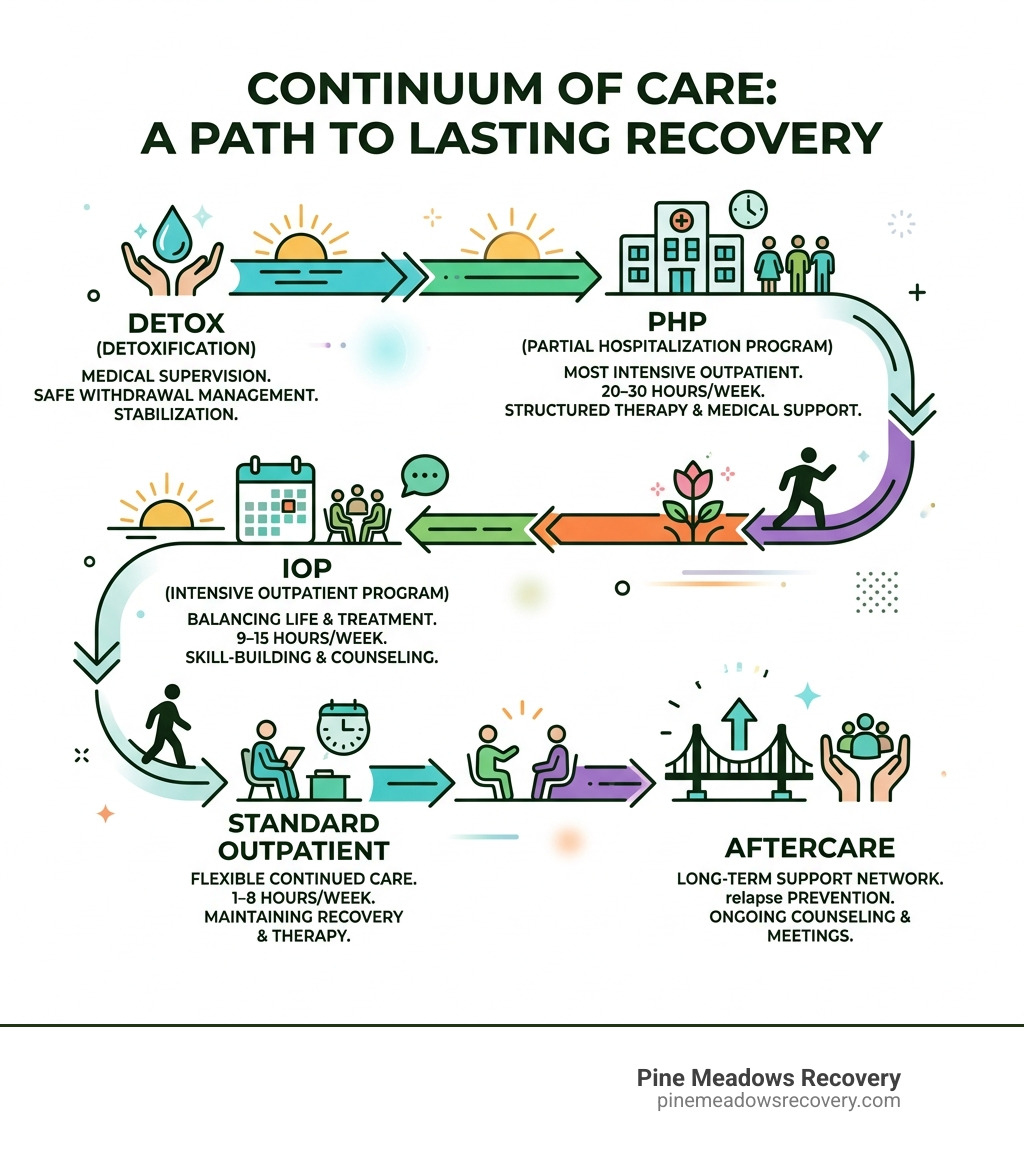
When we talk about Outpatient Drug Rehab in Kenosha WI, we are describing a spectrum of care that allows you to receive professional medical and therapeutic support while living at home. Unlike residential treatment, where you stay at a facility 24/7, outpatient programs are designed to fit into your existing life. This is particularly helpful for parents, students, or those who cannot take an extended leave from work.
There are three primary levels of outpatient care to consider:
- Partial Hospitalization Program (PHP): This is the most intensive level of outpatient care. You spend most of your day at the center (often 5–6 hours a day, 5 days a week) but return home in the evening. Learn more about our outpatient services to see if this high-level support is right for you.
- Intensive Outpatient Program (IOP): This offers a middle ground. You typically attend sessions for 3 hours a day, 3 to 5 days a week. It’s an excellent option for those transitioning from inpatient care or those who need more than standard counseling. You can find Intensive Outpatient Program details here.
- Standard Outpatient: This usually involves weekly individual or group therapy sessions. It is often the final step in a structured treatment plan.
The flexibility of these programs is their greatest strength. You can apply the skills you learn in therapy to real-world situations in real-time. According to the Wisconsin Department of Health Services, Finding and Choosing Substance Use Treatment Programs involves looking for a program that aligns with your specific recovery goals, age requirements (most local centers serve adults 18+), and eligibility based on the severity of the addiction.
Essential Services at Top Outpatient Drug Rehab in Kenosha WI
To be considered a “top” facility, a center must offer a comprehensive toolkit of evidence-based services. In Kenosha, the most effective programs utilize a combination of medical and behavioral therapies.

- Medication-Assisted Treatment (MAT): This is the gold standard for opioid and alcohol use disorders. Medications like Suboxone, Vivitrol, and Methadone are used to reduce cravings and manage withdrawal symptoms. At Pine Meadows Recovery, we focus on What we treat: Substance Abuse by integrating MAT with counseling.
- Dual Diagnosis Care: It is estimated that 50% of people with a substance use disorder also have a co-occurring mental health condition. Treating both simultaneously is vital for long-term success.
- Evidence-Based Therapies: This includes Cognitive Behavioral Therapy (CBT), which helps you identify and change negative thought patterns, and group counseling to build peer support.
- Telehealth Options: In our modern world, accessibility is key. Many Kenosha providers now offer virtual sessions so you can stay connected even if you have transportation issues.
Specialized Care for Co-Occurring Disorders
Recovery isn’t just about stopping drug use; it’s about healing the mind and spirit. Many of us in Kenosha have experienced trauma or struggle with anxiety and depression alongside addiction. This is why we emphasize What we treat: Co-occurring disorders.
Specialized care often includes:
- Trauma-Informed Care: Understanding how past experiences influence current behaviors.
- Veteran Support: Addressing the unique challenges faced by those who served, including PTSD.
- Gender-Specific Groups: Creating a safe space where men or women can discuss sensitive issues among peers.
- Holistic Therapy: Integrating yoga, mindfulness, and fitness to repair the mind-body-spirit connection.
Criteria for the 10 Best Outpatient Drug Rehab in Kenosha WI
Choosing the right facility can feel overwhelming. When we evaluated the Best drug rehab centers in Kenosha, we looked for specific markers of clinical excellence. A top-tier center isn’t just a building; it’s a community of experts dedicated to your health.
The Top 10 Outpatient Addiction Services In Kenosha Wi all share these common traits:
- Personalized Treatment Plans: No two addictions are the same. Your plan should be based on your medical history, family dynamics, and personal goals.
- Positive Patient Reviews: Success stories from former clients provide insight into the facility’s culture and effectiveness.
- High Staff Credentials: Look for licensed clinical substance abuse counselors (LCSAC) and board-certified medical staff.
How to Choose the Best Outpatient Drug Rehab in Kenosha WI
Beyond the “best of” lists, you need to find the center that fits your life. Our drug rehab near Kenosha complete guide suggests asking the following questions during your search:
- Location: Is it accessible via public transport or near major highways like I-94?
- Duration: How long is the program? Most IOPs last 3 to 6 months.
- Philosophy: Does the center use a 12-step model, or does it focus on holistic and secular approaches?
- Family Involvement: Does the center offer family therapy? Addiction affects the whole family, and healing together often leads to better outcomes.
- Aftercare: What happens when the program ends? The best drug rehab center in Kenosha will have a robust aftercare plan to prevent relapse.
Accreditations and Quality Standards
Never compromise on quality. Ensure the facility you choose holds recognized accreditations. These organizations audit centers to ensure they meet the highest standards of patient safety and ethical care.
- CARF (Commission on Accreditation of Rehabilitation Facilities): Focuses on the quality of the programs and the results they achieve.
- The Joint Commission: The nation’s oldest and largest standards-setting body in healthcare.
- SAMHSA Alignment: Programs that follow the Substance Abuse and Mental Health Services Administration’s National Registry of Evidence-based Treatment Programs.
- Wisconsin DHS Licensing: Ensures the facility complies with all state laws and health regulations.
Navigating Costs and Insurance for Kenosha Addiction Treatment
One of the biggest hurdles to starting Outpatient Drug Rehab in Kenosha WI is the fear of the bill. However, outpatient care is significantly more affordable than inpatient treatment because you aren’t paying for room and board.
| Program Level | Average Estimated Cost (3 Months) | Common Payment Options |
|---|---|---|
| PHP | $10,000 – $15,000 | Private Insurance, Grants |
| IOP | $5,000 – $10,000 | Insurance, Medicaid, Sliding Scale |
| Standard Outpatient | $2,000 – $5,000 | Medicare, Private Pay, Medicaid |
Fortunately, there are many Free and low-cost rehab options in our community. Most local facilities accept:
- Private Insurance: Plans like Blue Cross Blue Shield, UnitedHealthcare, and Aetna often cover a large portion of outpatient costs.
- Medicaid and Medicare: Many Kenosha clinics are specifically set up to serve residents through these public programs.
- Sliding Scale Fees: This means the cost is adjusted based on your income.
- Grant Funding: Kenosha County often receives federal and state grants to help uninsured residents access life-saving care.
Local Recovery Resources and Community Support
Kenosha is a community that cares. We aren’t just a statistic; we are neighbors looking out for each other. Local substance abuse stats show that 658 residents were served by the public behavioral health system in 2020 alone.
If you are in immediate trouble, the Kenosha County Crisis Line (262-657-7188) is available 24/7.
Other local resources include:
- Harm Reduction: Distribution of Narcan (naloxone) and fentanyl test strips through county initiatives.
- Detox Centers: If you need to clear your system before starting outpatient care, there are several Detox Centers Kenosha Wi available.
- Accessibility: Most rehabs are located near the Sheridan Road corridor or close to the Metra and city bus lines, making it easy to attend daily sessions.
- Overdose Response Initiative: A partnership between local law enforcement and health services to provide follow-up care for survivors.
Starting the Journey: Intake and Aftercare
Taking the first step is often the hardest part, but we strive to make it as simple as possible. Most outpatient drug rehab in Kenosha WI facilities offer 24/7 scheduling and same-day availability for assessments.
When you call for a comprehensive treatment overview, here is what the intake process usually looks like:
- Phone Screening: A quick conversation to determine your needs.
- In-Person Assessment: A roughly four-hour process involving a physical exam, drug screening, and a deep dive into your history to create a personalized plan.
- Orientation: Meeting your counselors and setting your schedule.
Recovery doesn’t end when the program does. Long-term healing is supported through:
- Relapse Prevention: Learning the specific triggers in your Kenosha neighborhood and how to avoid them.
- Sober Living: Referrals to local transitional housing if your home environment isn’t supportive.
- Alumni Programs: Staying connected to the peers who walked the journey with you.
Frequently Asked Questions about Outpatient Rehab in Kenosha
How long does outpatient drug rehab typically last?
Most intensive programs (IOP) last between 3 to 6 months. However, recovery is a lifelong process, and many people continue with standard outpatient therapy or support groups for years to maintain their sobriety.
Can I continue working while attending an outpatient program?
Yes! This is one of the primary benefits of outpatient drug rehab in Kenosha WI. Many facilities offer evening or weekend sessions specifically designed for working professionals.
What is the difference between PHP and IOP in Kenosha?
PHP (Partial Hospitalization) is like a full-time job, requiring 20–30 hours of attendance per week. It is best for those who need a high level of medical supervision. IOP (Intensive Outpatient) is more flexible, usually requiring 9–15 hours per week, allowing more time for work or school.
Conclusion
Finding the right outpatient drug rehab in Kenosha WI is a vital step toward reclaiming your life. Whether you are dealing with opioid addiction, alcohol use, or co-occurring mental health disorders, our community offers a wealth of resources to support you. From the shores of Lake Michigan to the heart of downtown, Kenosha is a place where healing happens every day.
At Pine Meadows Recovery, we are committed to providing holistic, evidence-based, and client-centered care. We believe that everyone deserves a chance at a fulfilling, sober life. If you or a loved one is ready to take that step, we are here to walk with you. Start your recovery journey today and discover the strength you have within you.