
When You Need Help with Alcohol: What to Know Right Now
If you’re looking for help with alcohol, here’s a quick summary of your best first steps:
- Talk to a doctor or treatment center — they can assess your situation and recommend safe next steps
- Don’t stop drinking abruptly if you drink heavily — withdrawal can be dangerous without medical supervision
- Call SAMHSA’s helpline: 1-800-662-4357 — free, confidential, 24/7 support
- Treatment works — most people with alcohol use disorder (AUD) reduce their drinking or stop altogether with the right help
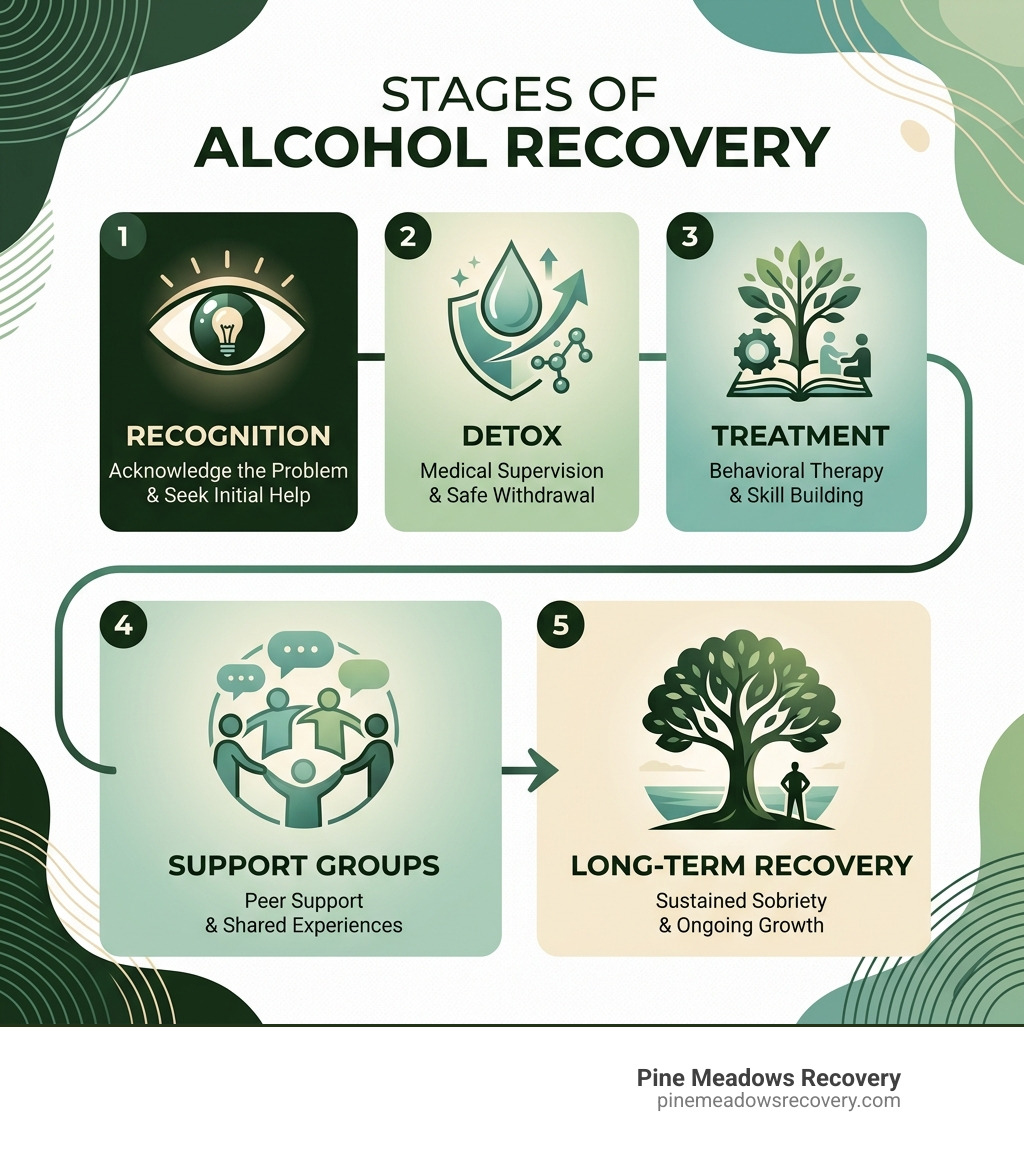
- Options include medical detox, FDA-approved medications, behavioral therapy, and peer support groups like AA or SMART Recovery
Alcohol use disorder is more common than most people realize. Millions of American adults are affected by it, and roughly 1 in 10 children grows up in a home where a parent has AUD. Yet despite how widespread it is, many people suffer in silence — unsure whether their drinking “counts” as a problem, or afraid that help is out of reach.
One member of Alcoholics Anonymous described the experience of denial this way: “When I look back now, it’s hard to imagine I didn’t see a problem with my drinking. But instead of seeing the truth when all of the ‘yets’ started happening, I just kept lowering my standards.”
That feeling — of the problem slowly growing while life quietly shrinks around it — is something many people recognize. The good news is that recovery is real, and it’s more accessible than you might think.
At Pine Meadows Recovery, we’ve helped individuals in Kenosha, Wisconsin and beyond find lasting recovery from alcohol addiction through personalized, evidence-based programs. Our experience providing help with alcohol spans partial hospitalization, intensive outpatient, and outpatient care — often addressing co-occurring mental health challenges alongside addiction. Whether you’re taking your first step or returning after a setback, this guide will walk you through everything you need to know.
Key terms for help with alcohol:
Recognizing When You Need Help with Alcohol

Recognizing a problem is often the hardest part of the journey. In the medical world, we use the term Alcohol Use Disorder (AUD). According to the Mayo Clinic, AUD is a pattern of alcohol use that involves problems controlling your drinking, being preoccupied with alcohol, or continuing to use alcohol even when it causes problems.
To help clinicians diagnose the severity of the issue, they use the DSM-5 criteria. This involves a series of questions about your habits over the past year. If you meet 2–3 of the criteria, it is considered mild; 4–5 is moderate; and 6 or more is severe. Some of these questions include:
- Have there been times when you ended up drinking more, or longer, than you intended?
- Have you more than once wanted to cut down or stop drinking, or tried to, but couldn’t?
- Have you spent a lot of time drinking, being sick, or getting over the after-effects?
- Has drinking—or being sick from drinking—often interfered with taking care of your home or family? Or caused job troubles? Or school problems?
It is also important to distinguish between “heavy drinking” and “binge drinking.” For men, heavy drinking is defined as five or more drinks in one day or 15 or more drinks in a week. For women, it is four or more drinks a day or eight drinks a week. Binge drinking typically occurs when a male consumes five or more drinks, or a female consumes four or more drinks, within about two hours.
If you are unsure where you stand, reviewing 10 signs you need help with alcohol treatment Kenosha WI can provide much-needed clarity.
Physical Signs You Need Help with Alcohol
Alcohol affects the body in profound ways. One of the most telling signs that you need help with alcohol is the development of tolerance—meaning you need more alcohol to achieve the same effect you once got with less.
Another critical physical sign is withdrawal. If you feel shaky, sweaty, or nauseous when you haven’t had a drink in a few hours, your body has become physically dependent. Chronic alcohol use also takes a toll on liver health, leading to conditions like fatty liver or cirrhosis. We focus heavily on these physical aspects in our alcohol abuse treatment programs to ensure your body can heal alongside your mind.
Behavioral Symptoms of AUD
Beyond the physical, AUD changes how we interact with the world. You might notice:
- Neglecting Responsibilities: Missing work, failing to pay bills, or ignoring household chores because of drinking or hangovers.
- Social Isolation: Giving up activities you once enjoyed or avoiding friends and family who don’t drink.
- Failed Quit Attempts: Making promises to yourself or others to stop, only to find yourself drinking again within days or hours.
- Risky Behavior: Driving under the influence or engaging in hazardous situations while drinking.
Professional Treatment Options and Medications
The good news is that AUD is a highly treatable medical condition. Modern treatment isn’t one-size-fits-all; it’s a spectrum of care designed to meet you where you are. According to the National Institute on Alcohol Abuse and Alcoholism (NIAAA), the most effective approach often combines behavioral therapies with medical support.
Behavioral treatments, such as Cognitive Behavioral Therapy (CBT), help you identify the triggers that lead to drinking and develop coping strategies to handle stress without a bottle. Family therapy can also be a vital component, helping to repair relationships and build a supportive home environment. For those who require a structured, immersive environment, a residential alcohol treatment center in Kenosha provides 24/7 support and a break from the triggers of everyday life.
FDA-Approved Medications for AUD
Many people are surprised to learn that there are non-addictive, FDA-approved medications specifically designed to help people stop drinking. These aren’t “crutches”—they are tools that manage a chronic medical disorder, much like insulin manages diabetes.
- Naltrexone: Available in pill form or a monthly injection, it blocks the “buzz” or pleasure people get from drinking, which helps reduce the urge to drink.
- Acamprosate: This helps the brain function normally again after long-term alcohol use and makes it easier to maintain abstinence by reducing symptoms like insomnia or anxiety.
- Disulfiram: This is an older medication that causes a very unpleasant physical reaction (nausea, flushing) if you consume any alcohol, acting as a powerful deterrent.
Finding Local Help with Alcohol in Wisconsin
If you live in the Badger State, you have access to excellent resources. A great place to start is with your primary care provider. They can perform an initial screening and provide referrals to specialized alcohol rehab in Kenosha, Wisconsin.
For those in the immediate area, community services and specialized centers offer a range of care levels. If you are worried about the initial stages of quitting, seeking professional alcohol detox in Wisconsin is the safest way to begin your journey.
The Detox Process and Withdrawal Safety
Detox is the process of letting alcohol leave your system. While it sounds simple, for someone with a physical dependency, it is a medical event. Withdrawal symptoms can begin within hours of the last drink and typically peak within 48 to 72 hours.
Common symptoms include:
- Anxiety and restlessness
- Tremors (the “shakes”)
- Sweating and increased heart rate
- Nausea or vomiting
In severe cases, withdrawal can lead to seizures or Delirium Tremens (DTs)—a life-threatening condition characterized by hallucinations, severe confusion, and high blood pressure. Because of these risks, the NHS and other health organizations strongly advise against “going cold turkey” without medical advice if you are a heavy drinker.
Medical Supervision vs. Home Detox
While some people with mild AUD can detox at home under a doctor’s guidance, those with moderate to severe dependency should always choose supervised care.
| Feature | Inpatient Medical Detox | Unsupervised Home Detox |
|---|---|---|
| Safety | High (24/7 medical monitoring) | Low (Risk of unmanaged seizures) |
| Medication | Available to ease symptoms | Generally not available |
| Success Rate | Higher due to controlled environment | Lower due to easy access to alcohol |
| Nutritional Support | IV fluids and vitamins provided | Often neglected |
Medical supervision ensures you stay hydrated, receive proper nutrition (like Thiamine to protect the brain), and have access to medications that can prevent the most dangerous withdrawal symptoms.
Support Groups and Long-Term Recovery Strategies
Once the alcohol is out of your system, the real work of recovery begins. Support groups are the backbone of long-term sobriety for millions.
Alcoholics Anonymous (AA) is the most well-known, having helped people for over 80 years. It is based on a 12-step program and the power of one alcoholic sharing their experience with another. For those looking for help with a drinking problem, AA offers a community that understands the struggle like no one else.
However, AA isn’t the only option. SMART Recovery uses a science-based approach focusing on self-empowerment and cognitive tools. Women for Sobriety offers a program tailored specifically to the unique emotional needs of women in recovery. Finding the right fit is essential; you might even find that alcohol rehab near me is the best way to explore these different philosophies in a guided setting.
Moderation vs. Abstinence
One common question is: “Can I just learn to drink less?” For some people with mild alcohol problems, moderation (harm reduction) may be a realistic goal. This involves setting strict limits and keeping a drinking diary.
However, abstinence (stopping completely) is strongly recommended if you:
- Have liver damage or heart disease.
- Are pregnant or trying to conceive.
- Have a severe AUD or have failed at moderation in the past.
- Take medications that interact dangerously with alcohol.
In our experience at Pine Meadows Recovery, we often find that total sobriety provides the clearest path to a healthy, vibrant life. You can learn more about these different paths in our Kenosha alcohol rehab guide.
Relapse Prevention and Support Systems
Recovery is a marathon, not a sprint. To stay sober long-term, you need a plan. This includes:
- Trigger Identification: Knowing which people, places, or emotions make you want to drink and having a plan to avoid or face them.
- Craving Plans: Having a list of people to call or activities to do (like a hobby or exercise) when the urge hits.
- Family Involvement: Educating your loved ones so they can support you without enabling you.
- Lifestyle Changes: Rebuilding your schedule around healthy habits rather than the next drink.
Frequently Asked Questions about Alcohol Recovery
How common is relapse during the recovery process?
Relapse is actually very common—it is estimated that many people will return to use at least once during their first year of sobriety. It’s important to view AUD as a chronic condition, similar to asthma or hypertension. A relapse isn’t a failure; it’s a sign that the treatment plan needs to be adjusted. The key is persistence. As we say, it’s about “progress, not perfection.”
Can my primary care doctor help me stop drinking?
Yes! Your doctor is a vital ally. They can provide screenings, offer “brief interventions” (short counseling sessions that provide advice and motivation), and prescribe medications like Naltrexone. They can also monitor your liver enzymes and overall physical health as you recover.
What should I do if a loved one refuses help?
This is one of the most painful situations a family can face. While you cannot force someone to change, you can set firm boundaries and stop enabling their behavior. Programs like Al-Anon are designed specifically for the friends and families of alcoholics, providing a space to focus on your own well-being. You can also consult with a professional interventionist to discuss the best way to encourage your loved one to seek treatment.
Conclusion
Seeking help with alcohol is not a sign of weakness; it is an act of incredible courage. It is the first step toward reclaiming your health, your relationships, and your future. Whether you are dealing with a mild habit that has started to slip or a severe dependency that feels impossible to break, millions of people have stood where you are right now and found their way back to a fulfilling life.
At Pine Meadows Recovery in Kenosha, Wisconsin, we are dedicated to providing that path. Our holistic, client-centered approach ensures that we don’t just treat the addiction—we treat the whole person. From evidence-based therapies to support for co-occurring mental health disorders, we are here to walk with you every step of the way.
You don’t have to do this alone. Start your recovery journey today and discover the life that’s waiting for you on the other side of the bottle.