
Finding the Right Therapy for Depression in Kenosha WI
Therapy for depression in Kenosha WI is available through multiple licensed providers offering evidence-based treatment — including CBT, EMDR, ACT, and DBT — both in-person and online.
Here are the top therapy options for depression in Kenosha, WI:
- Cognitive Behavioral Therapy (CBT) – Targets negative thought patterns driving depression
- EMDR – Especially effective when trauma underlies depression
- Acceptance and Commitment Therapy (ACT) – Builds psychological flexibility and emotional resilience
- Dialectical Behavior Therapy (DBT) – Develops emotional regulation skills
- Group Therapy – Peer-supported healing in a structured setting
- Teletherapy – Flexible online sessions for those with scheduling or mobility barriers
Depression is one of the most common — and most treatable — mental health conditions. Yet for many people in Kenosha, it still goes unaddressed. Life feels heavy. Getting out of bed is a struggle. Relationships start to break down. And it’s easy to tell yourself things will improve on their own.
They often don’t.
In a city of nearly 100,000 people with a median household income of $49,160, access to affordable, quality mental health care matters. The good news: Kenosha has real options — from private therapy practices to community-based programs and crisis support lines.
Whether you’re dealing with depression alone or alongside substance use or another mental health condition, the right support exists here.
At Pine Meadows Recovery, we are a Kenosha-based addiction and mental health treatment center with deep experience helping individuals navigate therapy for depression in Kenosha WI — especially when it occurs alongside substance use disorders. Our holistic, evidence-based programs are designed to treat the whole person, not just the symptoms. In this guide, we’ll walk you through the top 10 therapy providers in the area so you can find the right fit for your recovery journey.
Recognizing Symptoms and Local Factors of Depression in Kenosha
Recognizing the signs of depression is the first step toward reclaiming your life. For many of us living in Kenosha, depression doesn’t always look like “sadness.” Sometimes it looks like extreme irritability when you spill your morning coffee, or a total lack of energy to walk down to Simmons Island Park on a Saturday.
Common signs and symptoms include:
- Persistent Sadness or Numbness: Feeling “empty” or like you’re moving through a fog.
- Loss of Interest: Activities you used to love—like fishing on Lake Michigan or meeting friends downtown—no longer seem appealing.
- Sleep Disruptions: Either sleeping too much (hypersomnia) or being unable to fall asleep despite being exhausted.
- Physical Tension: Unexplained aches, pains, or digestive issues that don’t go away with treatment.
- Cognitive Struggles: Difficulty concentrating at work or making simple decisions at home.

Understanding the Impact on Kenosha Residents
Kenosha’s unique local factors play a role in our community’s mental health. With a population of 99,858 and 37,107 households, our city faces specific economic and environmental pressures. A median annual income of $49,160 means that financial stress can be a significant trigger for depressive episodes. When money is tight, the “budgeting” required for therapy can feel like an added weight.
Furthermore, being in Southeast Wisconsin means we deal with long, grey winters. Seasonal Affective Disorder (SAD) is a very real factor here, often worsening existing depression signs and symptoms. According to the National Alliance on Mental Illness (NAMI), while depression is common, it is highly treatable with the right local support. We see how household stress and economic factors can contribute to a cycle of withdrawal, but identifying these local triggers is the first step in breaking that cycle.
Effective Types of Therapy for Depression in Kenosha WI
When seeking therapy for depression in Kenosha WI, it helps to know which “modality” or style of therapy works best for your specific needs. Most local clinics utilize a combination of evidence-based practices to ensure you aren’t just talking about your problems, but actively solving them.
- Cognitive Behavioral Therapy (CBT): This is the “gold standard” for depression. It helps you identify “distorted” thoughts (like “I’m a failure”) and replace them with more balanced, realistic perspectives.
- EMDR (Eye Movement Desensitization and Reprocessing): Originally designed for trauma, EMDR is incredibly effective if your depression is rooted in past painful experiences or PTSD.
- Acceptance and Commitment Therapy (ACT): Rather than fighting your feelings, ACT teaches you to accept them while committing to actions that align with your personal values.
- Dialectical Behavior Therapy (DBT): Excellent for emotional regulation, DBT provides concrete skills to handle intense emotions and improve relationships.
For more information on how these fit into a broader care plan, check out our guide on mental health services.
Comparison of Popular Therapy Types
| Therapy Type | Best For | Primary Goal |
|---|---|---|
| CBT | Negative thought patterns | Reframing mindset and behaviors |
| EMDR | Trauma-based depression | Processing past distressing events |
| Group Therapy | Social isolation | Building community and shared healing |
| ACT | Emotional flexibility | Living according to core values |
Specialized Therapy for Depression in Kenosha WI: Postpartum and Bipolar Care
Depression isn’t a one-size-fits-all diagnosis. Many residents require specialized care for specific conditions:
- Postpartum Depression: The transition to parenthood is hard. Local providers offer targeted support for postpartum depression to help new parents navigate hormonal shifts and sleep deprivation.
- Bipolar Disorder: This requires a careful balance of therapy and often medication management to handle the “highs” and “lows.”
- SAD and Mood Disorders: Light therapy and behavioral activation are common local treatments for those affected by Wisconsin’s climate.
Addressing Co-occurring Conditions with Therapy for Depression in Kenosha WI
It is very common for depression to bring “friends” along. You might find yourself struggling with anxiety treatment needs or ADHD at the same time. At Pine Meadows Recovery, we specialize in dual diagnosis treatment, which addresses both mental health and substance use disorders simultaneously. Treating only one while ignoring the other often leads to relapse; treating both leads to long-term healing.
Identifying Top Therapy Providers and Clinics in Kenosha
Selecting the right clinic can feel overwhelming. You want a place that offers more than just a couch; you need evidence-based practices, experienced clinicians, and a compassionate environment.
When we look at the top providers in Kenosha, we evaluate them based on:
- Clinical Expertise: Do they have licensed professionals (LCSW, LPC, PsyD)?
- Accessibility: Do they offer evening hours or weekend appointments?
- Specialization: Can they handle complex cases like trauma or substance use?
- Community Integration: Are they connected to local Kenosha resources?
At Pine Meadows Recovery, we meet these standards by providing personalized, holistic care right here in Kenosha. We focus on the root causes of depression, ensuring our clients have the tools they need for a sustainable recovery. For a deeper dive into local options, see our mental health clinics in Kenosha guide.
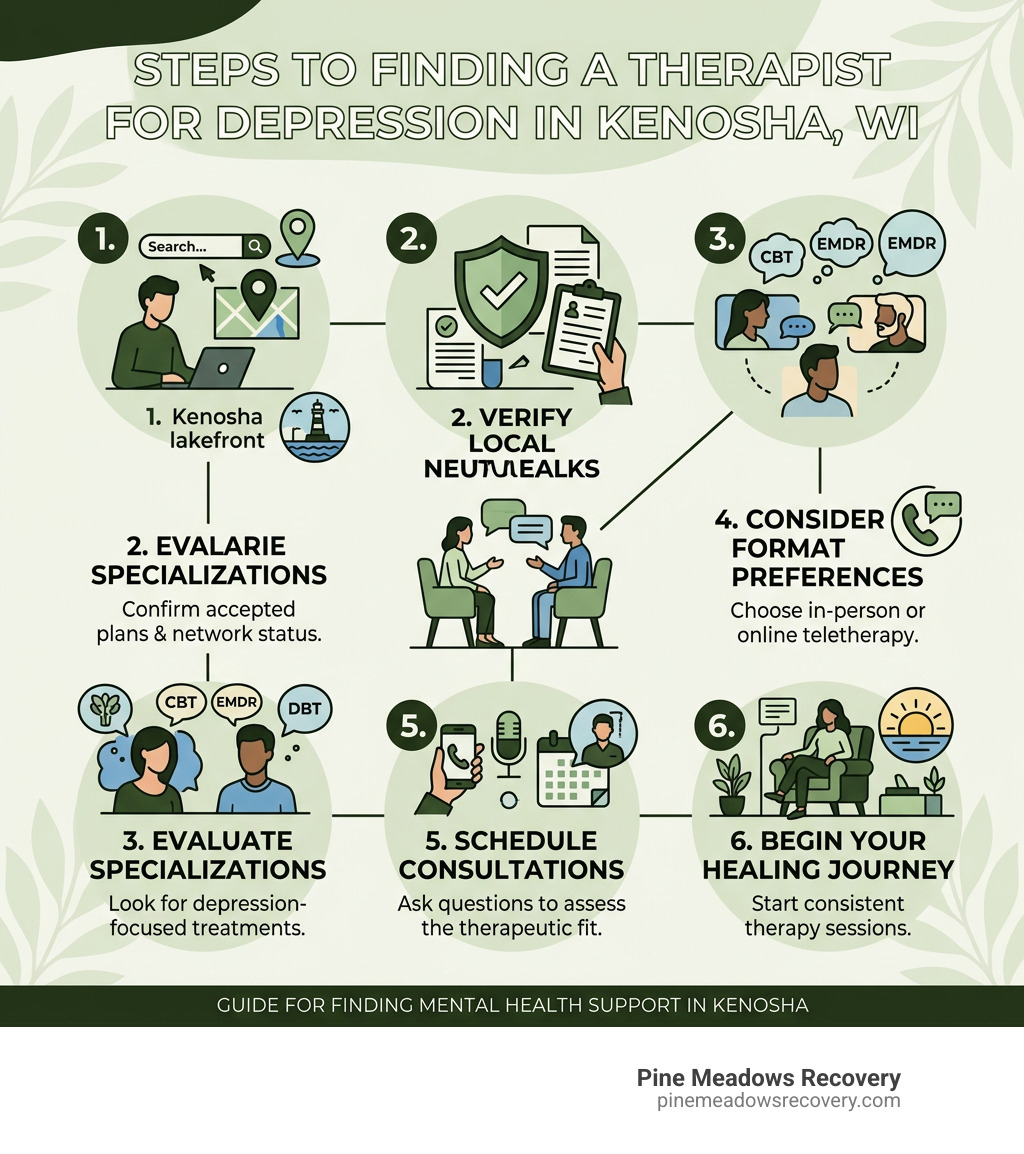
Choosing Between In-Person, Teletherapy, and Group Options
Kenosha residents have more flexibility today than ever before:
- In-Person Therapy: Great for building a strong physical connection and getting out of the house (which helps with the isolation of depression).
- Teletherapy: Perfect for busy parents or those who work in Milwaukee or Chicago and can’t make it to a 2 PM appointment in person.
- Group Therapy: Places like the Bridges Community Center offer a “drop-in” feel where you can find peer support from others living with mental illness.
For more tips on choosing the right format, read our Kenosha mental health services tips.
Navigating Insurance, Costs, and Crisis Resources
We know that “how much does it cost?” is usually the first question on everyone’s mind. Therapy is an investment, but it shouldn’t be an impossible one.
- Insurance: Most major providers in Kenosha accept private insurance, and many are in-network with BadgerCare+ or Medicaid.
- Sliding Scale Fees: Some clinics offer “sliding scale” payments based on your income, making sessions more affordable if you are uninsured.
- Budgeting: While counseling requires some financial planning, many families find that the “cost” of untreated depression (lost work, medical bills, relationship strain) is far higher than the cost of therapy.
If you are in an immediate mental health emergency, do not wait for an appointment. Kenosha has robust crisis prevention and intervention services available 24/7.
Immediate Crisis Support and Community Hotlines
If you or a loved one are in crisis, please use these Kenosha-specific and national resources:
- 988 Suicide & Crisis Lifeline: Just dial 988 for immediate help.
- KHDS Crisis Line: Call 262-657-7188 for 24/7 local intervention.
- HOPELINE: Text “HOPELINE” to 741741 for emotional support via text.
- Women and Children’s Horizons: For domestic abuse support, call 262-652-9900.
- Veterans Crisis Line: Dial 988 and press 1, or text 838255.
Frequently Asked Questions about Depression Treatment
How do I get matched with the right therapist in Kenosha?
Finding a therapist is a bit like dating—you need the right “click.” Look for someone who specializes in your specific concerns (like postpartum or trauma). Many Kenosha providers offer a free 15-to-20-minute phone consultation. Use this time to ask about their credentials, their experience with “lived experience” peer support, and what their intake process looks like.
What local support groups are available for depression?
You don’t have to heal in a vacuum. Kenosha has several community hubs:
- NAMI Kenosha: Offers support groups and education for families and individuals.
- Bridges Community Center: A wonderful drop-in center on 7th Ave for adults living with mental illness.
- GriefShare: Local faith-based groups for those dealing with depression following a loss.
- Hope Council: Great for those navigating depression alongside substance use.
Is therapy for depression affordable without insurance?
Yes, it can be. The ELCA Outreach Center can sometimes assist with prescription costs, and the Behavioral Health Resource Center of Kenosha County (at KHDS) helps residents apply for insurance or find low-cost providers. Additionally, websites like NeedyMeds or RxAssist can help lower the out-of-pocket costs for medications often prescribed alongside therapy.
Conclusion
Recovery from depression isn’t just about “feeling better”; it’s about getting your life back. At Pine Meadows Recovery, we believe in a holistic approach that combines evidence-based therapies like CBT and EMDR with a deep understanding of the Kenosha community. Whether you are seeking help for yourself or a loved one, depression is a treatable medical condition, not a personal failing.
We are here to help you navigate every step of the journey, from the first crisis call to long-term wellness. If you’re looking for specialized support, our Women’s Mental Health Services Kenosha County Guide is an excellent place to start. Let’s work together to find the light again.