
What You Need to Know About Wisconsin Drug Rehab in 2026
Wisconsin Drug Rehab options range from medical detox and residential treatment to flexible outpatient programs — here’s a quick overview of what’s available:
| Level of Care | What It Is | Best For |
|---|---|---|
| Medical Detox | Supervised withdrawal management | First step in recovery |
| Residential Treatment | 24/7 structured live-in care | Severe addiction, unstable home |
| Partial Hospitalization (PHP) | Intensive daytime treatment | Step-down from residential |
| Intensive Outpatient (IOP) | Structured care, flexible schedule | Work/family responsibilities |
| Outpatient Treatment | Regular counseling sessions | Mild-moderate addiction |
| Sober Living | Peer-supported recovery housing | Post-treatment stability |
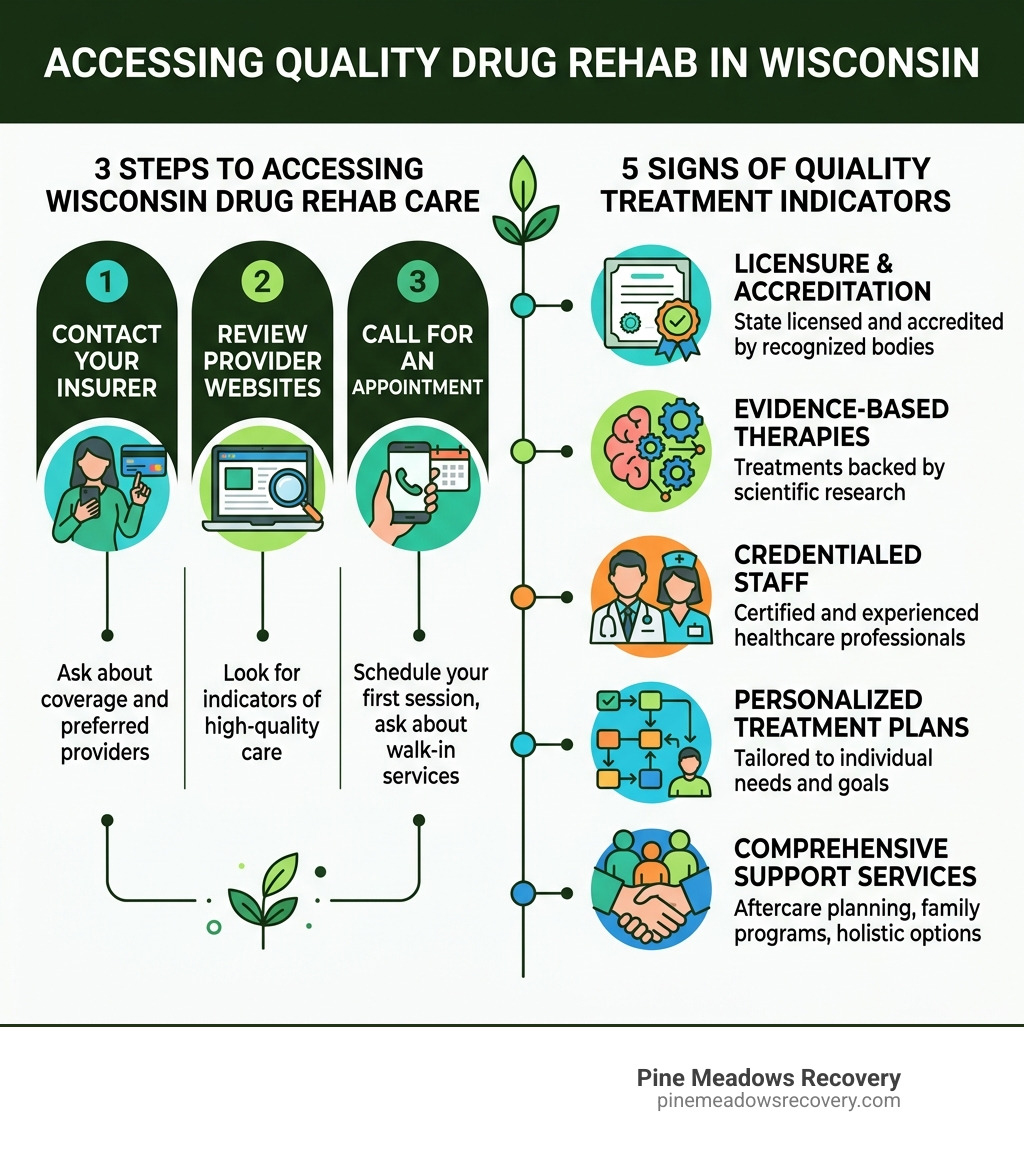
Getting into treatment in Wisconsin takes three steps:
- Contact your insurer to ask about coverage and preferred providers
- Review provider websites for the five signs of quality treatment
- Call for an appointment — some programs offer walk-in services
Deciding to get help is hard. It’s normal to feel scared, uncertain, or even hopeless. But treatment works — and recovery is possible.
Wisconsin has over 488 evaluated drug and alcohol rehab centers across its 72 counties. Whether you need round-the-clock residential care or a flexible outpatient program you can fit around work and family, there is a path forward for you.
At Pine Meadows Recovery, we’re a dedicated addiction treatment center in Kenosha, Wisconsin, with hands-on experience helping individuals find their footing in Wisconsin Drug Rehab — from partial hospitalization to outpatient care, all built around your unique needs. In this guide, we’ll walk you through 10 practical tips to not just survive rehab, but truly thrive in it.
Navigating the Wisconsin Drug Rehab System
Navigating Wisconsin Drug Rehab can feel like trying to find your way through the Northwoods without a compass. As of April 2026, the state has evaluated 488 alcohol and drug rehabs. These facilities aren’t just concentrated in big cities like Milwaukee; they are spread across all 72 counties, each tasked with delivering essential substance use services to their residents.
In Wisconsin, the system is designed to help those most in need first. State-supervised programs follow a specific priority list for admissions. The highest priority is given to pregnant women who inject drugs, followed by other pregnant women using substances, individuals who use drugs intravenously, and then the general population. This ensures that the most vulnerable individuals get the immediate care they require.
Recognizing Signs and Symptoms of Addiction
Before you can “survive” rehab, you have to recognize when it’s time to go. Addiction isn’t always a dramatic movie scene; often, it’s a slow erosion of your physical and mental health. Physical dependence is a major red flag—this is when your body literally demands the substance to feel “normal.” You might also notice behavioral changes, like withdrawing from family or losing interest in hobbies you once loved.
Withdrawal symptoms are another clear sign. If you feel shaky, nauseous, or anxious when you try to stop, your body is signaling for professional help. Understanding what we treat in substance abuse is the first step toward reclaiming your life. Whether it’s alcohol, opioids, or prescription medications, recognizing these signs early can save your life.
Five Signs of Quality Treatment in Wisconsin
Not all rehabs are created equal. The Wisconsin Department of Health Services (DHS) highlights five specific signs of quality that you should look for when choosing a facility:
- Accreditation: Has the facility been reviewed by an outside agency like The Joint Commission or CARF? This ensures they meet high standards of safety and care.
- Medication-Assisted Treatment (MAT): Does the program offer FDA-approved medications for alcohol or opioid recovery? MAT is a gold standard for reducing cravings and preventing overdose.
- Evidence-Based Practices: Are they using proven methods like Cognitive Behavioral Therapy (CBT) or Motivational Interviewing?
- Family Involvement: Does the program include your loved ones in the healing process?
- Ongoing Supports: Do they provide a plan for what happens after you leave?
For a deeper dive into these standards, check out the ultimate guide to addiction treatment resources facilities and how to get help.
Choosing the Right Level of Care and Specialized Programs

One of the biggest hurdles in Wisconsin Drug Rehab is figuring out where you actually belong. Do you need to pack a suitcase for 30 days, or can you just come in for a few hours a day?
Residential treatment offers 24/7 support and is often the best choice if your home environment is chaotic or if your addiction is severe. On the other hand, outpatient care allows you to maintain your job or school schedule while receiving high-level clinical support. Many people find success in a “continuum of care,” starting with intensive treatment and gradually stepping down to outpatient programs as they gain strength.
Preparing for Your Wisconsin Drug Rehab Journey
Your journey usually begins with detoxification services. This is the process of safely clearing substances from your body under medical supervision. We cannot stress this enough: do not try to detox alone at home. It can be dangerous and, in some cases, fatal.
Looking for detox centers in Kenosha, WI is a great way to start your search for a safe, supervised environment. Once you are stabilized, we work with you to create an individualized plan. No two people have the same story, so no two people should have the same treatment plan. For more on how to prepare, see our drug rehab near Kenosha, WI complete guide.
Finding the Best Wisconsin Drug Rehab for Dual Diagnosis
Did you know that approximately 50% of people with substance use disorders also have a co-occurring mental health condition? This is known as a dual diagnosis. It’s incredibly common for conditions like anxiety, depression, PTSD, or bipolar disorder to walk hand-in-hand with addiction.
If you only treat the addiction and ignore the underlying anxiety or trauma, the risk of relapse is much higher. That’s why it’s vital to find a facility that understands what we treat holistically. Treating the mind and the body simultaneously is the secret sauce to long-term sobriety.
10 Essential Tips for Surviving and Thriving in Treatment
Surviving rehab isn’t just about “doing your time.” It’s about active participation. Here are our top 10 tips for making the most of your Wisconsin Drug Rehab experience:
- Verify Accreditation: Always ensure your chosen center is licensed and accredited. This is your guarantee of professional care.
- Involve Your Family: Addiction is a family disease. When your loved ones learn about the recovery process, they become your strongest support system.
- Utilize Peer Support: You are not alone. Whether it’s through 12-step meetings or SMART Recovery, connecting with others who “get it” is life-changing.
- Be Honest with Counselors: They aren’t there to judge you; they are there to help you. The more honest you are, the better they can guide you.
- Follow Aftercare Plans: Rehab is the beginning, not the end. Your aftercare plan is your roadmap for the “real world.”
- Embrace Holistic Therapies: Recovery isn’t just talk therapy. Yoga, meditation, and outdoor activities in Wisconsin’s beautiful natural settings can help heal your spirit.
- Stay Connected to Sober Housing: If your home isn’t safe for recovery, look into the Wisconsin Recovery Residence Registry for a stable, drug-free environment.
- Use State Helplines: The Wisconsin Addiction Recovery Helpline is a fantastic resource if you ever feel lost or need immediate guidance.
- Address Your Mental Health: Don’t ignore the “why” behind your use. Treat your depression or PTSD alongside your addiction.
- Commit to the Process: There will be hard days. There will be days you want to leave. Stay. The process works if you let it.
Specialized Support for Veterans and Professionals
In April 2026, we’ve seen a rise in specialized programs tailored to specific groups. Veterans, for instance, often face unique challenges like service-related trauma and high rates of SUD. Specialized veteran programs provide a space where they can heal among peers who understand their experiences.
For professionals, “device-friendly” options are becoming more common. These programs allow you to stay connected to your work or school through laptops and phones during specific hours, ensuring that your career doesn’t have to hit a dead end while you get healthy. If you’re looking for more localized info, read these 10 facts about drug rehab near Milwaukee, WI.
Aftercare and Long-Term Recovery Success
The first few months after rehab are often the most challenging. This is where relapse prevention strategies come into play. Many successful graduates stay connected through alumni networks or by attending the 10 best outpatient drug rehabs in Kenosha, WI. These programs provide the “bridge” between the structure of rehab and the freedom of everyday life.
Understanding Insurance, Costs, and State Resources
One of the biggest questions we get is, “How much is this going to cost?” The answer varies depending on your insurance and the type of program you choose.
Medicaid and Private Insurance Coverage
Wisconsin Medicaid (ForwardHealth) has a robust residential substance use treatment benefit. It covers assessment, counseling, medication management, and peer support. However, it’s important to note that Medicaid typically does not cover room and board costs in residential facilities.
Private insurance often covers a broader range of services, including out-of-network billing for some boutique or specialized centers. Always call your provider first to verify your benefits.
| Feature | Wisconsin Medicaid | Private Insurance |
|---|---|---|
| Medical Detox | Covered | Usually Covered |
| Residential Therapy | Covered | Usually Covered |
| Room and Board | Typically Not Covered | Often Covered |
| Outpatient Care | Covered | Covered |
| Choice of Provider | Limited to Medicaid Providers | Varies by Network |
If you’re looking for the best drug rehab centers in Kenosha, WI, many will offer an insurance verification service to do the heavy lifting for you.
Low-Cost and Free Treatment Options
If you don’t have insurance, don’t lose hope. Wisconsin’s 72 counties are responsible for providing services regardless of your ability to pay. Many centers offer sliding scale fees based on your income. You can find free rehab in Kenosha, Wisconsin and low-cost options by contacting local county health departments.
Additionally, programs in Racine County, WI and surrounding areas often have grants available for those in financial need.
Frequently Asked Questions about Wisconsin Addiction Treatment
What are the priority populations for rehab admission in Wisconsin?
Wisconsin law requires providers to prioritize certain groups to ensure the most at-risk individuals get help first. The order is:
- Pregnant women who inject drugs.
- Other pregnant women struggling with substance use.
- Individuals who use drugs intravenously (injecting).
- All other individuals with substance use disorders.
Does Wisconsin Medicaid cover residential room and board?
Generally, no. While Wisconsin Medicaid covers the clinical aspects of treatment (like therapy, doctor visits, and medication), it does not pay for the “room and board” (the cost of staying and eating at the facility). Some counties or charitable organizations may offer help to cover these costs for eligible residents.
How do I find a quality-accredited rehab center near me?
The best way is to use the Wisconsin Addiction Recovery Helpline or visit the DHS website to look for the “five signs of quality.” You can also look for centers with Joint Commission or CARF accreditation. If you are in the Southeastern part of the state, looking for a rehab in Racine, WI or Kenosha is a great starting point.
Conclusion
Surviving and thriving in Wisconsin Drug Rehab is a journey of a thousand steps, but the first one is simply admitting you need help. As we move through April 2026, the resources available in the Badger State have never been more comprehensive or accessible. From the rural retreats of the Northwoods to the specialized clinical centers in Kenosha, help is closer than you think.
At Pine Meadows Recovery, we believe that every person deserves a chance at a healthier, happier life. Our Kenosha-based programs are designed to meet you where you are, offering the personalized, holistic care you need to break the cycle of addiction once and for all.
Don’t wait for “the right time”—that time is now. Start your recovery journey today and discover the life that’s waiting for you on the other side of addiction.